
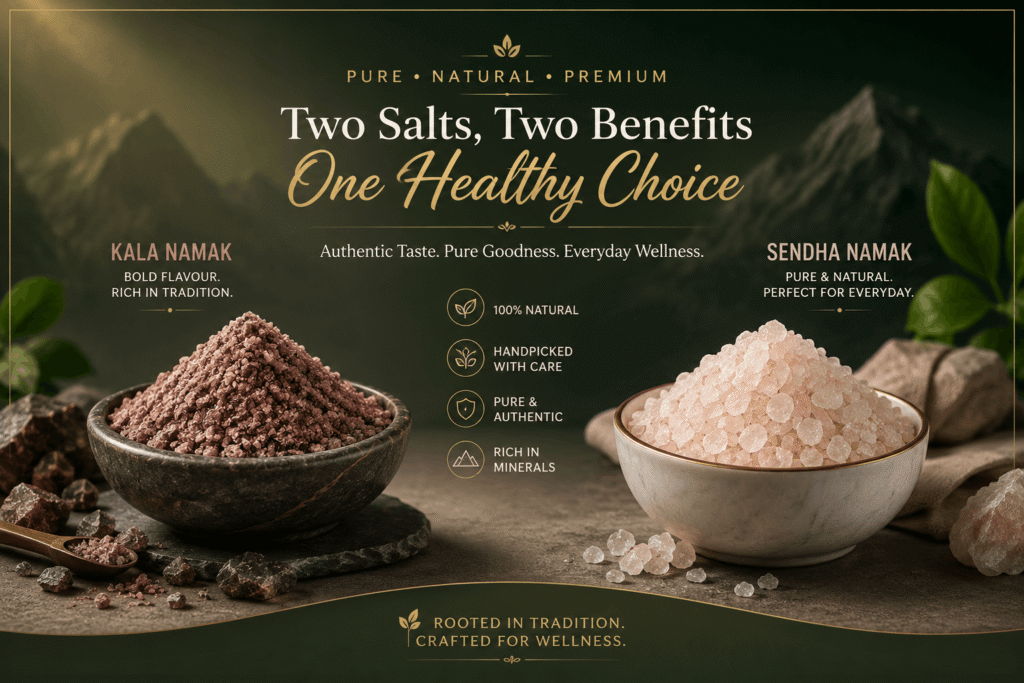

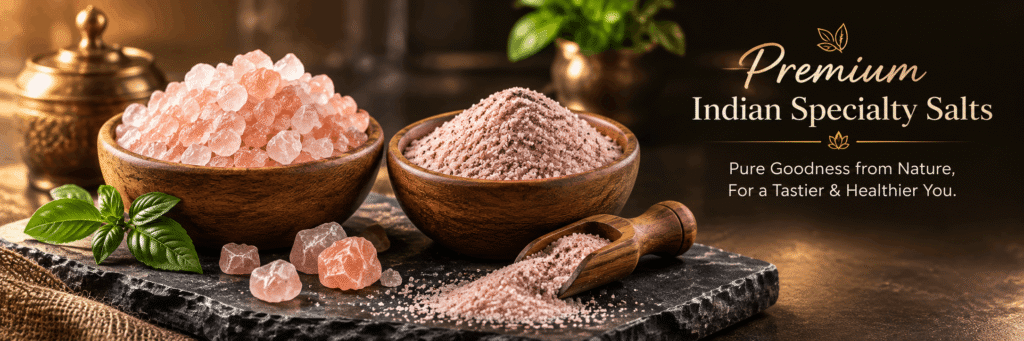
Salt may appear to be a simple item for cooking purposes; however, different types of salts are used in Indian cooking, each having their distinct flavors, textures, and functions. Two such salts are kala namak and sendha namak.
Although both are traditionally used in Indian cuisine, the two spices differ widely in their taste, aroma and culinary applications. So, which is the better choice? Let us see the difference between them.
Kala Namak Definition
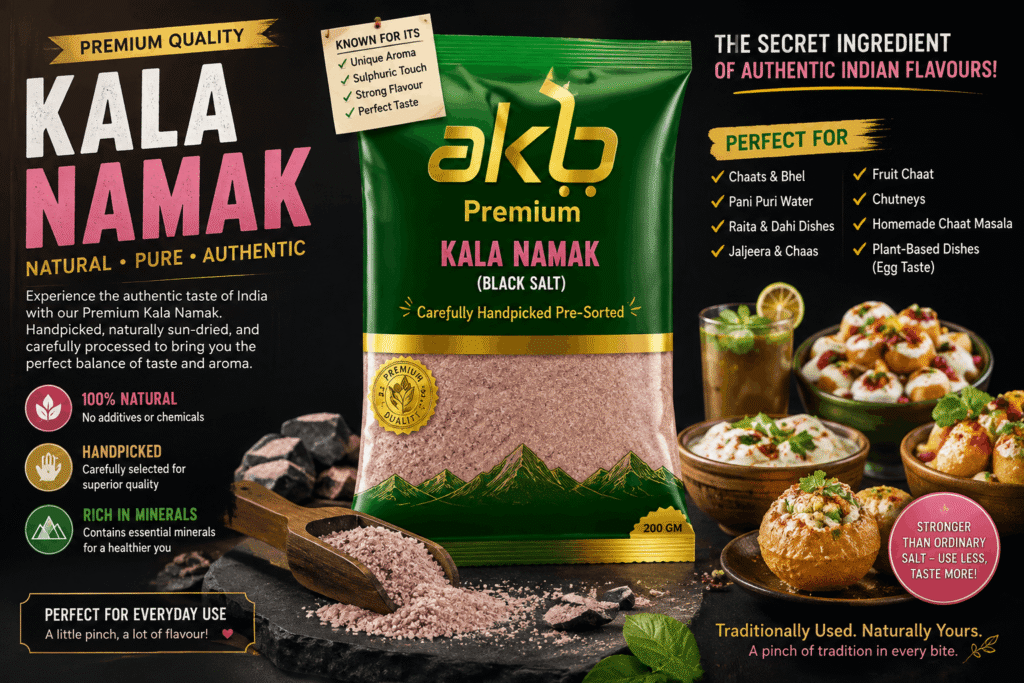
Kala namak, popularly referred to as black salt, is a specific kind of Indian salt known for having a distinctive sulphuric smell and a unique salty flavor. The color of kala namak varies from grayish-purplish crystals to pinkish-gray powder.
Its unique aroma makes it especially popular in dishes where you want an extra punch of flavour.
Uses for Kala Namak
Some of the best uses for kala namak include:
- Chaats and bhel
- Pani puri water
- Raita and dishes made with dahi
- Jaljeera and chaas
- Fruit chaat
- Chutneys
- Homemade chaat masala
- Plant-based dishes that require an egg taste
A small amount is usually enough because its flavour is much stronger than ordinary salt.
Definition of Sendha Namak

Sendha namak, alternatively referred to as rock salt or saindhav namak, is an unprocessed salt that has a clean and mellow taste. Sendha namak comes in either white or translucent crystals.
Unlike kala namak, sendha namak does not have an intense sulfurous smell, and hence it can be used in food dishes where the taste of the ingredients needs to be highlighted.
Sendha namak is also used during vrat, and therefore it is known as vrat wala namak.
Best Ways to Use Sendha Namak
You can use sendha namak in:
- Sabudana khichdi
- Vrat-friendly potato dishes
- Kuttu and singhara flour recipes
- Raita
- Salads
- Chaas and nimbu pani
- Soups
- Everyday vegetables and dal
Its mild taste makes it a versatile option for light and simple meals.
Kala Namak vs Sendha Namak: Key Differences
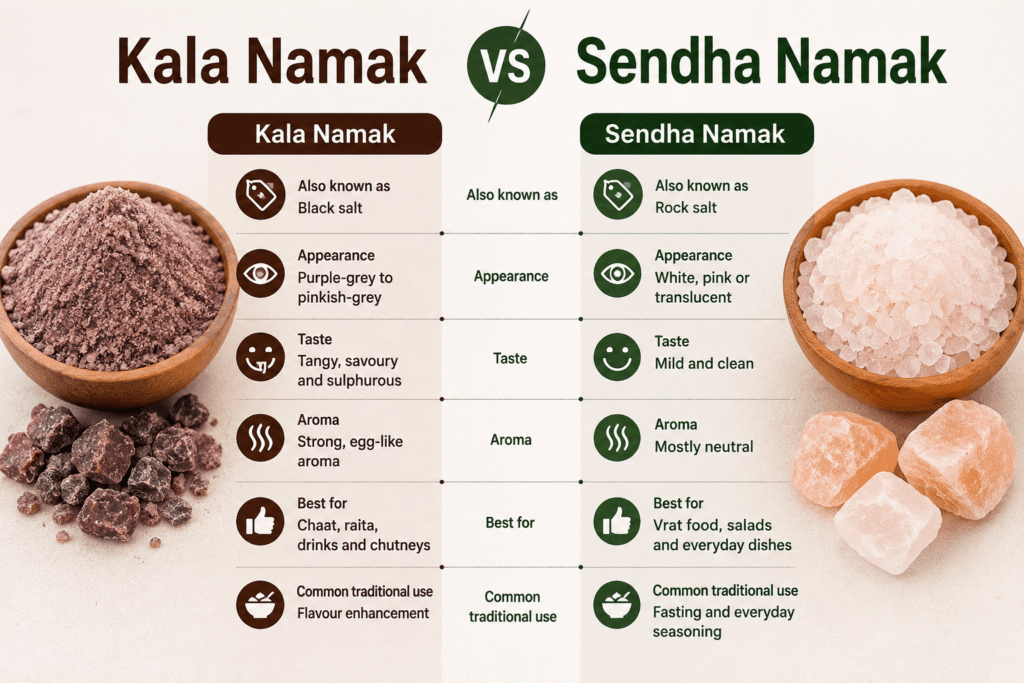
| Feature | Kala Namak | Sendha Namak |
|---|---|---|
| Also known as | Black salt | Rock salt |
| Appearance | Purple-grey to pinkish-grey | White, pink or translucent |
| Taste | Tangy, savoury and sulphurous | Mild and clean |
| Aroma | Strong, egg-like aroma | Mostly neutral |
| Best for | Chaat, raita, drinks and chutneys | Vrat food, salads and everyday dishes |
| Common traditional use | Flavour enhancement | Fasting and everyday seasoning |
Can You Use Kala Namak Instead of Sendha Namak?
Not necessarily in all dishes.
In case you are making vrat recipes, then sendha namak is the right choice traditionally. In contrast, for pani puri, fruit chaat, or jaljeera, you will need kala namak to give the dish that unique taste.
Technically, both can provide saltiness, but replacing one with the other can significantly change the taste of the final dish.
Which Salt Is the Better One for Normal Cooking?
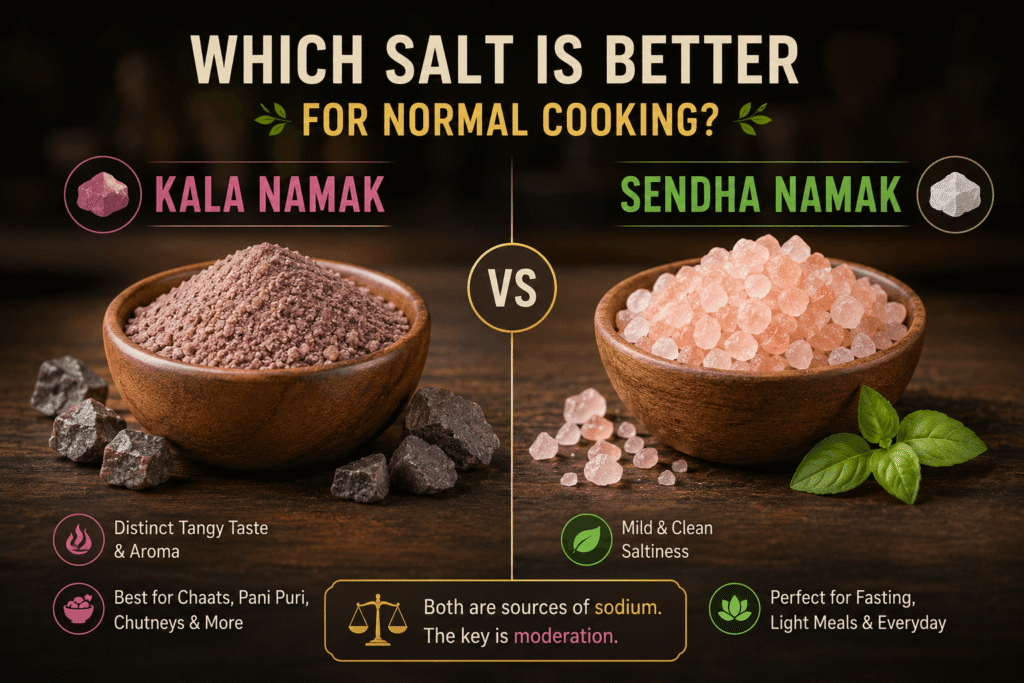
Neither of the two salts can be regarded as “better” all the time, as it all comes down to your usage preference.
If what you require is an unusual tangy taste and aroma in your food, then you must go for kala namak.
Choose sendha namak when you want a milder saltiness, especially for fasting recipes, light meals and dishes where you don’t want a strong aroma.
Remember, however, that both are sources of sodium and the key is in moderation since there should be no room for thinking that any one of the two can be eaten in unlimited amounts.
Kala Namak Storage and Sendha Namak Storage
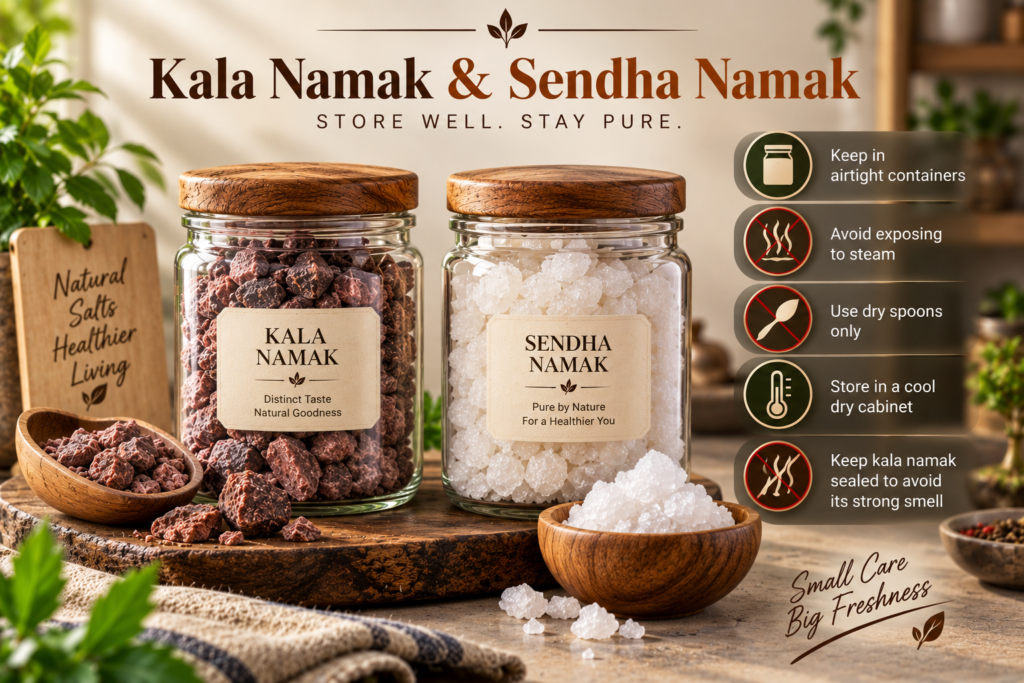
Salt tends to soak up moisture from the surroundings, which could lead to lump formation. In order to preserve both:
- Keep it in airtight containers.
- Avoid exposing it to steam.
- Avoid using wet spoons when picking the salt.
- Keep it in a dry and cool cabinet in your kitchen.
- Keep kala namak in an airtight container so as to avoid its smell affecting other foods.
Concluding Remarks
Both kala namak and sendha namak are essential components of Indian kitchens, yet they play distinct roles.
If you’re looking for a pungent taste in Indian snacks like chaat, raita or beverages, then kala namak would be the ideal choice. If you need something more refined, especially during fasts, sendha namak works best.
In other words, there’s no need to opt between them since you can keep both salts in your pantry to suit the requirements of each dish.