
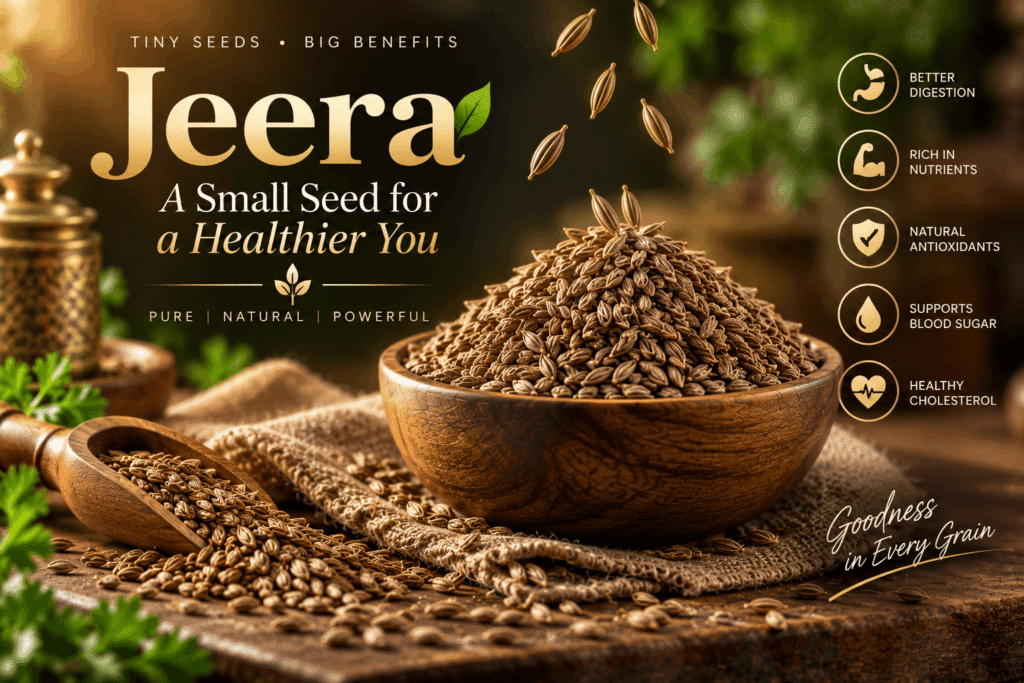
Jeera or Cumin is one of the most widely used spices in the kitchen of India. This spice is known for its unique earthy and warm, and sometimes nutty, taste. However, the use of cumin not limited to adding taste alone; it has always been known for its medicinal properties as well.
From supporting digestion to providing essential nutrients, adding jeera to your everyday meals can be a simple way to make your diet more flavourful and nutritious.
1. Supports Digestion
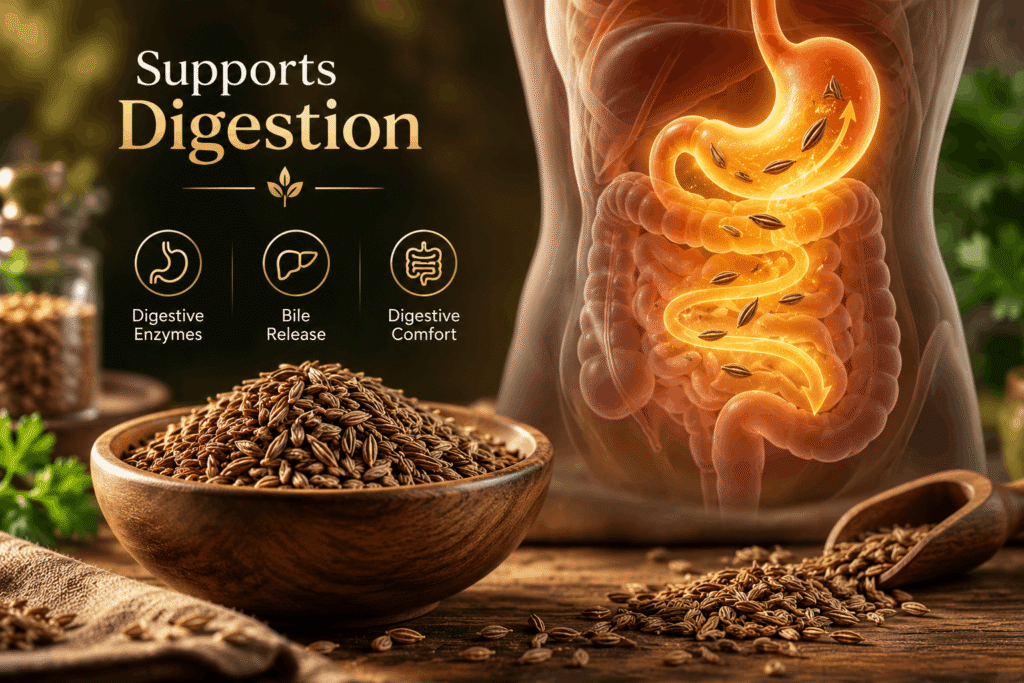
Cumin has traditionally been used to support digestion and help with digestive discomfort. Research suggests that cumin may increase the activity of digestive enzymes, which can help the body digest food more efficiently.
It may also promote the release of bile, which plays an important role in the digestion of fats and certain nutrients.
In short: Jeera may help support healthy digestion and digestive comfort.
2. A Good Source of Iron
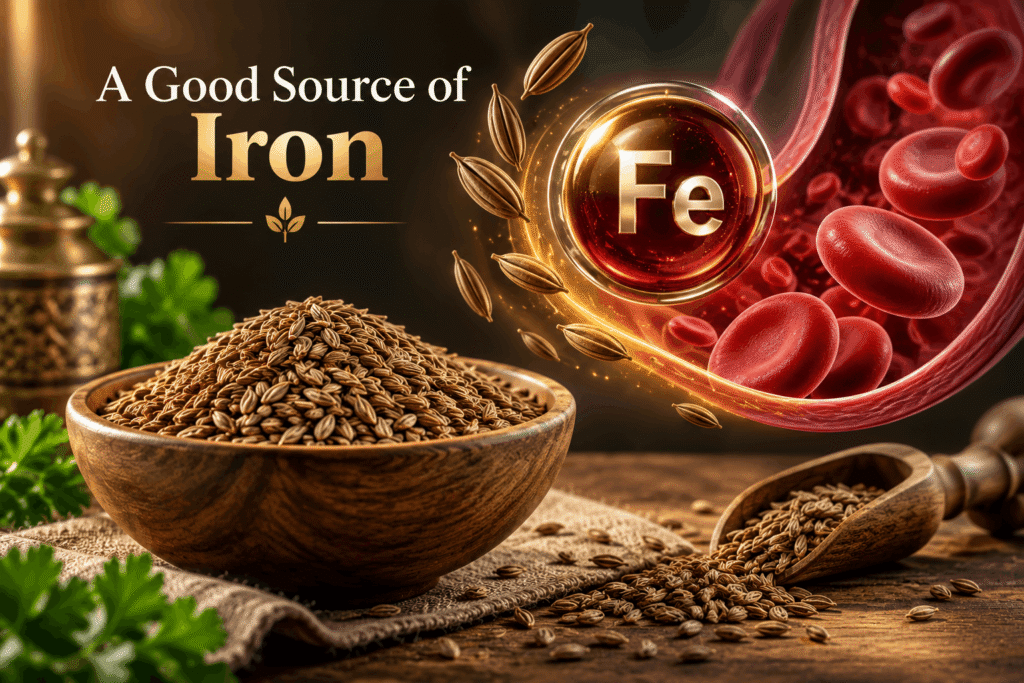
Cumin is naturally rich in iron, an important mineral required by the body for several essential functions. Even though cumin is generally consumed in small quantities, it can still contribute to your daily iron intake.
One teaspoon of ground cumin contains around 1.4 mg of iron, according to the source.
In short: Adding jeera to your meals can help increase your dietary iron intake.
3. Contains Antioxidants
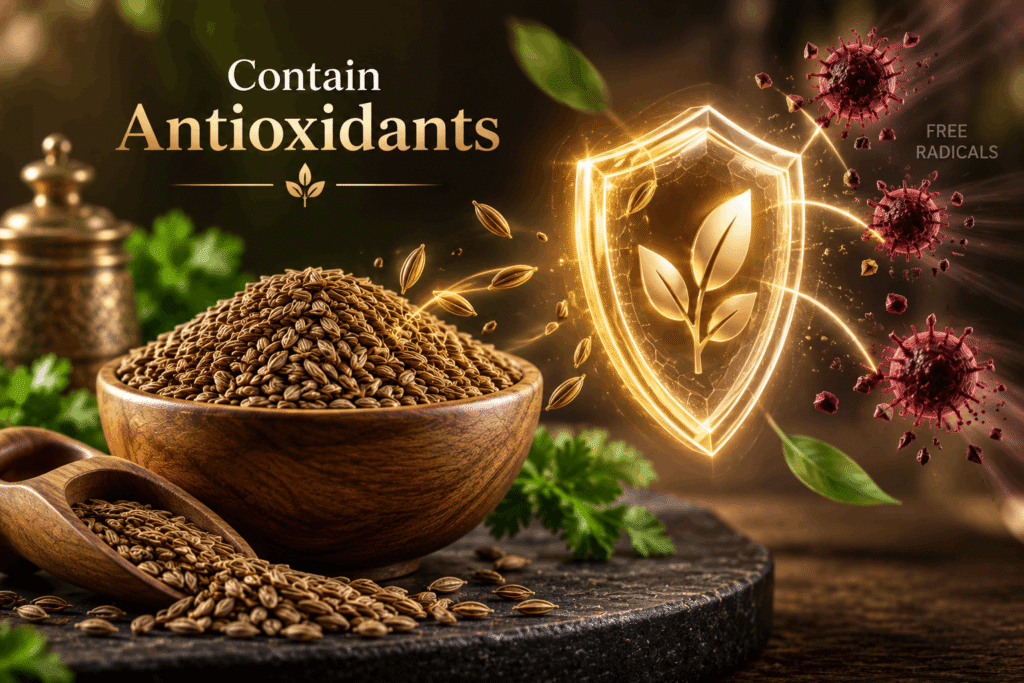
Cumin is a rich source of plant-based compounds, which include flavonoids, phenols, terpenes, and alkaloids. There are antioxidants present among some of these compounds.
Antioxidants protect the cells from being damaged by free radicals.
In summary: Jeera is a source of plant-based antioxidants.
4. Can Promote Good Blood Sugar Levels
Some studies have examined whether cumin can affect blood sugar. There have been some positive results with concentrated cumin supplements in some initial markers of diabetes.
Further research is still necessary to find out more about how it works and how much you need.
Conclusion: Cumin could help to promote good blood sugar levels, but you should not use it as a replacement for your treatment.
5. May Promote Healthy Cholesterol Levels
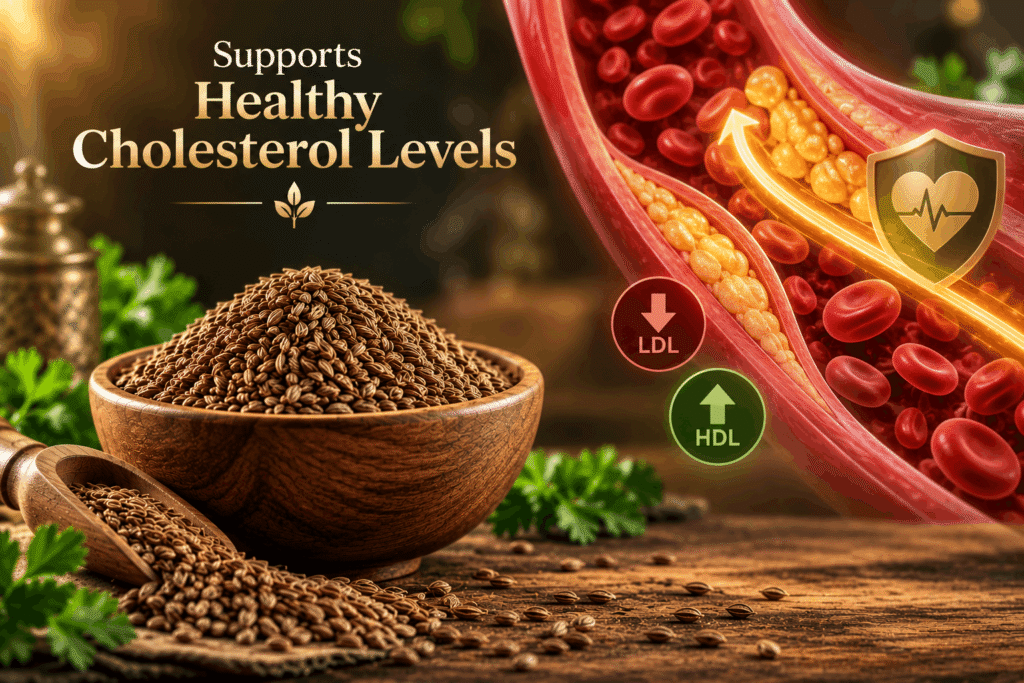
The relationship between cumin consumption and the reduction of cholesterol levels has also been researched. Studies suggest that there has been improvement in specific blood lipid levels due to cumin concentration intake.
However, there has not been any consistency in results among all the studies, and it has also not been clear if such effects can happen from using small amounts in cooking.
Conclusion: Jeera can help in maintaining healthy cholesterol levels.
How to Use Jeera?
Jeera is one of the simplest spices to add in your daily intake:
- While cooking: Add jeera while tempering dals, curries, vegetables, and rice.
- In powdered form: Add roasted jeera powder while making raita, salads, chaas, or chutneys.
- As a drink: Jeera can also be used in preparing an easy-to-make cumin drink.
- In masalas: Mix ground jeera in masalas to enhance their taste and aroma.
Conclusion
Jeera is a spice with much to offer beyond taste. The possible digestive properties, iron, and antioxidants that it contains could be beneficial to your balanced diet.
Thus, the next time you look into your spice rack, keep this little spice in mind.
Disclaimer
This article is purely meant for information purposes and does not constitute professional medical advice.