
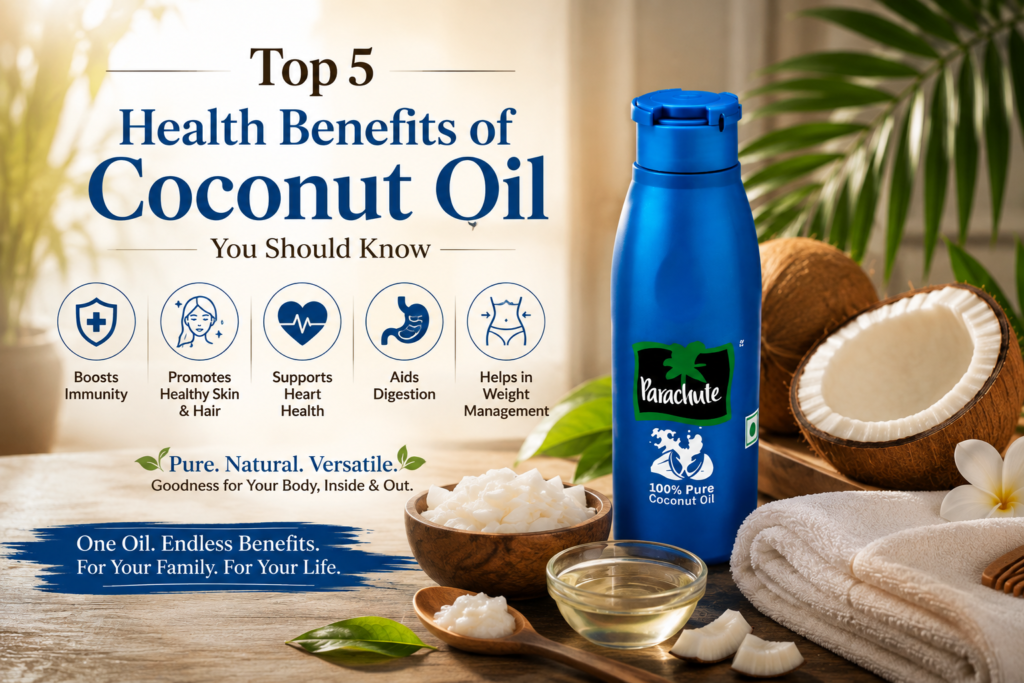

Coconut oil has been sitting in Indian kitchens and bathroom shelves for as long as most of us can remember. For some, it’s the oil their mother used during champi sessions on lazy Sunday afternoons. For others, it’s just the thing they grab when their skin feels a little too dry, or when a recipe calls for it. Simple household ingredient, sure — but it does a lot more than people realise.
So the real question is: is it actually good for you, or is this just one of those things we do because our parents did it?
Turns out, there’s a bit more to it than the smell and the texture. Coconut oil has lauric acid and MCTs in it, and scientists have actually looked into what these fats might do in the body. Most people use it on their hair and skin without a second thought, and that’s fine. But eating it is where you need to slow down a little — it’s high in saturated fat, so it’s not something you want to pour into every single dish. Moderation is really the word here.
And honestly, how good it is for you kind of depends on what you’re using it for. Great for dry skin, solid addition to a hair-care routine — but cooking with it needs a bit more thought.
So here are five practical ways coconut oil can actually help, along with a few things you should keep in mind before using it.
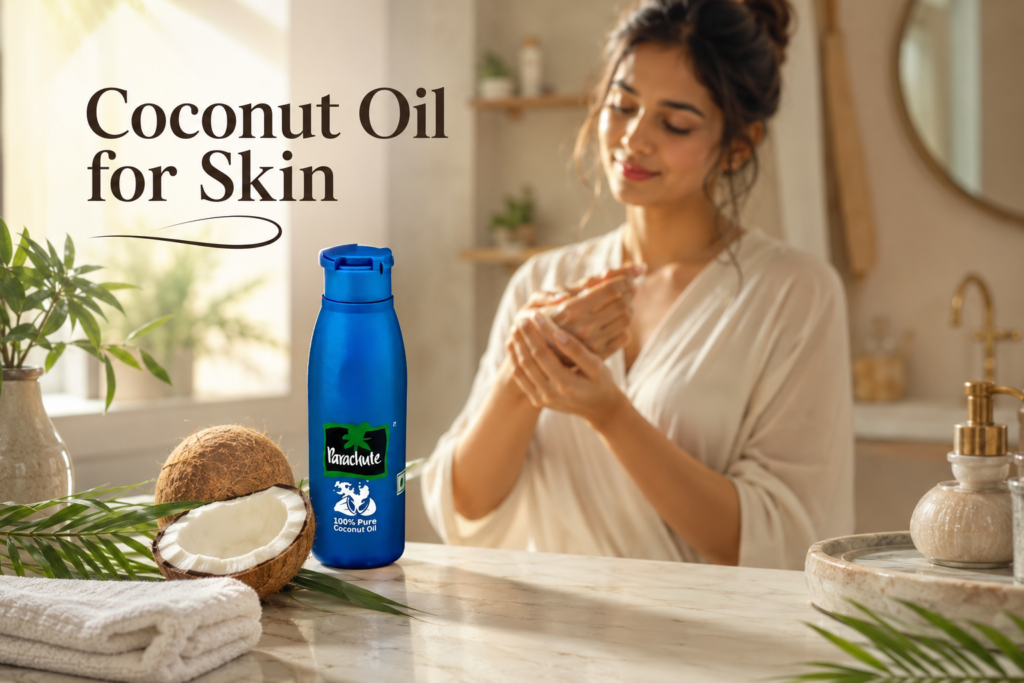
1. Helps Moisturise and Protect Dry Skin
Dry, rough skin can become especially uncomfortable when exposed to harsh soaps, dry weather or frequent washing. Coconut oil is often used as a simple moisturiser because it can help reduce moisture loss from the skin.
Its fatty acids can form a protective layer over the skin, helping retain moisture and leaving the skin feeling softer.
How you can use it:
- Apply a small amount to clean, slightly damp skin.
- Use it on particularly dry areas such as elbows, knees and heels.
- Avoid applying it to skin that is irritated or prone to breakouts if it makes your skin feel greasy or congested.
- Consider a patch test before using it extensively.
The takeaway: Coconut oil can be a simple addition to a moisturising routine, particularly for dry skin.
2. Supports Hair Care and Helps Reduce Protein Loss

For many Indian households, coconut oil and hair care have practically been inseparable for generations.
One reason coconut oil is popular as a pre-wash hair treatment is its ability to penetrate the hair shaft. Research has found that coconut oil can help reduce protein loss from hair, which may help minimise damage associated with grooming and washing.
It can also make dry hair feel smoother and more conditioned.
A simple hair-care routine:
- Take a small quantity of coconut oil.
- Massage it gently into the scalp and through the lengths if suitable for your hair.
- Leave it on for a short period before washing.
- Shampoo thoroughly to remove excess oil.
You don’t necessarily need a large amount. A little can go a long way.
The takeaway: Coconut oil can work particularly well as a pre-wash treatment for dry or damaged-feeling hair.
3. Provides Fat That Can Be Used as an Energy Source

Coconut oil contains medium-chain fatty acids, although commercial coconut oil isn’t the same as a purified MCT oil.
MCTs are absorbed and metabolised differently from many longer-chain fats and can be rapidly transported to the liver. This is one reason coconut-derived fats have attracted interest in nutrition research.
However, it’s important not to interpret this as meaning that eating large quantities of coconut oil automatically boosts energy or causes weight loss.
Coconut oil is still calorie-dense, so portion size matters.
A smarter approach:
- Use it in moderation.
- Consider your overall dietary fat intake.
- Don’t treat coconut oil as a replacement for a balanced diet.
- Choose cooking oils based on the complete nutritional context of your diet.
The takeaway: Coconut oil can contribute dietary fat and contains fatty acids that are metabolised relatively quickly, but moderation remains important.
4. May Support Oral Hygiene When Used for Oil Pulling
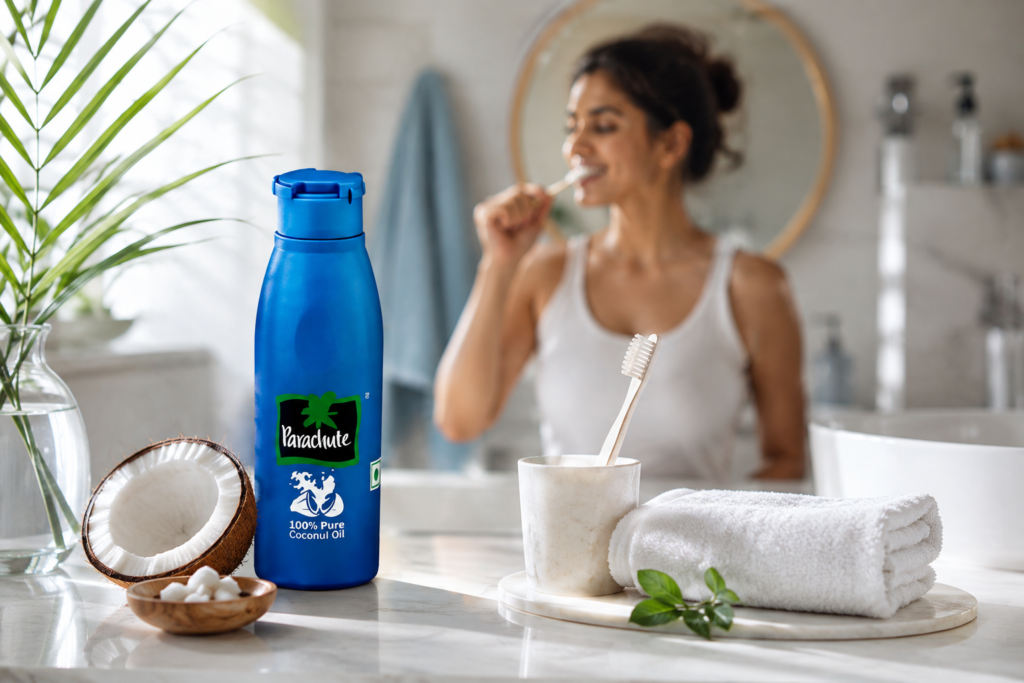
Oil pulling is an old oral-care practice in which oil is swished around the mouth and then spat out.
Coconut oil is commonly used for this practice because it contains lauric acid, which has antimicrobial activity in laboratory and experimental settings.
Some studies suggest oil pulling may help reduce certain measures of plaque and oral bacteria. But it should be viewed as a supplementary practice rather than a replacement for brushing, flossing or professional dental care.
If you practise oil pulling:
- Use a small amount of coconut oil.
- Swish gently rather than aggressively.
- Spit it into a bin rather than the sink to avoid plumbing problems.
- Continue brushing twice daily with fluoride toothpaste.
- Don’t swallow the oil.
The takeaway: Coconut oil may have a role in an oral-care routine, but conventional dental hygiene remains essential.
5. Contains Lauric Acid With Antimicrobial Properties
One of the most interesting components of coconut oil is lauric acid.
Lauric acid can be converted into monolaurin under certain conditions, and both compounds have demonstrated antimicrobial activity in laboratory research. This helps explain why coconut oil continues to attract interest beyond cooking and personal care.
However, laboratory antimicrobial activity shouldn’t automatically be interpreted as proof that consuming coconut oil will prevent or treat infections.
Its antimicrobial properties are best understood as one reason coconut oil is interesting, rather than a reason to use it as medicine.
Why It Works / Why Coconut Oil Stands Out
Coconut oil is interesting because it combines several characteristics in one familiar household ingredient.
🌴 Lauric Acid
Coconut oil is particularly rich in lauric acid, a fatty acid that has been investigated for antimicrobial activity.
⚡ Medium-Chain Fatty Acids
Some of its fatty acids are metabolised differently from longer-chain fats, which has contributed to interest in coconut-derived MCTs.
💧 Occlusive Skin Properties
When applied topically, coconut oil can help reduce water loss from the skin, making it useful as a moisturising ingredient.
💇 Hair-Friendly Properties
Its ability to penetrate the hair shaft helps explain why coconut oil has remained popular as a pre-wash hair treatment.
🥥 Versatile Household Ingredient
Perhaps its biggest advantage is versatility. The same ingredient can appear in cooking, traditional hair-care routines and skincare.
Coconut Oil: How to Use It Wisely
Just because coconut oil is popular doesn’t mean you should be generous with it. More really isn’t better in this case.
On the cooking side, remember it’s high in saturated fat — so go easy with the portions. Instead of crowning one oil the “superfood” of your kitchen, it’s better to just keep an eye on your overall diet and how everything balances out.
When you’re using it for your skin or hair, go with whatever actually works for your type. Everyone’s skin reacts differently, so if you start noticing irritation, itching, or breakouts, that’s your cue to stop — no need to force it.
And for oral health, be clear about this: coconut oil is not a replacement for brushing, flossing, or your regular dental checkups. It’s fine as an extra, but it can’t do the job those basics are meant to do.
Final Thoughts
Coconut oil is one of those things you’ll find sitting quietly in most Indian homes — on the kitchen shelf, or tucked away in the bathroom cabinet. Chances are you grew up watching your mother or grandmother reach for it, whether it was for champi on a weekend, a quick fix for dry elbows, or just something that went into the cooking pot. It’s cheap, it’s familiar, and honestly, it does way more than most people give it credit for.
That said, you don’t need to be using coconut oil for literally everything. Like any ingredient, it’s got its strengths and its limits. Using it here and there, when it actually fits what you’re doing, works a lot better than expecting one jar of oil to fix your hair, skin, and health all at once.
So if you’re thinking about giving it a shot for your hair, dealing with skin that just won’t stop feeling dry, or you’re simply curious about what coconut oil is actually good for — it helps to know what it can realistically do for you. That way, you get to enjoy the everyday perks without turning it into some kind of miracle product it was never meant to be.



it is a mind-boggling-blog