

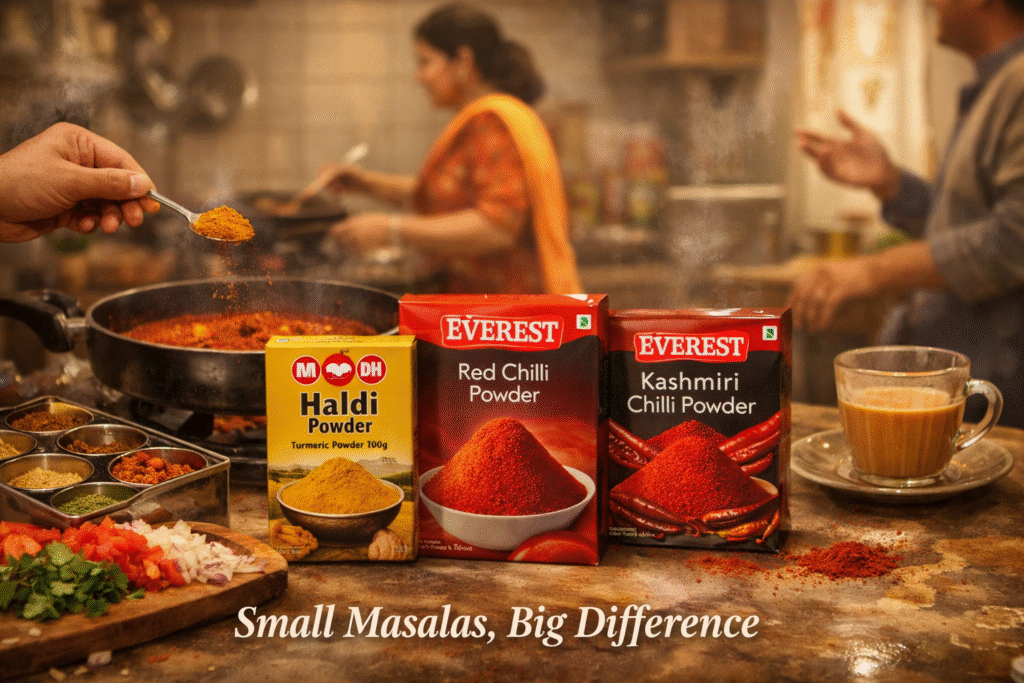
You know how in Indian homes, the kitchen is always active… morning chai, lunch prep, someone asking “aaj kya bana hai?”—it never really stops. And somewhere in all this, those small masalas quietly do their job. I didn’t think much about it earlier, honestly. Haldi toh haldi hoti hai, mirchi toh mirchi. Bas daal do.
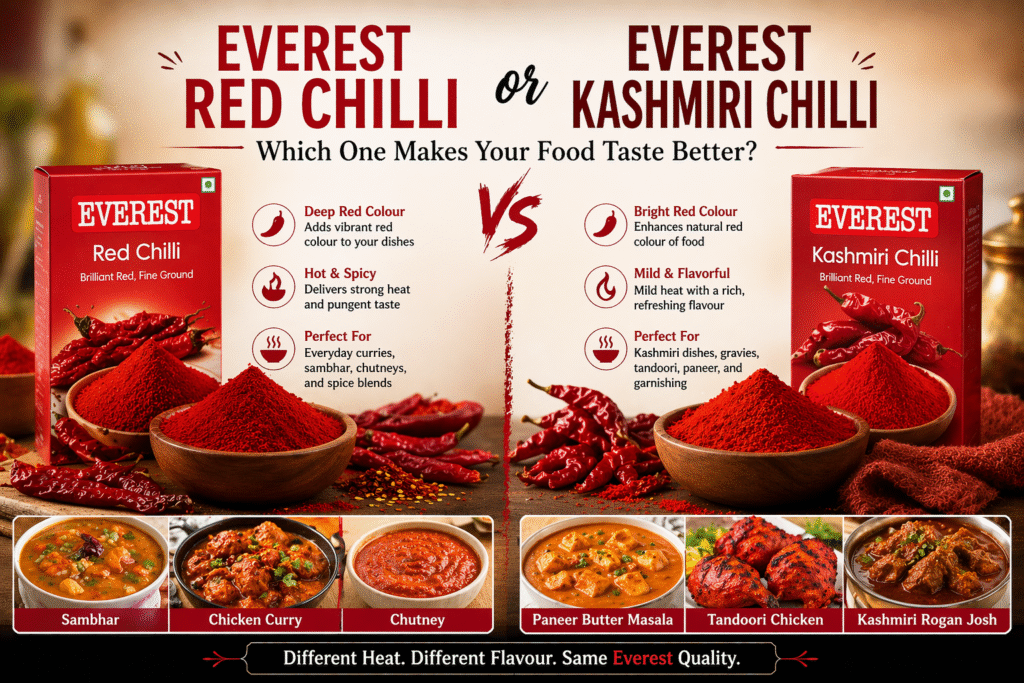
But over time, you start noticing… same recipe, same sabzi, but taste changes. Color changes. Even the smell feels different. That’s when I started paying a little more attention to basics like MDH haldi powder, Everest red chilli powder, and Everest Kashmiri chilli powder. Simple things, but they really shape your food.
🟡 MDH Haldi Powder – The Everyday Essential
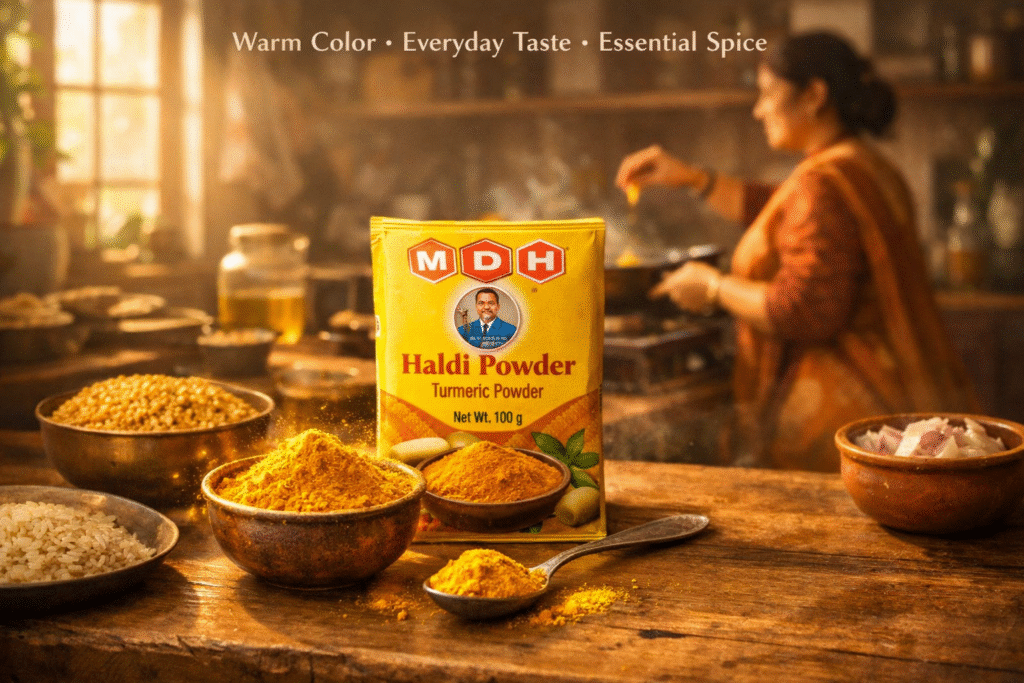
Haldi is one of those things you just can’t skip.
Whether it’s dal, sabzi, or even that quick poha in the morning… it’s always there.
With MDH Haldi Powder, I’ve noticed the color comes out nice and warm—not too dull, not too artificial.
Plus, there’s that familiar smell… the kind that instantly feels like home.
My mom still adds a pinch extra sometimes, saying “haldi acchi honi chahiye, taste bhi aur health bhi.” And honestly, she’s right. It’s not just about color—it adds that base flavor we don’t even think about.
🌶️ Everest Red Chilli Powder – For That Real Spice
Now this one depends on your mood 😄
Some days you want proper spicy food. Like rajma-chawal with that strong kick, or aloo sabzi that actually feels “chatpata”.
That’s where Everest Red Chilli Powder works well.
It gives heat, but also a strong flavor. Not just burning spice… actual taste.
I remember once we had guests over, and the sabzi turned out just right—slightly spicy, full of flavor. Someone actually asked, “mirchi kaunsi use ki hai?”
That’s when you know it’s noticeable.
🔴 Everest Kashmiri Chilli Powder – For Color & Mild Taste
Then there are days when you don’t want too much spice… but still want that rich red color.
Like paneer, butter chicken style gravy, or even pav bhaji at home.
You want it to look good, but not too spicy.
That’s where Everest Kashmiri Chilli Powder fits perfectly.
It gives that deep red color, but the taste stays mild.
It’s actually my go-to when making something for everyone at home—because not everyone likes too much spice.
🍲 So… Which One Should You Use?
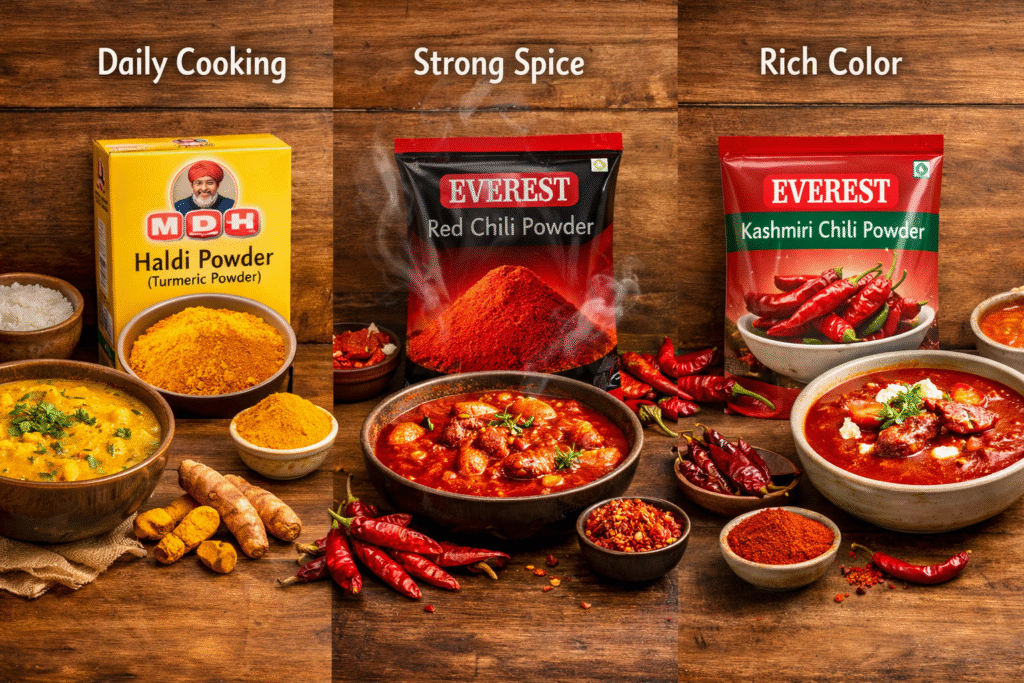
Honestly, it’s not about choosing one.
- For daily cooking → MDH Haldi Powder
- For strong, spicy flavor → Everest Red Chilli Powder
- For color without too much heat → Everest Kashmiri Chilli Powder
Real cooking is like that only… thoda adjust, thoda mix, depending on what you’re making.



I totally relate to your take on how those small masala choices can shift the entire vibe of a dish. It’s funny how something as simple as red chilli vs Kashmiri chilli can completely change the flavor profile—especially when you’re aiming for that perfect balance of heat and aroma. Your point about haldi being more than just color really hit home; it’s that foundational note that ties everything together.
Your take on how small masalas can make such a big difference in flavor and aroma really resonates with me. I’ve noticed the same thing—how switching between different chilli powders can completely change the vibe of a dish, from mild and comforting to fiery and bold. It’s these subtle details that make home cooking feel so personal and authentic.
I totally relate to how a small change in masala can shift the entire taste of a dish—like how MDH haldi brings that warm, familiar base flavor we all grow up with. The way you described the difference between red and Kashmiri chilli really made me think about how we often overlook these basics, but they’re what give our food its soul. Thanks for sharing your kitchen insights—it’s the kind of relatable content that makes you appreciate the little things in cooking.
The way you described how switching between chilli powders can completely transform the ‘chatpata’ feel of a simple sabzi really resonates with my own kitchen experiences. It’s fascinating how those small details in basic spices end up shaping the entire soul of a dish, just like your mom’s extra pinch of turmeric.
It really hits home how the same recipe can transform just by swapping out basic spices like Kashmiri and red chili powder for that perfect balance of heat and color. I’ve always loved how a specific brand’s haldi powder can bring that warm, familiar aroma that instantly makes a dish feel like home.
You really captured that subtle shift from just treating spices as a chore to realizing how they silently craft the identity of our daily meals. It’s fascinating how switching between a fiery kick and a milder, color-rich option completely changes the soul of a dish like your rajma-chawal example.
It’s so true how the specific brand of masala can completely transform a familiar recipe, changing both the aroma and the color in ways we didn’t even notice at first. That moment of realizing the ‘chatpata’ kick or the ‘warm’ turmeric color makes all the difference is something every home cook understands perfectly.
You perfectly captured how the subtle differences in our daily masalas can completely transform a simple recipe, especially that switch between the real spice kick of red chilli and the nuance of Kashmiri. It is often those small, unassuming bases like haldi and mirchi that determine whether a dish just feels like food or truly feels like home. This reminder to pay closer attention to our basic ingredients is definitely something our kitchens could benefit from more often.