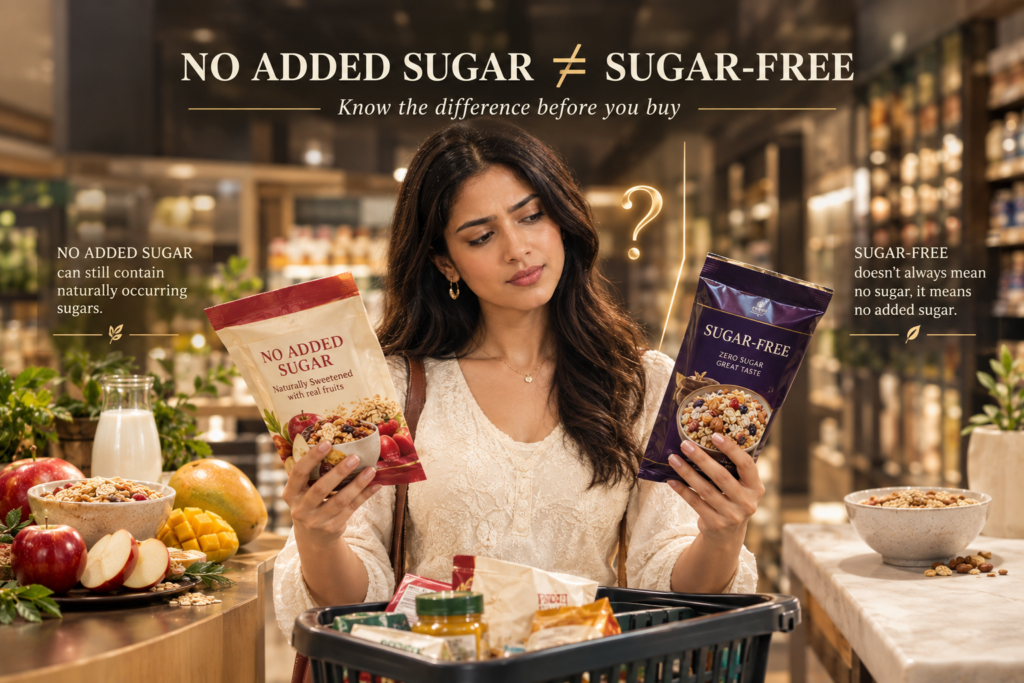

You pick up a cereal, biscuit, juice or spread from the supermarket and notice the words “No Added Sugar.” It sounds like the product has no sugar at all.
Then you see another product labelled “Sugar-Free.”
Are they actually saying the same thing?
No. And this small difference on a food label can change what you expect from the product.
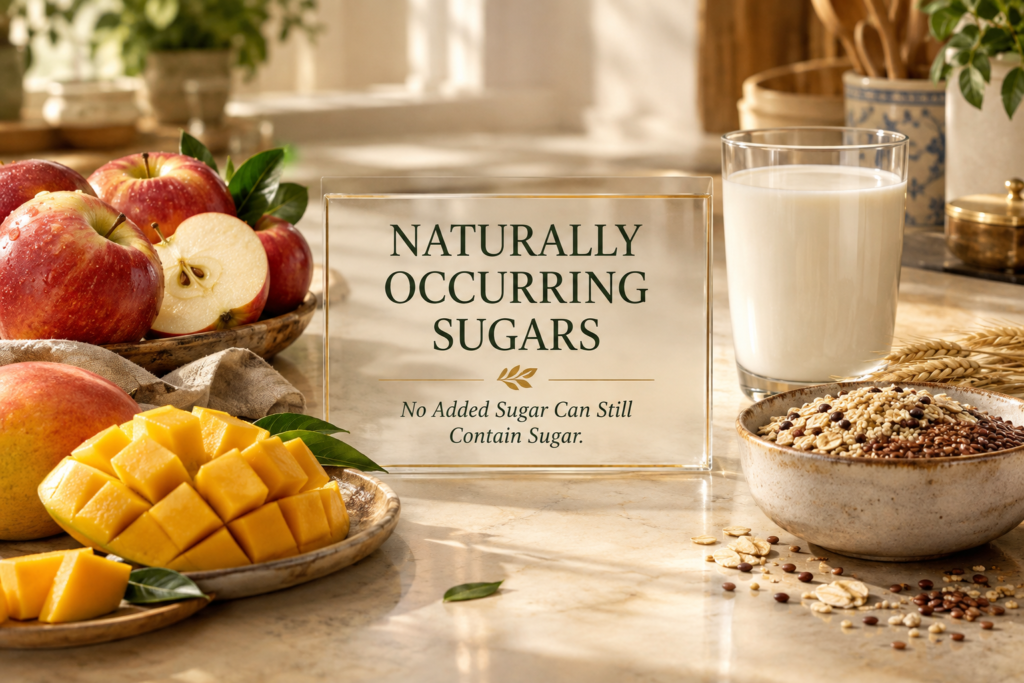
“No Added Sugar” generally means that manufacturers have not added sugar or certain sweetening ingredients during production. However, the food may still contain naturally occurring sugars from ingredients such as milk, fruit or other foods.
“Sugar-free,” on the other hand, refers to a much lower amount of sugars in the finished food, subject to the applicable food-labelling rules.
So, if you are trying to understand what you are really buying, don’t stop at the front of the packet. The ingredient list and nutrition information tell the bigger story.
No Added Sugar vs Sugar-Free: What’s the Difference?
The easiest way to understand it is to separate added sugar from total sugar.
1. What does “No Added Sugar” mean?
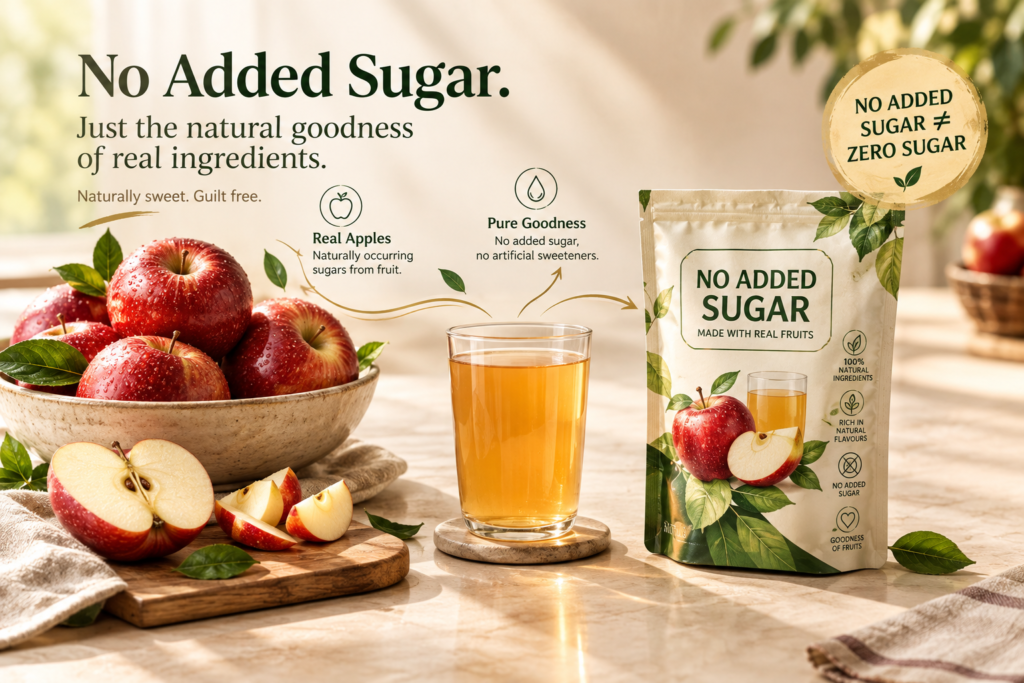
A product labelled “No Added Sugar” is made without adding sugar or other ingredients used primarily for their sweetening properties, within the conditions applicable to the claim.
But that does not automatically mean zero sugar.
For example, a fruit-based product may contain naturally occurring sugars from the fruit itself.
Think about a simple example:
Apple → naturally contains sugar
If you make a product using apples without adding table sugar, the finished product can still contain sugar.
So:
No added sugar ≠ no sugar
This is probably the most important point to remember when shopping.
2. What does “Sugar-Free” mean?
“Sugar-free” is a stronger claim.
Under India’s food-labelling framework, a food making a “sugar-free” claim has to meet the prescribed conditions for sugars in the finished product.
In practical terms, this means you shouldn’t interpret “sugar-free” as simply “we didn’t add table sugar.”
Instead, it relates to how much sugar is actually present in the product.
That distinction matters when comparing packaged foods.
A Simple Example
Imagine you are comparing two products.
| Product | Added Sugar | Naturally Occurring Sugar | What the Label Suggests |
|---|---|---|---|
| Product A | No | Yes | No Added Sugar |
| Product B | Very little/within applicable sugar-free limits | Very little | Sugar-Free |
Product A may still contribute sugar to your diet.
Product B is designed to meet the requirements for a sugar-free claim.
That’s why reading only the front label can sometimes give you an incomplete picture.
Why “No Added Sugar” Can Still Taste Sweet
This is where things get interesting.
Food doesn’t necessarily need added table sugar to taste sweet.
Sweetness can come naturally from ingredients such as:
- Fruits
- Milk
- Certain grains
- Dried fruits
- Naturally sweet ingredients
Some products may also use permitted sweeteners or other ingredients to create sweetness while making a particular sugar-related claim.
So, when you see “No Added Sugar,” don’t assume the product will taste completely unsweetened.
Instead, ask:
“Where is the sweetness coming from?”
The ingredient list can help answer that question.
What Should You Check on a Food Label?
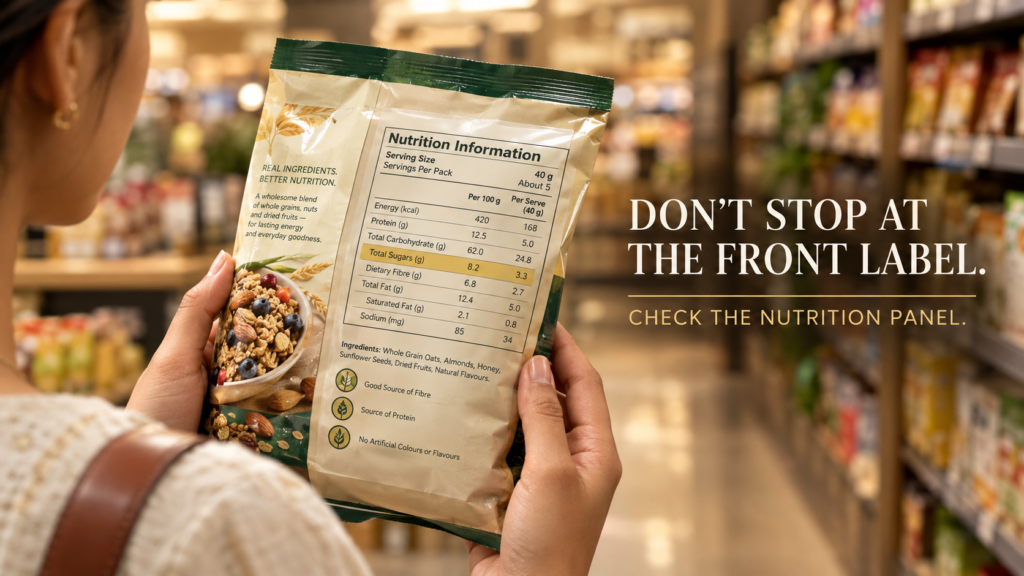
If you’re standing in a supermarket aisle comparing two products, you don’t need to become a nutrition expert.
Just follow these simple checks.
1. Look at the nutrition information
Check the total sugars listed in the nutrition panel.
This gives you more useful information than relying only on a front-of-pack claim.
2. Read the ingredient list
Look at what actually goes into the product.
If the product is marketed as having no added sugar, check whether the ingredient list makes sense with that claim.
3. Don’t judge a product by “healthy-looking” packaging
Words such as:
- Natural
- Light
- Healthy
- No Added Sugar
- Low Fat
- Multigrain
can sound impressive.
But each describes something different.
A product can have one positive-sounding claim without automatically being the right choice for every person.
4. Check the serving size
This one is easy to overlook.
Nutrition information is often provided per serving as well as per 100 g or 100 ml, depending on the product and labelling format.
If you eat two servings, your intake will obviously be different from the amount shown for one serving.
Is No Added Sugar Healthier?
Not necessarily.
This is another common misunderstanding.
Removing added sugar can be useful depending on the product and your dietary needs, but “No Added Sugar” is not a magic health label.
For example, two breakfast products could both carry different sugar-related claims while still differing considerably in:
- Calories
- Fibre
- Protein
- Fat
- Sodium
- Total carbohydrates
- Portion size
- Overall ingredient composition
So instead of asking only:
“Does this product have added sugar?”
also ask:
“What else is in it?”
That gives you a much clearer picture.
What About “Sugar-Free” Products?
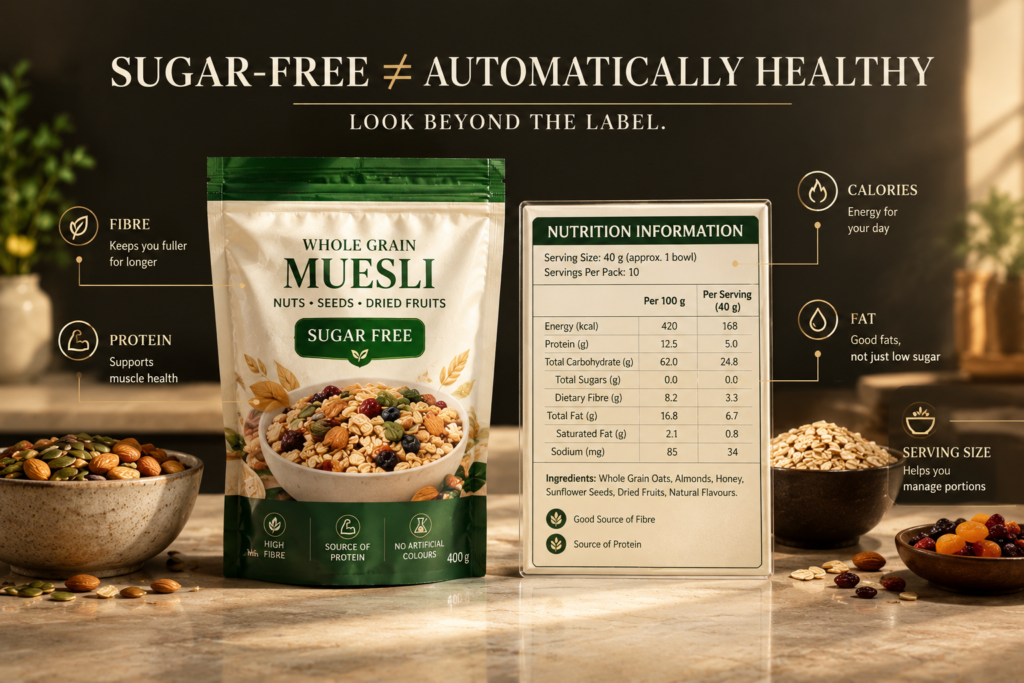
Sugar-free products can be useful for people who specifically want to reduce sugars, but the term doesn’t mean the product is automatically low-calorie or nutritionally superior.
Some sugar-free products may use permitted sweeteners to provide sweetness.
That’s why it is still worth checking:
- Ingredients
- Nutrition information
- Serving size
- Sweeteners used
- Your own dietary requirements
In other words, sugar-free tells you something specific about sugar content. It doesn’t tell you everything about the food.
Why It Works / Why It Stands Out
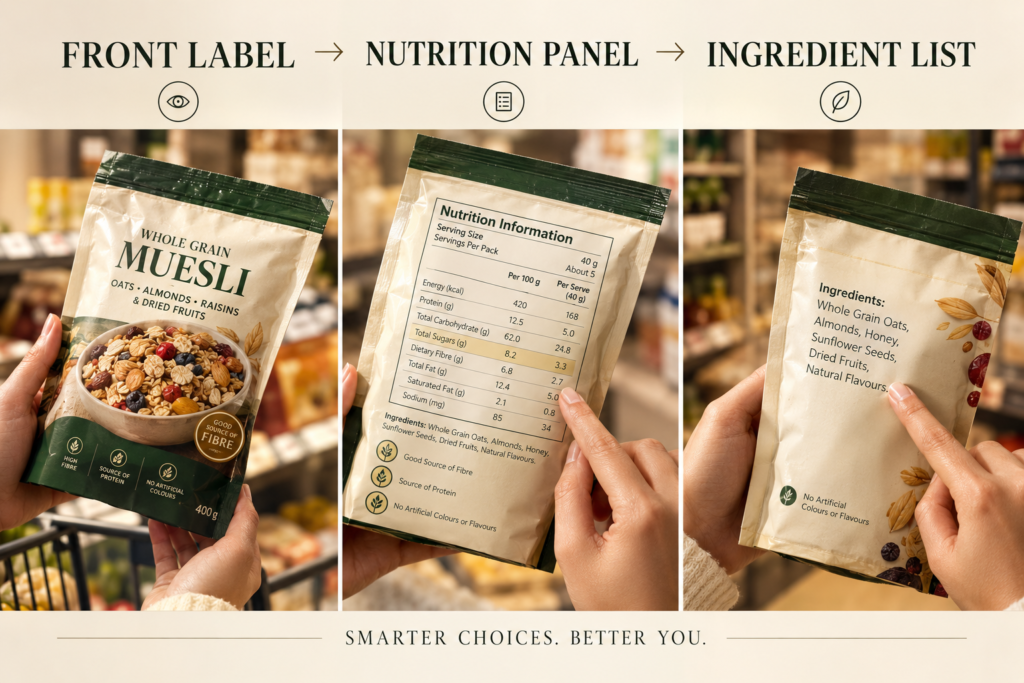
The best way to shop for packaged food isn’t to memorise dozens of marketing terms.
It is to understand what each claim actually tells you.
The difference between “No Added Sugar” and “Sugar-Free” is a good example.
A front-of-pack claim gives you a quick starting point. The nutrition panel and ingredient list provide the context.
This simple three-step approach works well:
Front label → Nutrition panel → Ingredient list
That takes only a few seconds and can help you make a more informed comparison between similar products.
Common Myths About Sugar Labels
Myth 1: No Added Sugar means zero sugar
Not true.
A food can contain naturally occurring sugars even when no sugar has been added.
Myth 2: Sugar-Free means the product is automatically healthy
Not necessarily.
Sugar content is only one part of a food’s nutritional profile.
Myth 3: Sweet taste always means added sugar
Not necessarily.
Sweetness can come from naturally occurring sugars or permitted sweeteners, depending on the product.
Myth 4: You only need to read the front of the packet
Not really.
The front gives you the headline. The nutrition panel and ingredient list give you more detail.
So, Which Label Should You Look For?
That depends on what you are trying to achieve.
If your priority is avoiding added sugar, “No Added Sugar” is a useful claim to notice—but still check the nutrition information.
If your priority is choosing foods with very little sugar, a product meeting the requirements for a “Sugar-Free” claim may be relevant.
But there is no need to choose a product simply because one particular phrase sounds healthier.
Read the label. Compare similar products. Then decide based on your own needs.
Final Takeaway
No Added Sugar and Sugar-Free are not the same thing.
“No Added Sugar” tells you that sugar hasn’t been added to the product in the way covered by the applicable labelling requirements. The food can still contain naturally occurring sugars.
“Sugar-Free” refers to a specific sugar-content claim that must meet the relevant regulatory conditions.
So next time you are shopping, don’t let those two words blur together.
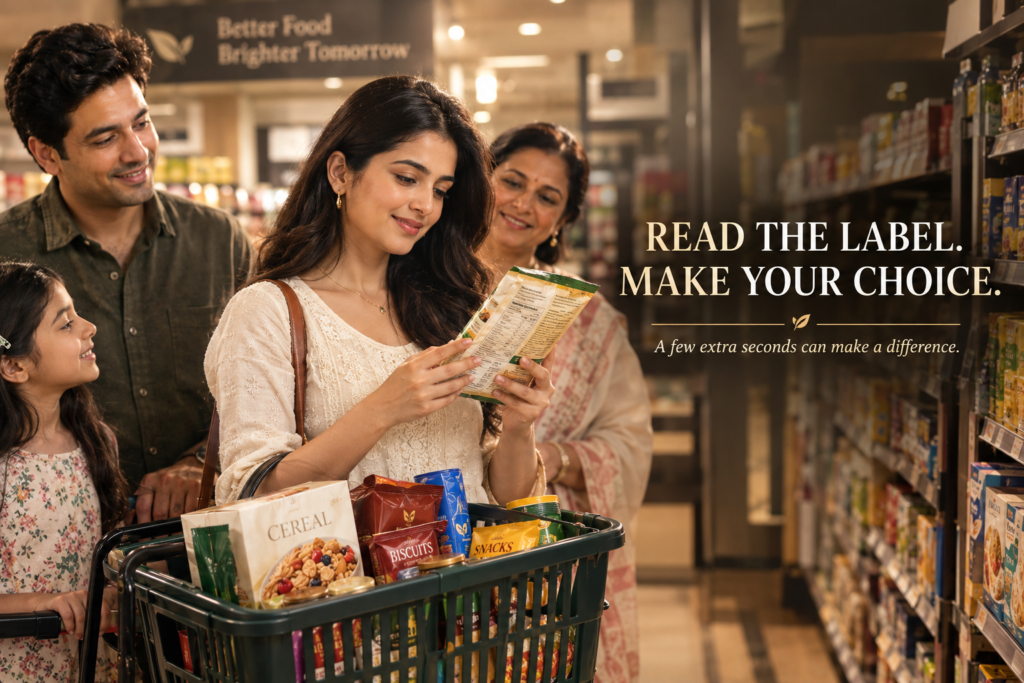
Turn the packet around, check the nutrition panel, read the ingredients, and then make your choice.
A few extra seconds at the supermarket shelf can make food labels much easier to understand.