
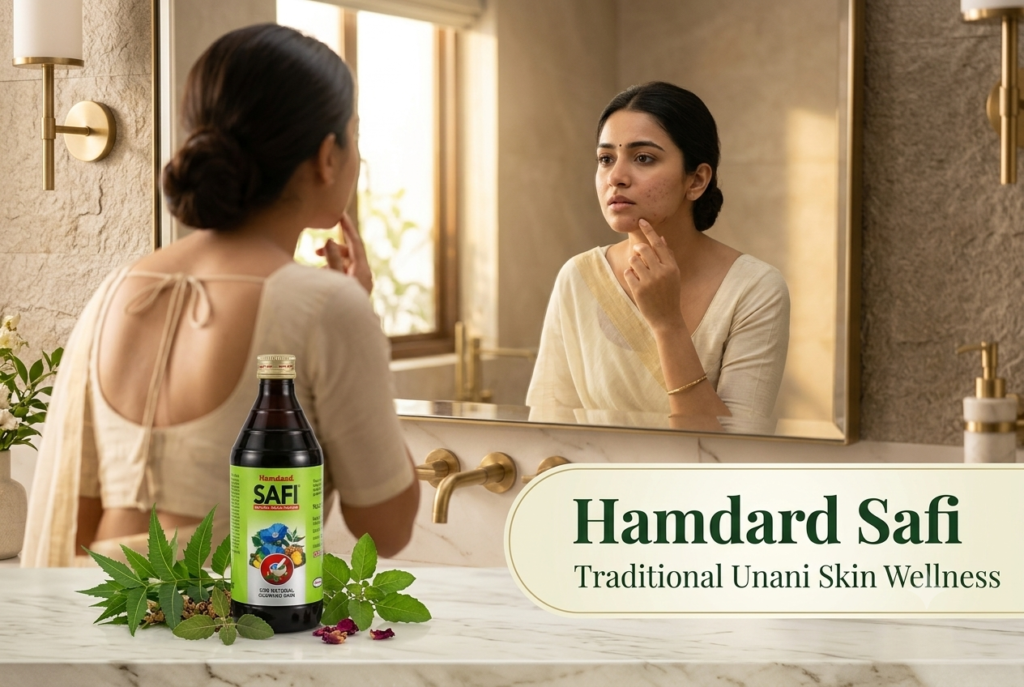

Hamdard Safi is a traditional Unani herbal syrup commonly associated with skin care, pimples, blemishes and digestive wellness. It is widely described as a “natural blood purifier,” although this term comes from traditional product positioning and should not be understood as a medically established process of removing unspecified toxins from the blood.
For people familiar with herbal remedies, Safi is a well-known name. But what exactly is it used for, what herbs does it contain, and what should you know before taking it?
This guide looks at Hamdard Safi from both the traditional and practical perspective.
What Is Hamdard Safi?
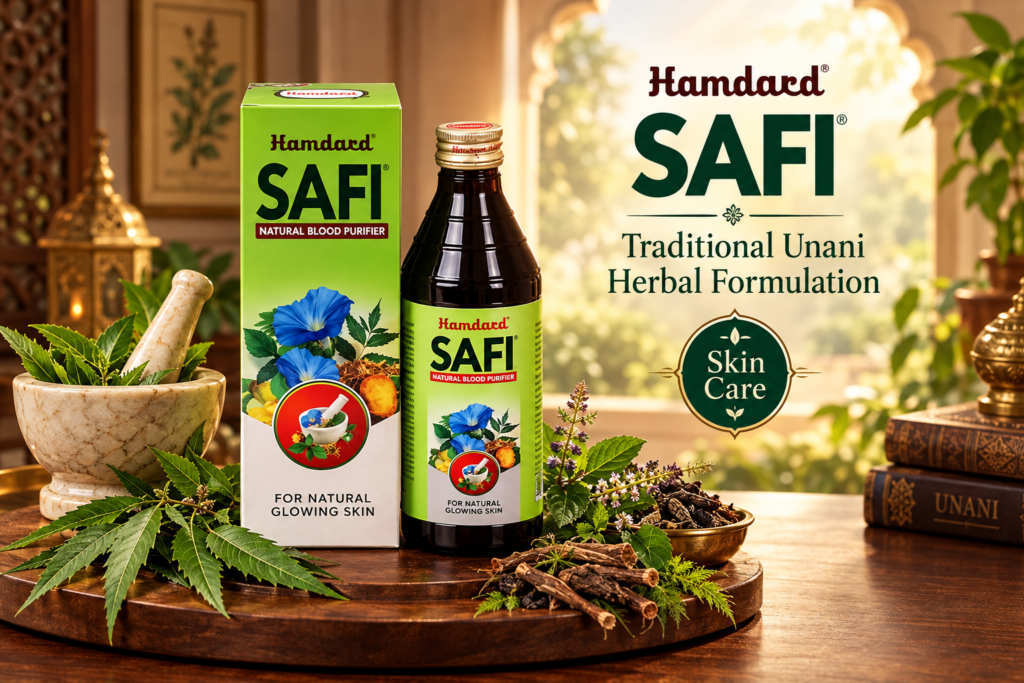
Hamdard Safi is an oral herbal formulation from Hamdard Laboratories India. It belongs to the Unani tradition and is marketed primarily around skin and internal wellness.
Current product listings describe Safi as a herbal “blood purifier” associated with concerns such as pimples, skin eruptions, boils and occasional constipation. Hamdard also continues to include Safi among its products available through its wider distribution network.
The phrase “blood purifier” needs some context. It is a traditional description used for certain herbal formulations; it does not mean that Safi literally filters the bloodstream in the same way that the body’s organs function.
That distinction is important when reading online claims about detoxification, acne or glowing skin.
What Is Hamdard Safi Traditionally Used For?

Safi’s traditional uses can broadly be grouped into two areas: skin-related concerns and digestive wellness.
1. Skin Concerns
Safi is commonly associated with concerns such as:
- Pimples
- Acne
- Skin eruptions
- Boils
- Heat rashes
- Blemishes
Current product listings describe these as traditional or marketed indications rather than guaranteeing that the syrup will treat every case of acne or another skin condition.
Acne itself can have many causes, including hormonal changes, excess sebum, blocked pores and inflammation. Persistent or severe acne may therefore require appropriate dermatological treatment rather than relying on an oral herbal formulation alone.
2. Occasional Constipation
Safi also contains Sana/Senna, a herb traditionally associated with laxative action. This helps explain why the product is also linked with occasional constipation and digestive regularity.
Because of this ingredient, taking more than the recommended amount is not a sensible way to pursue faster results. Excessive use of laxative ingredients can lead to loose stools, abdominal discomfort or diarrhoea.
What Are the Ingredients in Hamdard Safi?
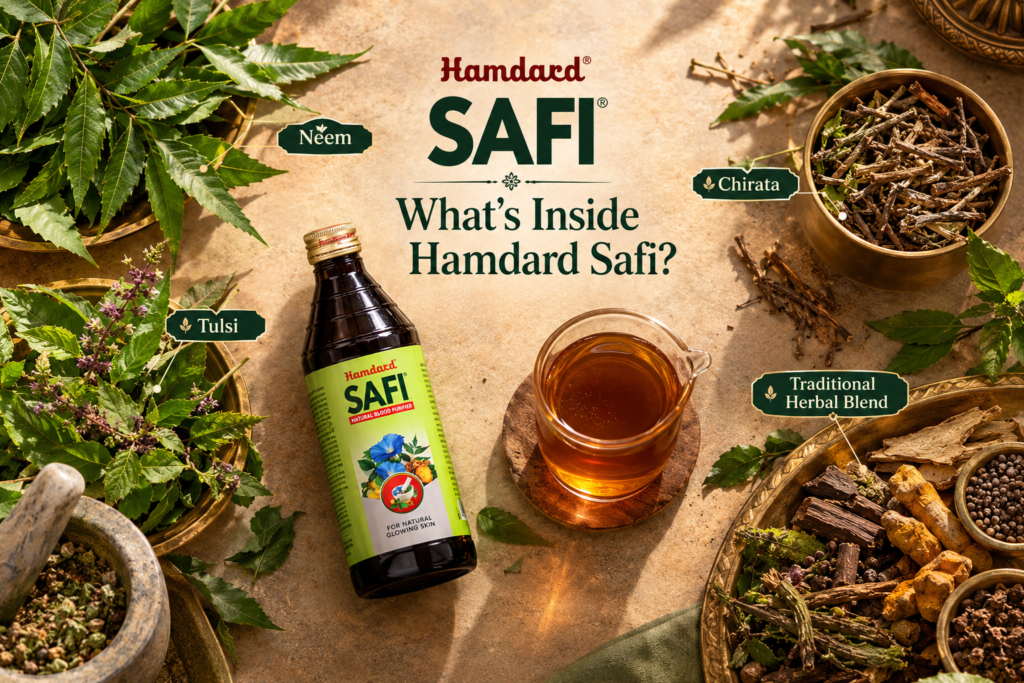
Safi is a multi-herbal formulation rather than a product based on one active herb.
Current Indian product listings identify ingredients including:
- Sana/Senna
- Sheesham
- Sandal
- Gilo
- Harar
- Chiraita
- Neem
- Tulsi
- Kasni
- Unnab
- Revand Chini
- Brahmi
- Keekar
- Chob Chini
- Shora Desi
The complete formulation is considerably longer, with some current listings describing a blend of numerous botanical ingredients. The exact composition should therefore be checked against the label of the pack you are purchasing, particularly because product formulations and packaging can change.
What Do Some of These Herbs Traditionally Contribute?
Sana/Senna: Traditionally used for its laxative effect and associated with bowel movement.
Neem: Has a long history in Indian traditional wellness practices and is frequently associated with skin care.
Tulsi: A familiar Indian herb traditionally used in a variety of wellness preparations.
Chiraita: Traditionally used in herbal preparations and associated with digestive and general wellness.
Sheesham and Sandal: Included in traditional formulations and commonly mentioned among Safi’s herbal ingredients.
The presence of these herbs does not automatically prove that the finished product will produce a particular skin or digestive result. The formulation should be considered as a whole.
Why Is Safi Called a “Blood Purifier”?

“Blood purifier” is probably the phrase most closely associated with Safi.
In traditional herbal-product language, the term generally refers to the idea of supporting internal cleansing and, in turn, promoting healthier-looking skin.
Modern medicine does not use “blood purification” as a general explanation for acne or everyday skin problems. The body already has organs, particularly the liver and kidneys, that perform important functions involved in processing and removing substances from the body.
Therefore, claims that Safi or another syrup can simply “remove toxins from the blood” should be treated as traditional or marketing language rather than as an established medical mechanism.
This distinction also helps avoid the common mistake of assuming that every pimple is caused by impurities in the blood.
How Should Safi Be Taken?
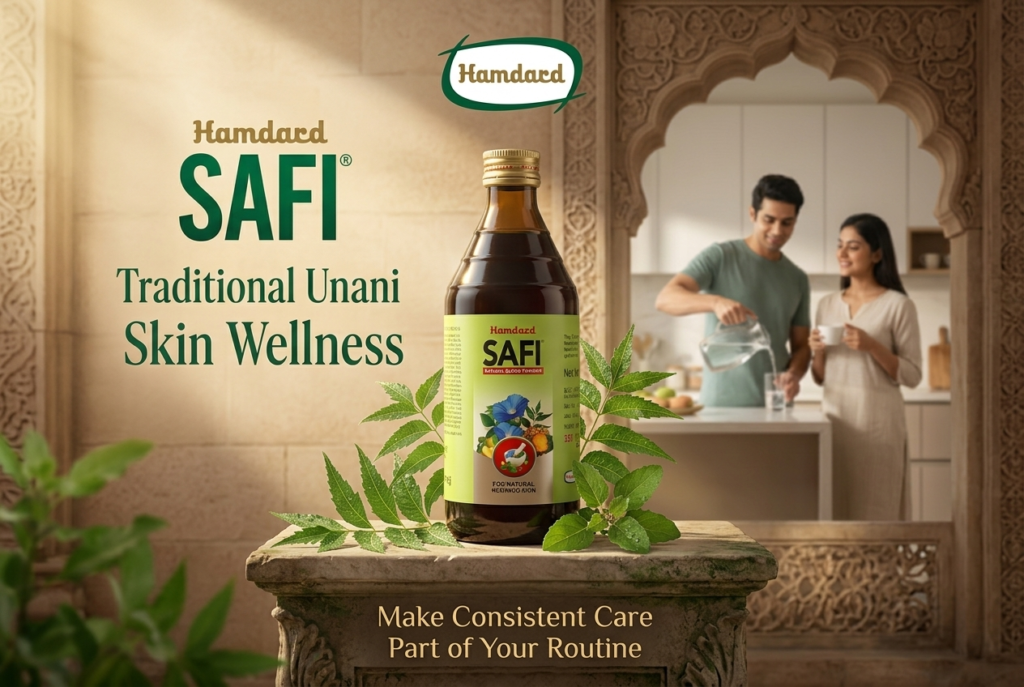
Directions can vary according to the formulation and product label, so the current packaging should be the primary reference.
Current Indian pharmacy listings commonly describe adult use around 10 ml once daily mixed with water, but consumers should follow the directions on their own pack and any advice provided by a healthcare professional.
Do not increase the quantity simply because you want quicker skin results.
If you have a medical condition, take regular medicines, are pregnant or breastfeeding, or have ongoing digestive problems, professional advice is particularly important before using an oral herbal product.
Are There Any Side Effects?
“Herbal” does not automatically mean “risk-free.”
Because Safi contains ingredients with laxative properties, excessive consumption may cause:
- Loose stools
- Diarrhoea
- Abdominal discomfort
- Changes in bowel habits
Current product information also advises caution for people with certain digestive conditions and recommends professional advice during pregnancy or breastfeeding.
If you experience an unexpected or significant reaction after taking the product, stop using it and seek appropriate medical advice.
Is Safi a Replacement for Acne Treatment?

No single herbal syrup should automatically be treated as a replacement for medical treatment.
If you have:
- Persistent acne
- Painful or deep pimples
- Frequent breakouts
- Acne that leaves scars
- Sudden unexplained skin changes
- A rash that does not improve
it is better to consult a dermatologist or other qualified healthcare professional.
A traditional product may be part of someone’s personal wellness routine, but diagnosis and treatment of an underlying skin condition are separate matters.
Final Thoughts
Hamdard Safi is a traditional Unani herbal syrup associated with skin concerns and digestive wellness, particularly pimples, skin eruptions and occasional constipation. Its “blood purifier” description comes from traditional product positioning and should not be confused with a medically established detoxification process.
Its multi-herbal formulation includes ingredients such as Sana/Senna, Neem, Tulsi, Chiraita, Sheesham and others. Because some ingredients can affect digestion, following the recommended directions matters.
Most importantly, read the current product label rather than relying on old online claims, and remember that persistent acne, unusual skin reactions or ongoing digestive problems may need professional evaluation.