
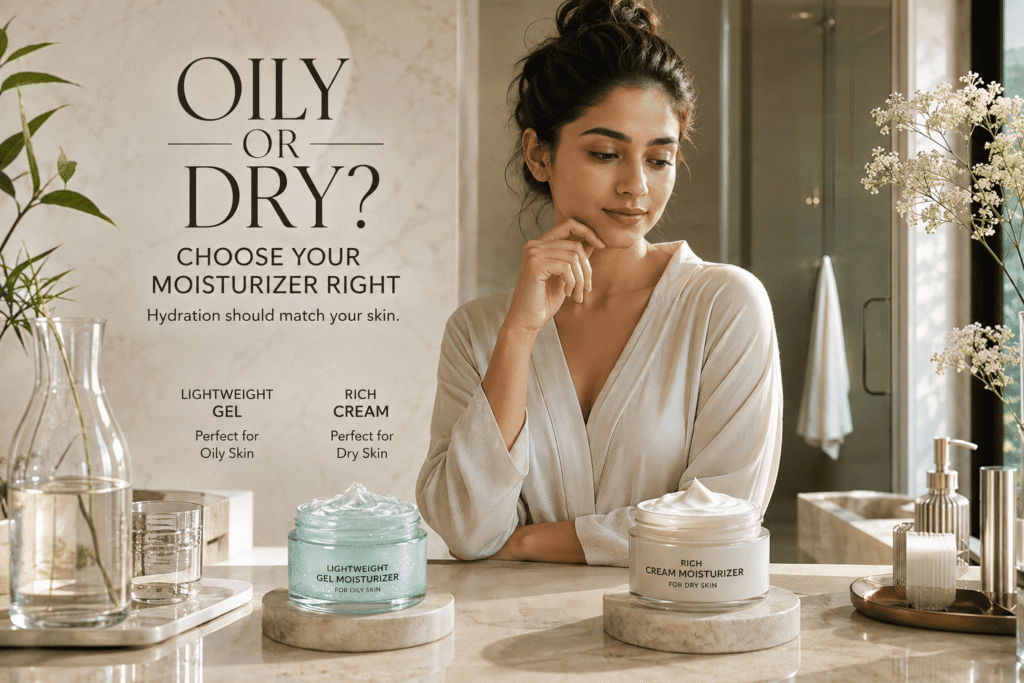

Okay so moisturizer shopping. Sounds like a five-minute task until you’re actually standing there staring at gels, creams, lotions, ten different things that all say “hydrating” on the label and somehow that word means nothing anymore.
Quick gut check though. Does your face turn into a shine machine by 2pm? A heavy cream is going to make that worse, not better — it just sits there. Does your skin feel like paper after you wash it, tight, maybe a bit flaky around the nose? A watery gel isn’t going to do much for you, you’ll be applying it every hour and still feel dry underneath.
And no, the answer isn’t skipping moisturizer. This is where people mess up, honestly, especially if your skin leans oily. Less product doesn’t mean less oil; that’s not how skin works. It still needs hydration, just a different kind than what dry skin needs.
If you’re oily, lightweight is the word to look for. Gel-based stuff, thin lotions, things that hydrate without piling more oil on top of what you’re already producing. Dry skin’s a different story — it’s not really about slapping on more moisture, it’s about ingredients that help the skin barrier actually hold onto that moisture. Because a lot of the time dryness isn’t “not enough water,” it’s a barrier that’s too weak to keep water in.
So really — check what your skin’s actually doing before you pick a bottle. That’s the whole trick, nothing more complicated than that.
Moisturizer for Oily Skin: Keep It Light but Hydrating
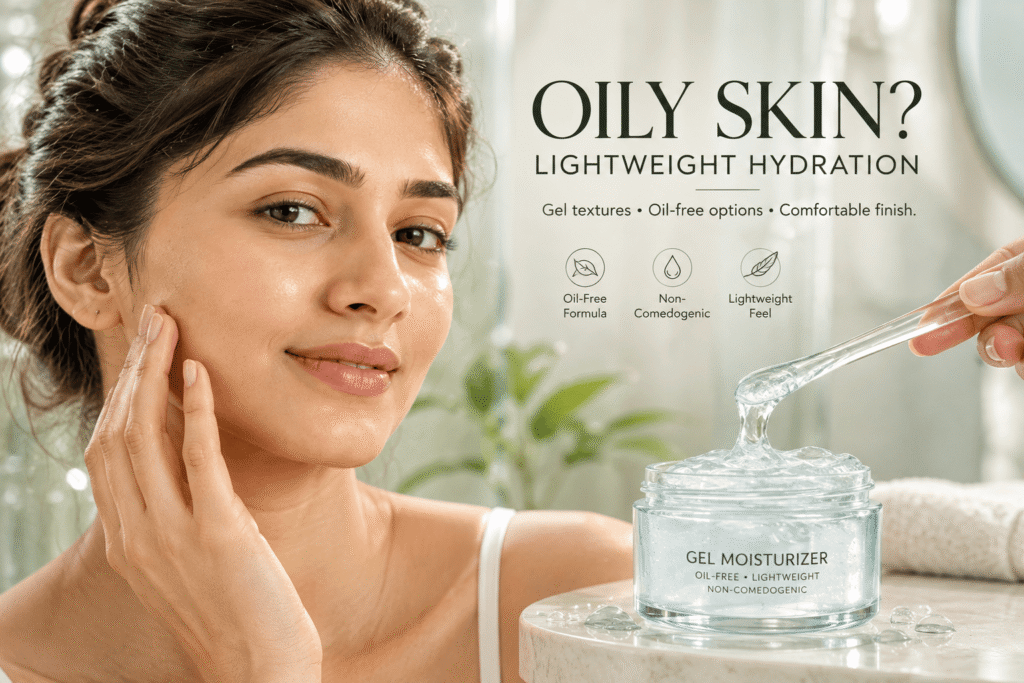
Oily skin produces more sebum, but that does not mean it does not need hydration. In fact, skipping moisturizer can leave the skin feeling uncomfortable and can make your routine harder to balance.
For oily or combination skin, look for:
- Oil-free or lightweight formulas
- Gel, gel-cream or water-based textures
- Non-comedogenic products, particularly if you are prone to clogged pores
- Fast-absorbing formulas that do not leave a heavy film
- Ingredients such as glycerin, hyaluronic acid and niacinamide
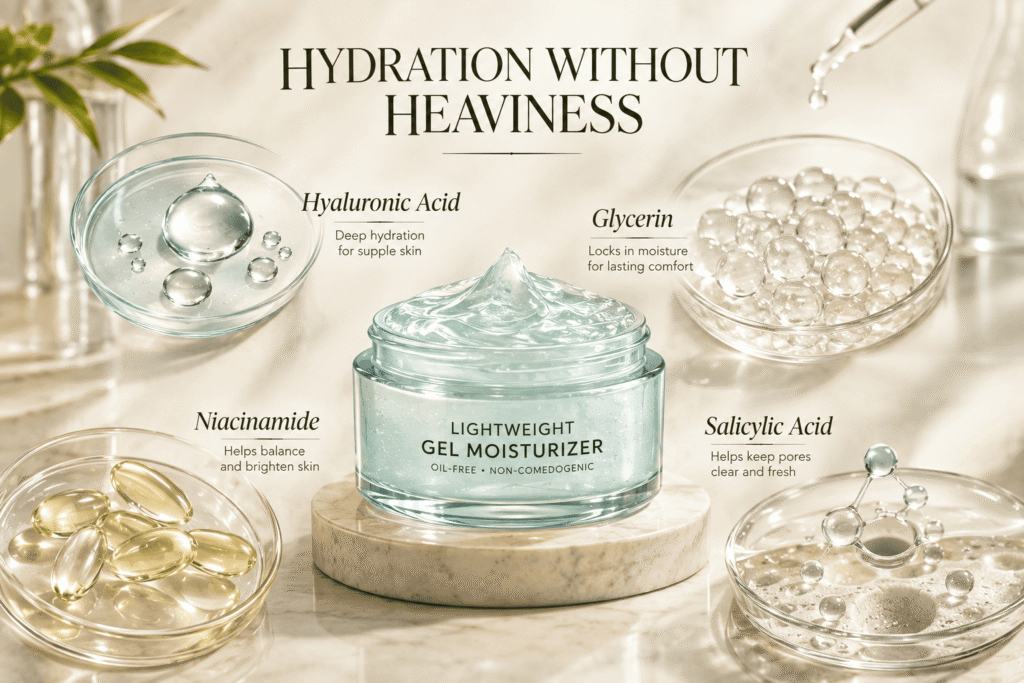
Key Ingredients for Oily Skin
Hyaluronic Acid: A humectant that helps attract and retain water, making it useful when you want hydration without a rich texture.
Glycerin: Another effective humectant that helps maintain skin hydration and is commonly found in lightweight moisturizers.
Niacinamide: Often used in skincare designed for oily or combination skin because it can support the skin barrier and help improve the appearance of excess oil over time.
Salicylic Acid: Particularly useful in products designed for blemish-prone skin. It can help exfoliate inside pores, although a moisturizer containing salicylic acid is not necessarily appropriate for everyone.
Moisturizers Worth Considering for Oily Skin
Some popular options include:
- Dot & Key Cica Oil-Free Moisturizer – A lightweight option for people who prefer a gel-like, non-heavy texture.
- Re’equil Oil Free Moisturiser – Designed for people looking for lightweight everyday hydration.
- Deconstruct Oil-Free Moisturizer – Another option to consider if you prefer a lighter skincare texture.
Why They Stand Out: The main advantage of these types of formulas is their texture. Instead of leaving oily skin feeling coated, lightweight moisturizers can provide hydration while fitting comfortably into a morning or evening routine.
What Should You Avoid If You Have Oily Skin?
There is a common misconception that every oil, silicone or rich ingredient is automatically bad for oily skin. That is not quite true.
Skin reacts differently to different formulations, and “natural” does not automatically mean non-comedogenic, while a synthetic ingredient is not automatically harmful.
Instead of avoiding an entire ingredient category, pay attention to how the complete formula feels and how your skin responds.
If you have oily or acne-prone skin, you may prefer to limit:
- Very heavy or greasy textures
- Products that consistently leave your pores feeling congested
- Strongly fragranced formulas if fragrance irritates your skin
- Layering too many rich products at the same time
The goal is comfortable hydration—not completely oil-free skin.
Moisturizer for Dry Skin: Focus on Hydration + Barrier Support
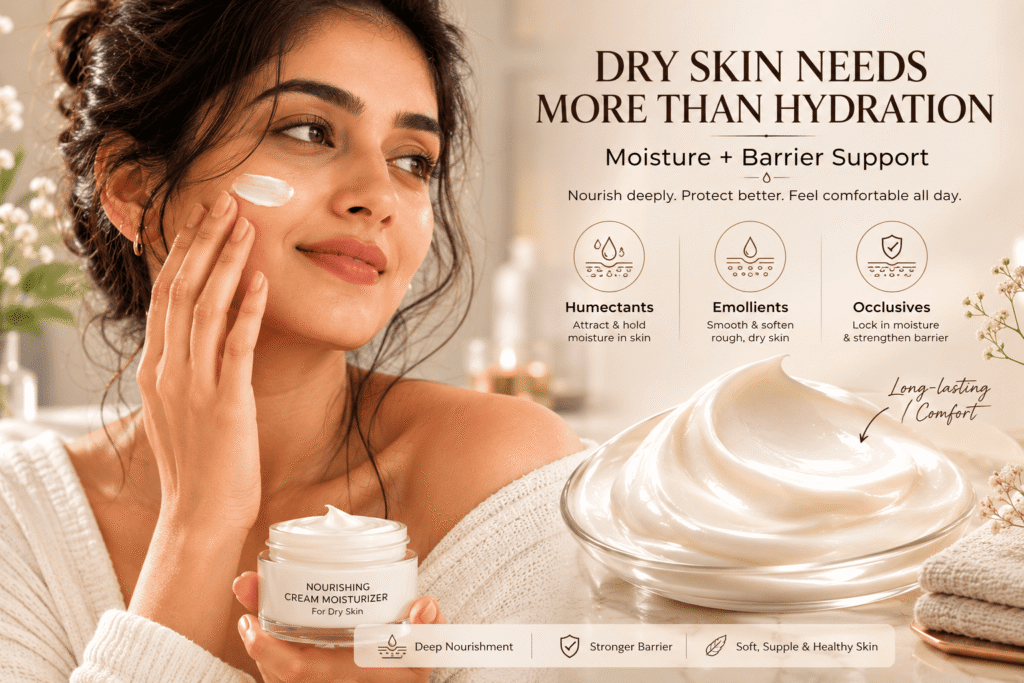
Dry skin usually needs a different approach.
If your skin feels tight after washing, develops flaky patches or looks rough and dull, a richer moisturizer may be more comfortable than a lightweight gel.
The best formulas for dry skin often combine three types of ingredients:
1. Humectants
Humectants such as glycerin and hyaluronic acid attract water and help increase hydration in the outer layers of the skin.
2. Emollients
Ingredients such as ceramides and squalane help soften the skin and improve the feel of rough or uneven texture.
3. Occlusives
Ingredients such as petrolatum and shea butter can form a protective layer that reduces water loss from the skin.
A good dry-skin moisturizer does not necessarily have to contain every ingredient listed above. What matters is finding a formula that gives your skin enough hydration and feels comfortable enough to use consistently.
Top Moisturizer Choices for Dry Skin
CeraVe Moisturizing Cream — Best for Barrier Support
CeraVe Moisturizing Cream is a popular choice for dry skin because its formula includes ceramides and hyaluronic acid. Its richer texture makes it particularly appealing when the skin feels dry or tight.
Why It Stands Out: It focuses on both hydration and skin-barrier support rather than simply providing a temporary soft feeling.
Bioderma Atoderm Crème — Great for Very Dry-Feeling Skin
Bioderma Atoderm Crème is designed for dry and sensitive-feeling skin and offers a nourishing texture for people who prefer richer moisturizers.
Why It Stands Out: It is a practical option when lightweight lotions do not feel sufficiently moisturizing.
Neutrogena Hydro Boost — Lightweight Hydration
If you have dry skin but dislike thick creams, a lightweight gel moisturizer such as Neutrogena Hydro Boost may be more appealing.
Why It Stands Out: Its water-gel style texture provides a lighter alternative to traditional rich creams.
Cetaphil Moisturising Cream — Simple Everyday Option
Cetaphil Moisturising Cream is another well-known option for people who want a richer everyday moisturizer.
Why It Stands Out: Its cream texture makes it useful for dry-feeling areas that need more substantial moisturization.
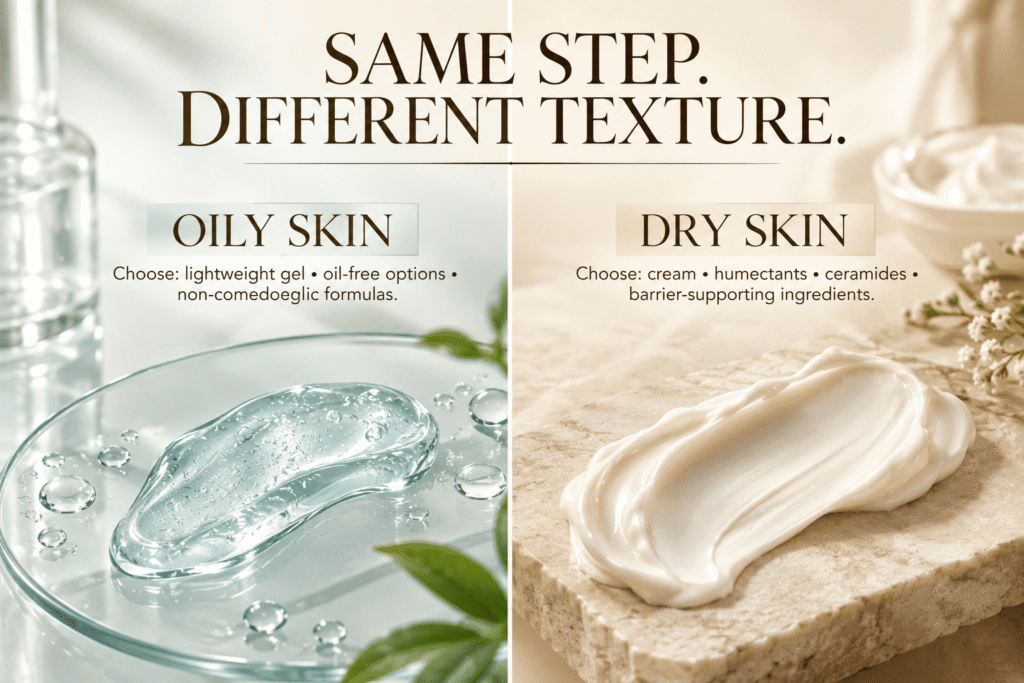
Oily Skin vs Dry Skin: What Is the Difference?
| Feature | Oily Skin | Dry Skin |
|---|---|---|
| Preferred texture | Gel or lightweight lotion | Cream or rich lotion |
| Main goal | Hydration without heaviness | Hydration + barrier support |
| Useful ingredients | Glycerin, HA, niacinamide | Glycerin, HA, ceramides, squalane |
| What may feel uncomfortable | Heavy, greasy creams | Very lightweight gels |
| Product priority | Lightweight and comfortable | Nourishing and protective |
Remember that dehydrated skin and dry skin are not exactly the same thing. Skin can be oily and still lack water. That is one reason a lightweight hydrating moisturizer can be useful even when your skin produces plenty of oil.
How to Pick the Right Moisturizer
Instead of choosing a product simply because it is popular, ask yourself these five questions:
- Does my skin feel oily, dry or both?
- Do I prefer a gel, lotion or cream texture?
- Am I prone to clogged pores or breakouts?
- Does my skin become tight or flaky after cleansing?
- Are there ingredients or fragrances that I already know irritate my skin?
These questions can narrow down your options much faster than choosing a moisturizer based only on packaging or online popularity.
When to Apply Moisturizer
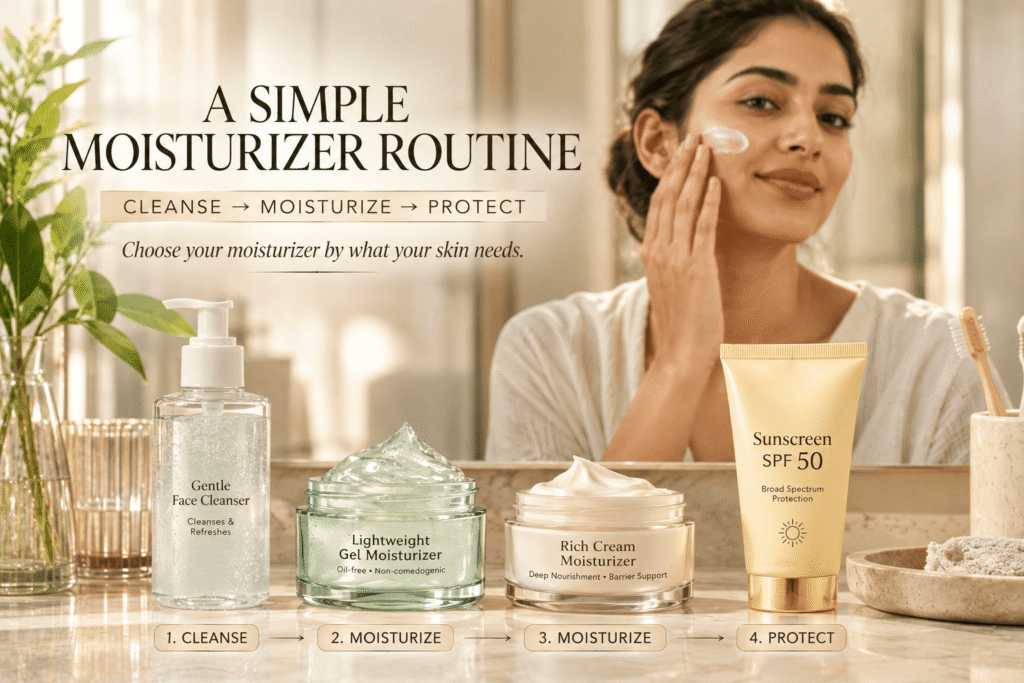
Moisturizer can be used after cleansing, and applying it while the skin is slightly damp can help make the skin feel more hydrated.
A simple routine can look like:
Morning: Cleanser → Moisturizer → Sunscreen
Evening: Cleanser → Treatment, if needed → Moisturizer
If you are using an exfoliating or acne-focused product, introduce it gradually and avoid adding several potentially irritating products at once.
The Bottom Line
There’s no magic bottle that works for every face. Sorry, wish there was.
If you’re oily, go lightweight — an oil-free or non-comedogenic gel or lotion that hydrates without that greasy film sitting on top. If you’re dry, you actually want something richer, a mix of humectants, emollients and stuff that supports your skin barrier, not just water content dressed up in fancy packaging.
Honestly, the “best” moisturizer is just whichever one fits your skin, feels good on, and you’ll actually use every single day without dreading it. That last part matters more than people give it credit for — the fanciest formula in the world is useless if it sits in your cabinet unused.
Stuck choosing between two products? Skip the marketing copy entirely. Look at the texture, check the ingredient list, and pay attention to how your skin actually behaves after you use it for a few days. That tells you way more than any label ever will.


It helps that the scope is kept narrow. The simplest explanation is often the correct one here.