
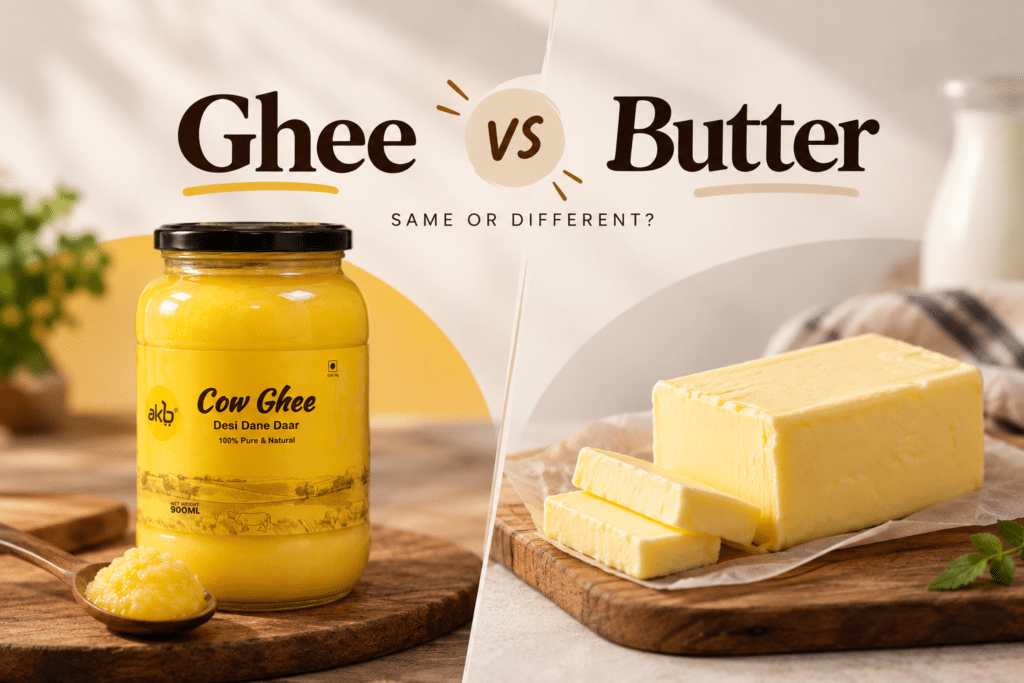

Butter and ghee are the most common fats in dairy that have been used since long ago. While both add richness, flavor, and texture to the dish, there is a lot of difference between them in terms of preparation, cooking, and composition.
However, the first question that everyone has in mind is whether ghee is healthier than butter.
And the answer is not black and white, because both products can be used in moderation in any well-balanced meal, but there are certain benefits of using ghee rather than butter.
Difference Between Ghee and Butter
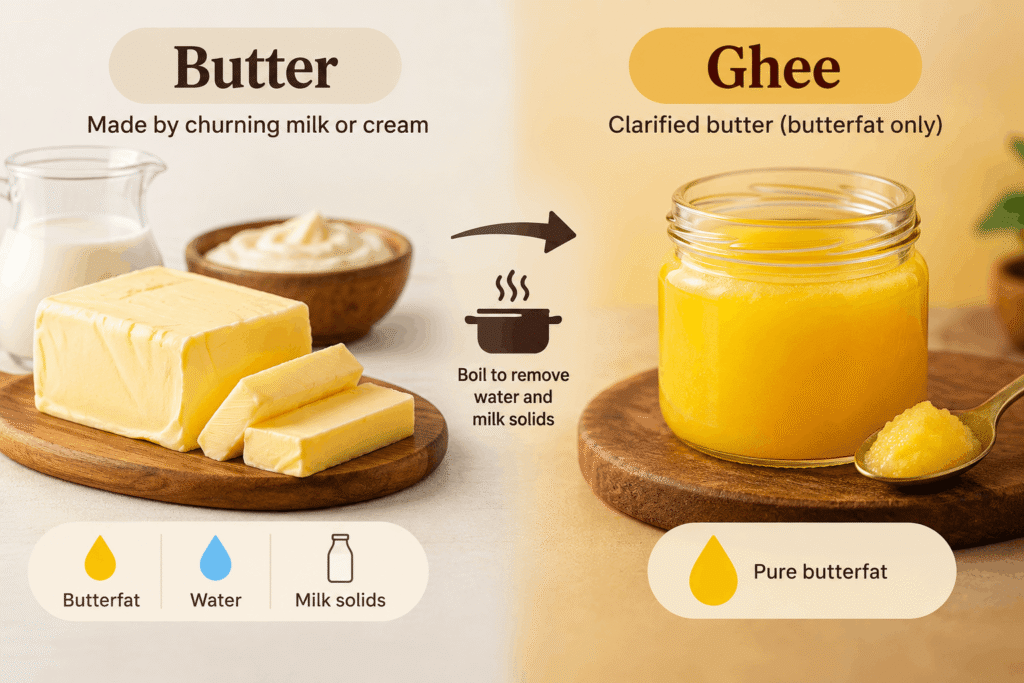
Butter is extracted by churning milk or cream and is made up of butterfat, water, and milk solids. Ghee is manufactured from butter by boiling it to remove water and milk solids and keep butterfat only.
This simple difference gives ghee its characteristic golden color, rich aroma, and nutty flavor.
Key fact: Ghee is essentially clarified butter with most of the water and milk solids removed.
Ghee vs Butter: Which One Should You Cook With?
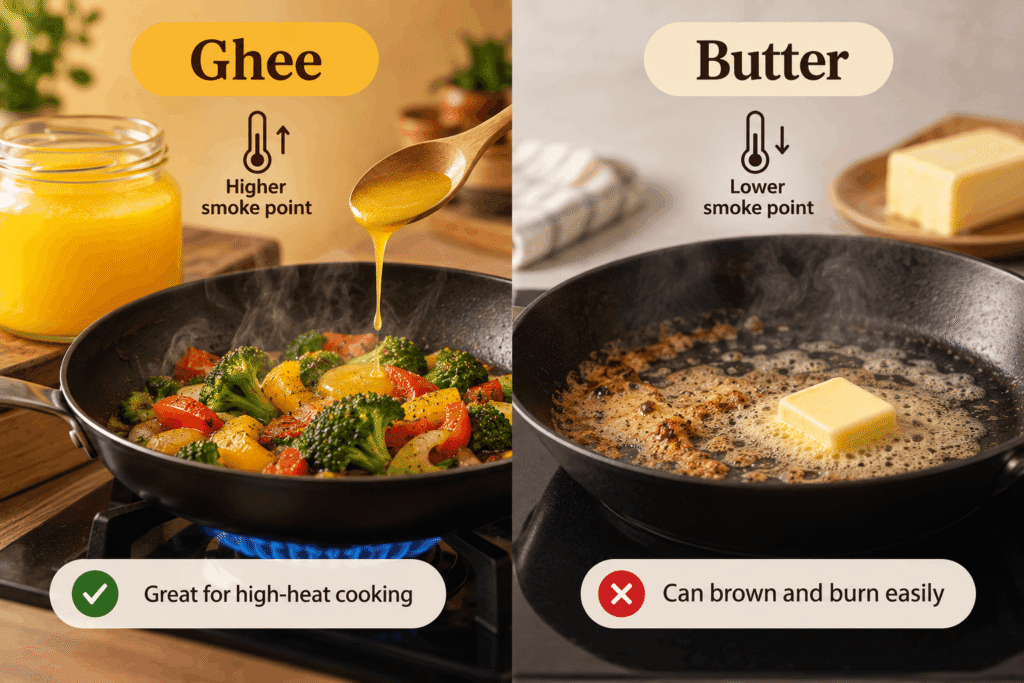
The most outstanding aspect of using ghee lies in its ability to perform well when cooking with high heat.
Ghee has a higher smoking point than butter, hence its easy use in high temperature cooking techniques such as sautéing, frying, roasting, among others. Butter tends to brown and burn easily owing to its milk solids.
Since ghee is traditionally used for tadka, frying, roasting, and sautéing in Indian cuisine, it can be used as a good cooking oil.
On the other hand, butter serves a purpose of its own in the kitchen.
Is Ghee Better at Helping Digestion?
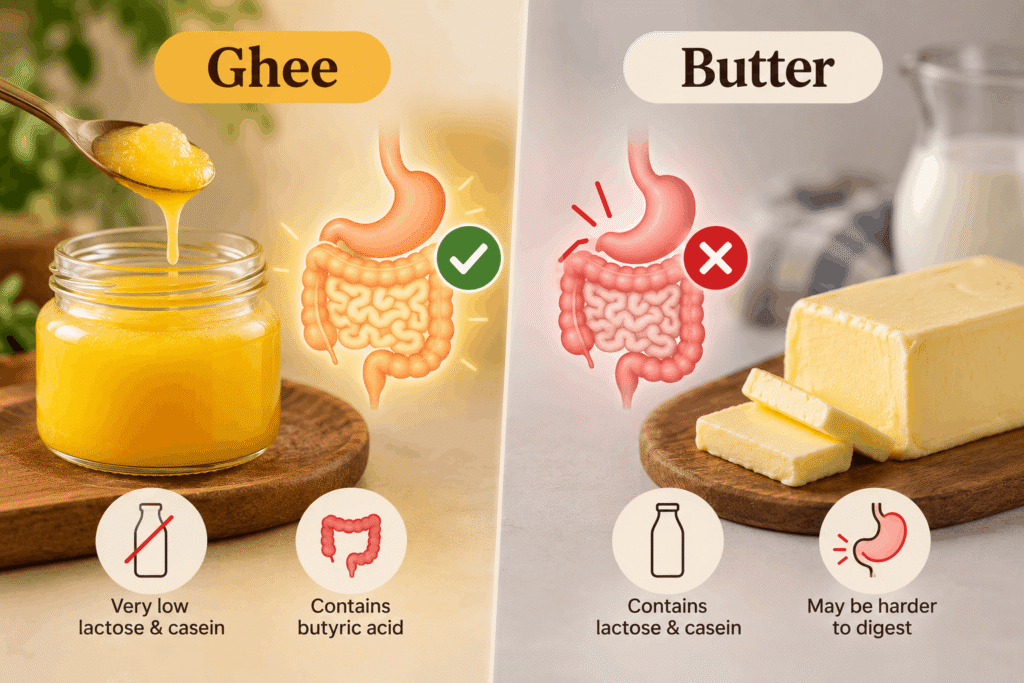
A significant difference lies in the presence of milk compounds after the processing process.
The amount of lactose and casein contained in ghee is extremely low compared to that found in butter. So, people who suffer from lactose intolerance can consume it easily. However, since it still belongs to dairy foods, one cannot consider it to be dairy-free just because of this factor. People who have an allergy to milk proteins need to exercise caution.
However, ghee has butyric acid, which is a short-chain fatty acid that plays an important role in maintaining the health of the colon lining cells.
Ghee and Butter: And the Nutritional Side of It?
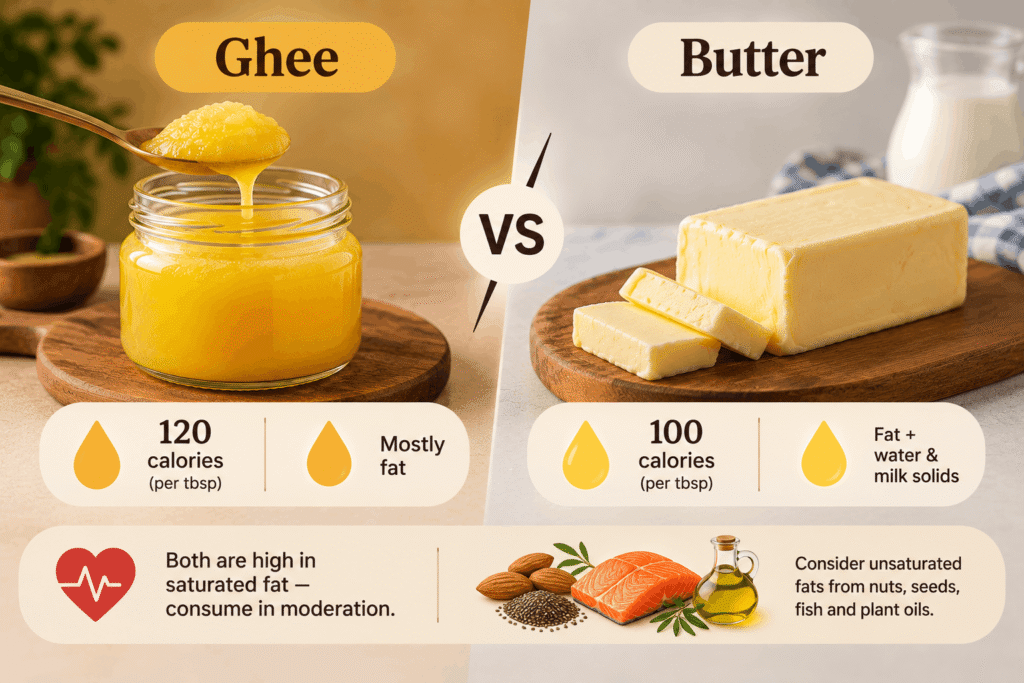
Both ghee and butter are high in fats and contribute to calorie intake. Ghee is more condensed because it does not contain water and milk solids.
A single tablespoon of ghee contains 120 calories, whereas a tablespoon of butter has 100 calories.
Both have saturated fat, thus quantity becomes an issue.
It is significant in this regard since the exchange of saturated fats with unsaturated fats from food like nuts, seeds, fish, and oils from plants is considered a healthier option.
Vitamin Content of Ghee
Both ghee and butter contain vitamin content in small quantities. Ghee being concentrated butterfat contains vitamins in small quantities like vitamin A, E, and K.
However, ghee must not be considered as an important source of vitamins. The most important role of ghee in the diet is that of fat for cooking purposes.
Ghee vs Butter: A Quick Comparison
| Feature | Ghee | Butter |
|---|---|---|
| Preparation | Clarified butter | Made from milk/cream |
| Milk solids | Mostly removed | Present |
| Lactose | Very low | Higher than ghee |
| High-heat cooking | Better suited | Can burn more easily |
| Calories | Slightly higher | Slightly lower |
| Saturated fat | High | High |
| Flavor | Rich, nutty | Creamy, milky |
| Best uses | Frying, roasting, tadka, sautéing | Baking, spreading, sauces |
Thus, Which is Healthier—Ghee or Butter?
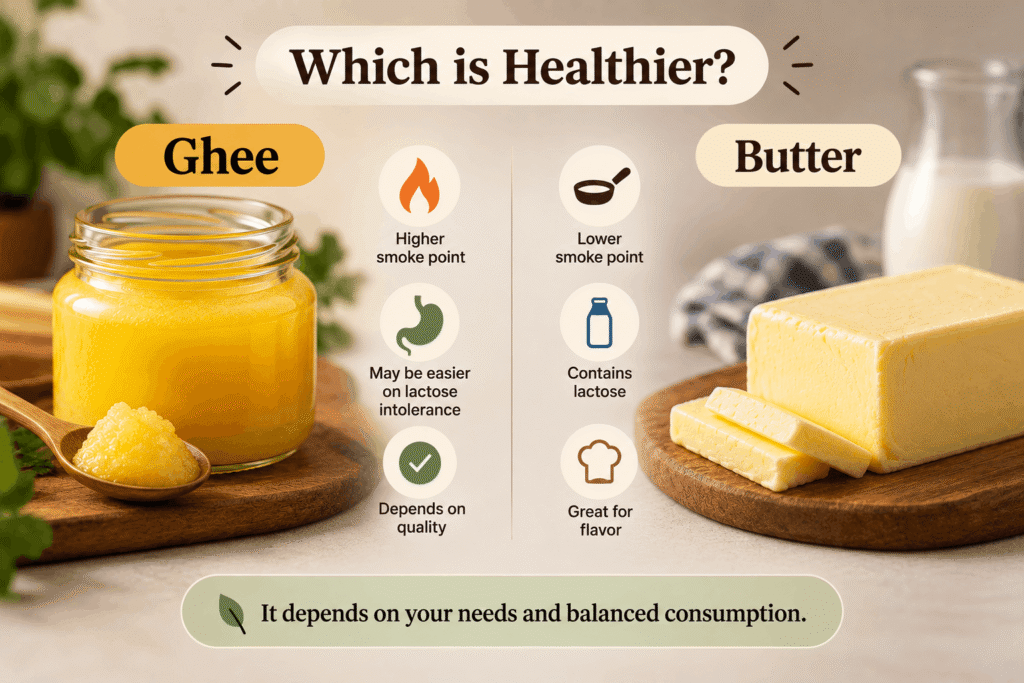
It really depends on how you define “healthier.”
If you need something that has a high cooking temperature, then ghee is going to be helpful for you. If you are having issues with lactose, then you can take comfort in the fact that ghee may be easier for you than butter although it is not dairy-free.
But there are some things that people need to understand regarding ghee; this does not mean that it is a super food and is going to be healthier than butter.
For general cooking purposes, it is also important that the ghee you select is of good quality since this is what will add flavor and richness to your food.
Final Words
Both butter and ghee should be present in the ideal kitchen. Butter is used where there is a requirement for a smooth texture and a heavy dairy flavor, while ghee is ideal to cook in at very high temperatures owing to its great taste and low milk content.
But is ghee better than butter? Instead of asking which of the two is better, go by your culinary requirements, preferences, and quantity consumed.
Ghee can make for an excellent inclusion in a balanced diet in reasonable amounts.



The example is small enough to follow and large enough to matter. Testing with something small first is the practical step people skip.