


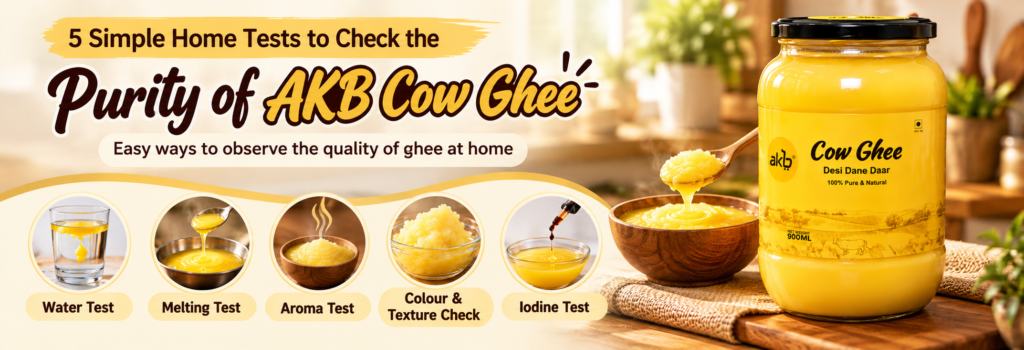
Ghee has always been an important part of Indian kitchens. From adding a spoonful to dal and roti to preparing parathas, sweets and traditional dishes, akb cow ghee adds a rich aroma and flavour to everyday meals. But with different brands and varieties available in the market, many people wonder how to identify good-quality ghee.
If you have AKB Cow Ghee at home, you can try a few simple checks to observe its aroma, texture, colour and melting behaviour. These home checks can help you understand the basic characteristics of ghee, although they cannot replace proper laboratory testing.
Water Test
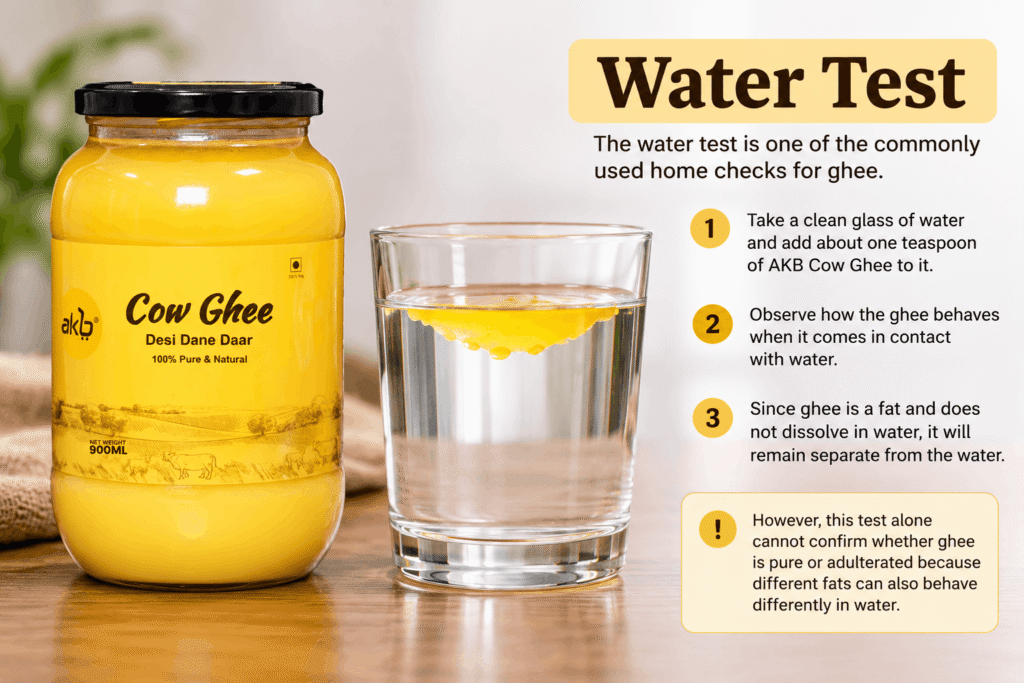
The water test is one of the commonly used home checks for ghee.
Take a clean glass of water and add about one teaspoon of AKB Cow Ghee to it. Observe how the ghee behaves when it comes in contact with water.
Since ghee is a fat and does not dissolve in water, it will remain separate from the water. However, this test alone cannot confirm whether ghee is pure or adulterated because different fats can also behave differently in water.
Melting Test
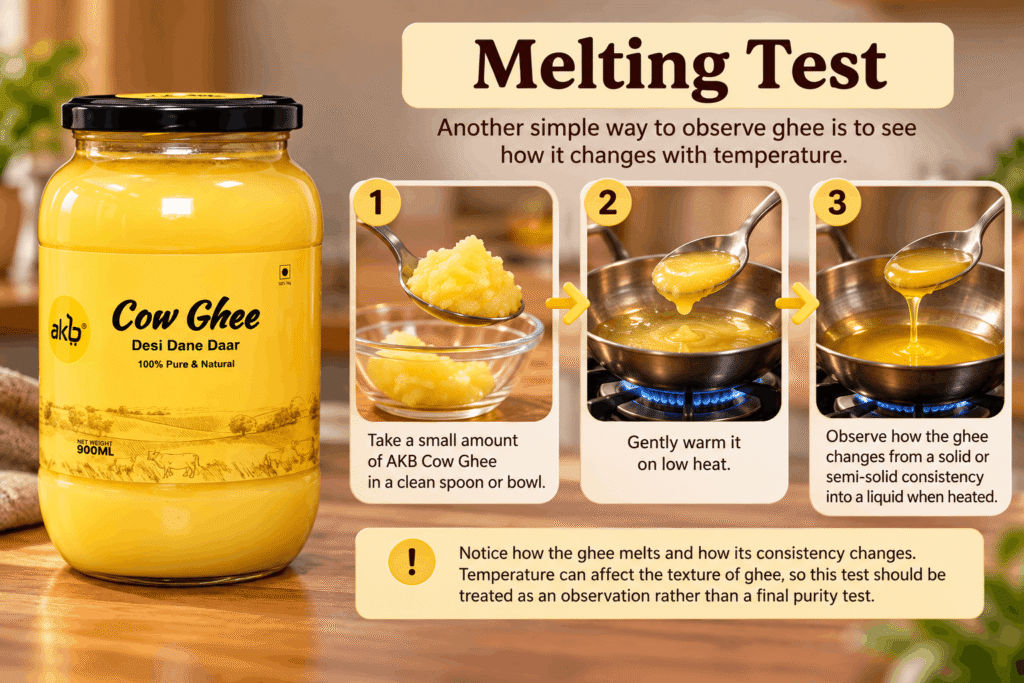
Another simple way to observe ghee is to see how it changes with temperature.
Take a small amount of AKB Cow Ghee in a clean spoon or bowl and gently warm it. Ghee naturally changes from a solid or semi-solid consistency into a liquid when heated.
Notice how the ghee melts and how its consistency changes. Temperature can affect the texture of ghee, so this test should be treated as an observation rather than a final purity test.
Aroma Test
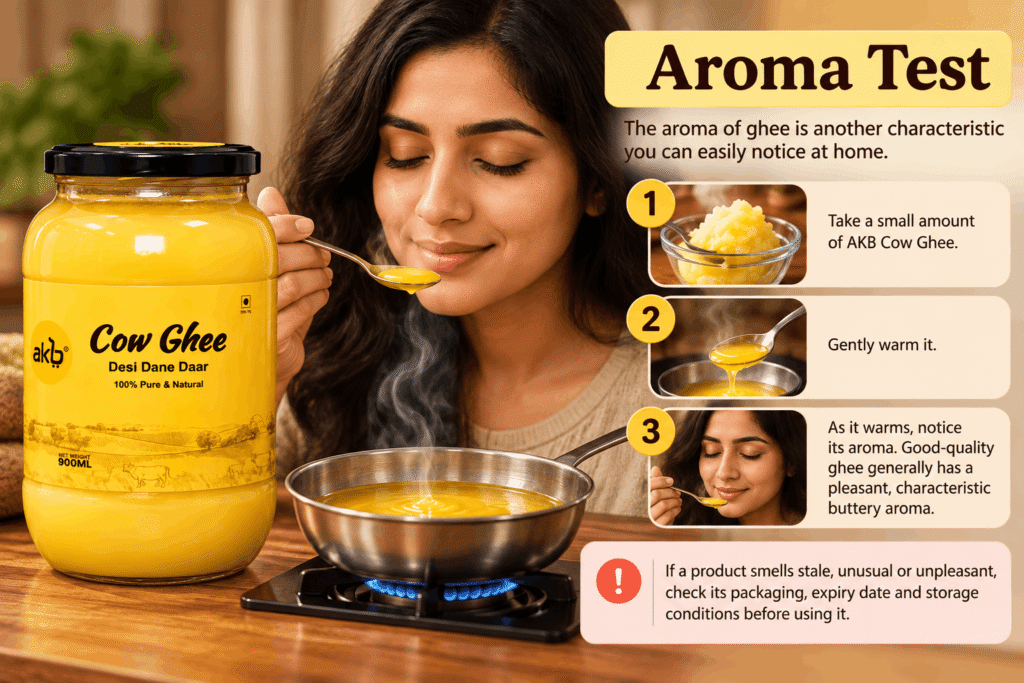
The aroma of ghee is another characteristic you can easily notice at home.
Take a small amount of AKB Cow Ghee and gently warm it. As it warms, notice its aroma. Good-quality ghee generally has a pleasant, characteristic buttery aroma.
If a product smells stale, unusual or unpleasant, check its packaging, expiry date and storage conditions before using it.
Check the Colour and Texture
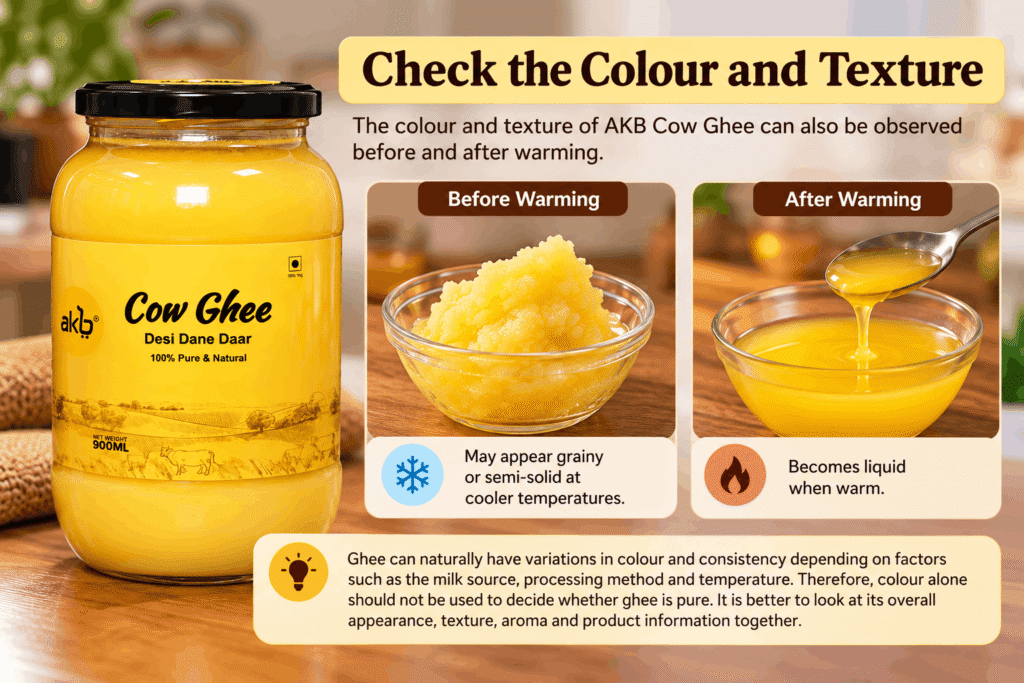
The colour and texture of AKB Cow Ghee can also be observed before and after warming.
Ghee can naturally have variations in colour and consistency depending on factors such as the milk source, processing method and temperature. It may appear grainy or semi-solid at cooler temperatures and become liquid when warm.
Therefore, colour alone should not be used to decide whether ghee is pure. It is better to look at its overall appearance, texture, aroma and product information together.
Iodine Test
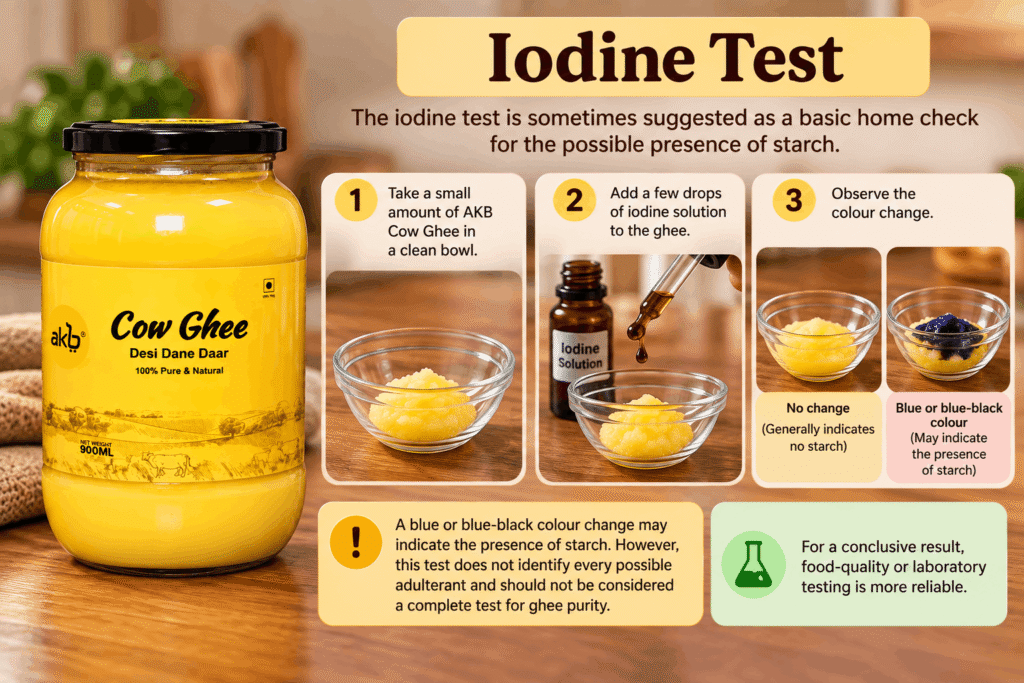
The iodine test is sometimes suggested as a basic home check for the possible presence of starch.
A small amount of ghee can be tested with iodine solution. A blue or blue-black colour change may indicate the presence of starch. However, this test does not identify every possible adulterant and should not be considered a complete test for ghee purity.
For a conclusive result, food-quality or laboratory testing is more reliable.
Reasons to Buy AKB Cow Ghee
When purchasing ghee for regular consumption, it is imperative that you buy a product which is manufactured by a reliable company and read its details thoroughly.
The uses of AKB Cow Ghee include a number of dishes such as dal, rotis, parathas and sweets along with other Indian cuisine. Proper storage of the product will ensure its quality and taste as well.
Final Remarks
Testing the quality of ghee in the comfort of your own home could be an easy means of assessing its smell, texture, color, and melting characteristics. While tests like the water test, melting test, and iodine test might yield some basic information, none of the methods can serve as a conclusive evidence for the purity of ghee.
The only way to ensure 100% purity is to use the right package of ghee from the right source.