

What is the best pressure cooker for my kitchen? This is a question we all ponder at some point or another. Are you setting up a new kitchen, replacing an old pressure cooker, or looking for something better, something more reliable, and above all, something much safer?
If you walk into any store selling kitchen utensils, you will find rows and rows of pressure cookers. They are of different sizes, different heights, different materials, and different styles. To many of us, a pressure cooker is more than just another kitchen utensil. It is the center of all kitchen activities. From making soft dal and fluffy rice to making quick rajma for a busy weeknight dinner, it is all about the pressure cooker. Every kitchen in India needs a pressure cooker. It is brewing chai in the morning when the pressure cooker makes its first whistle. It is brewing chai when lunch is already being prepared in the pressure cooker. The pressure cooker is an indispensable part of all kitchen activities.
But do we really need to know how we can select the best pressure cooker for our kitchen, or is it all about common sense?
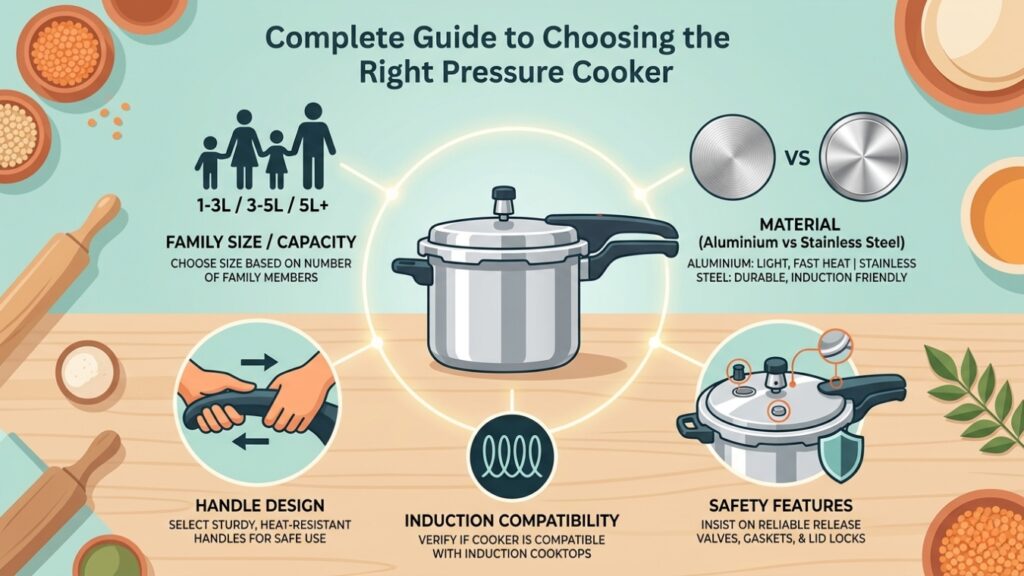
1. Start with the Right Size for Your Family
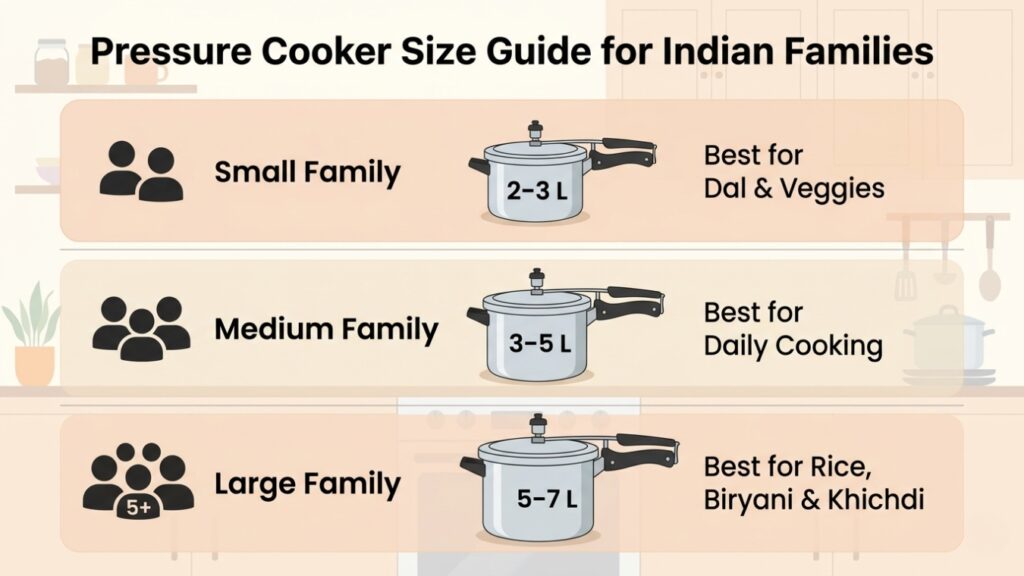
The first thing you should consider is the capacity. Pressure cookers come in different capacities, and if you end up with the wrong capacity cooker for your family’s size, you may find that it’s a hassle to cook.
Here’s a simple guide to help you choose the best pressure cooker for your family:
- 1-2 persons: 2-3 liter capacity cooker
- 3-4 persons: 3-5 liter capacity cooker
- 5 or more persons: 5-7 liter capacity cooker
Indian families often recommend that you have a smaller capacity cooker for making dal or veggies and a bigger-capacity cooker for making rice or khichdi.
If you’re a frequent entertainer in your home and often have dishes like chole, rajma, or biryani being made in your kitchen for your guests, then a slightly bigger capacity cooker is always a good idea. Think of it like buying a kadhai for your cooking—having a little extra space is always a good idea!
2. Choose the Right Material: Aluminium vs Stainless Steel
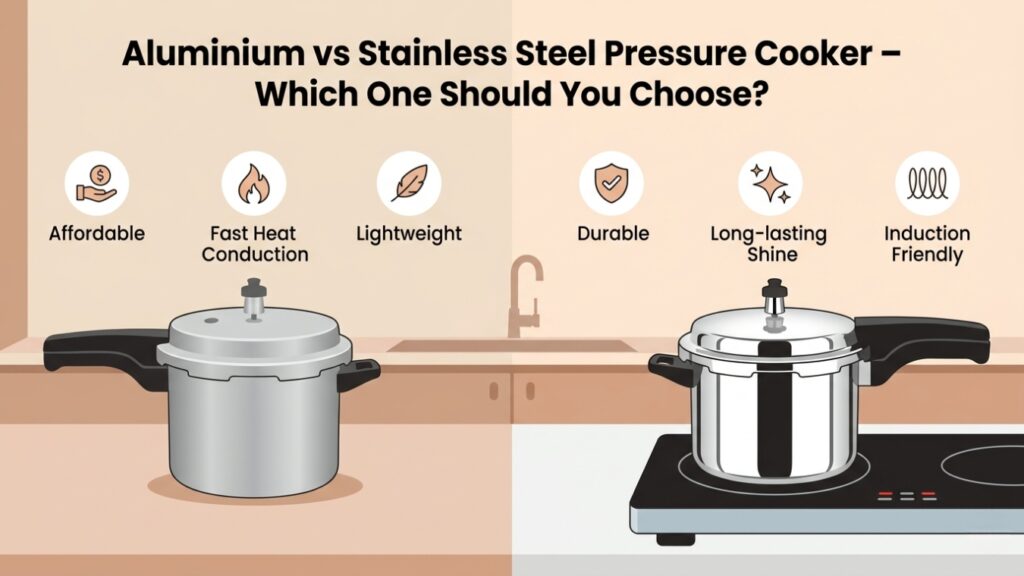
The type of material used in the pressure cookers can also be a factor in cooking, durability, and maintenance.
Aluminium Pressure Cookers
Aluminum pressure cookers are extremely common in most Indian homes.
Reasons why people prefer using them:
- Affordable
- Fast heat conduction
- Light in weight
However, these cookers can get discolored over a period of time and require a little extra maintenance.
Stainless Steel Pressure Cookers
Stainless steel pressure cookers are becoming increasingly popular in today’s kitchens.
Reasons why people prefer using them:
- Sturdy and long-lasting
- Will look new for years
- Suitable for induction cooking
Most people prefer using stainless steel pressure cookers because they are safer and feel stronger.
If you are already using steel utensils in your kitchen, a stainless steel pressure cooker will fit in well with your existing utensils.
3. Check Safety Features Carefully
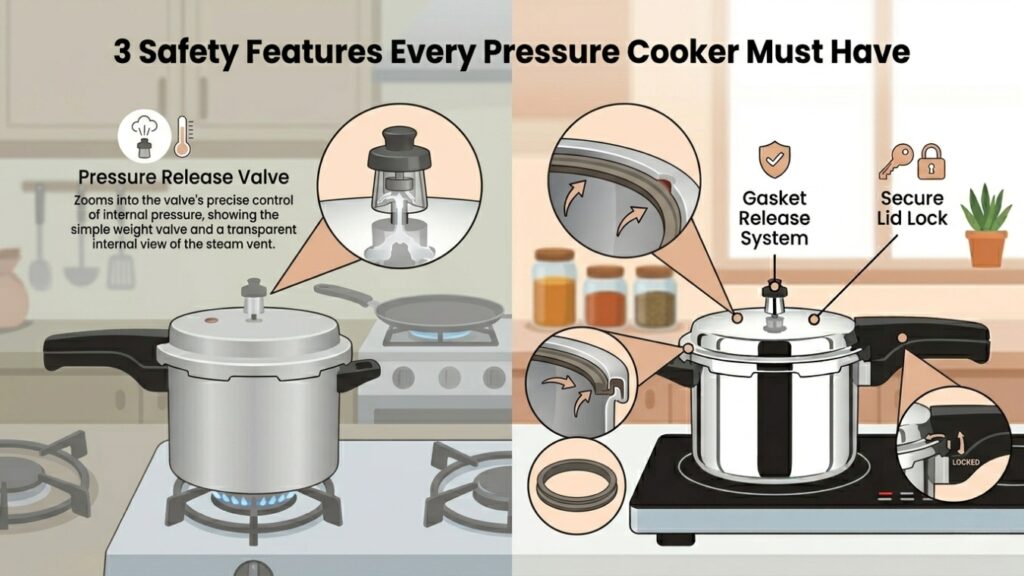
Pressure cookers today are much safer compared to old models. However, it is still important to check the following:
- Pressure release valve
- Gasket release system
- Strong lid locking mechanism
These features are important as they allow the pressure to release safely in case of a mishap.
In most Indian homes, pressure cookers are used every day. Hence, it is important to look at the product rather than its design.
A reliable pressure cooker is a must as it gives peace of mind, especially while making dal as it tends to foam.
4. Handle Design Matters More Than You Think
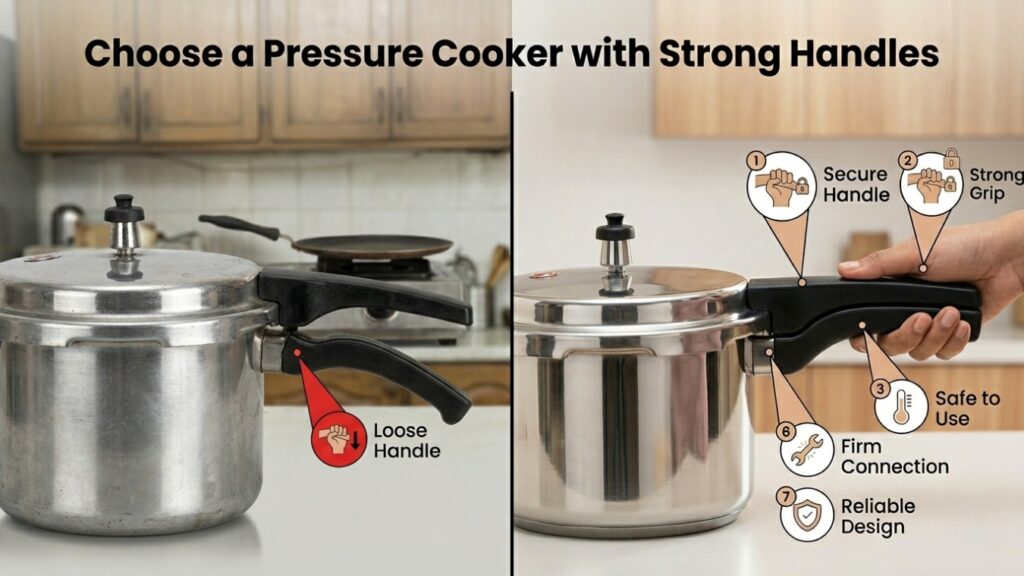
It might sound like a small detail, but comfortable handles make cooking easier.
A good handle should:
- Be heat-resistant
- Be well-attached
- Be easy to grip
If the handle is loose, it can be annoying when you are using it for everyday cooking.
Also, it is important to ensure that the cooker lid opens easily. Some have outer lids, and some have inner lids.
Many home cooks who are experienced prefer inner lid cookers because they feel secure under pressure.
5. Induction Compatibility for Modern Kitchens
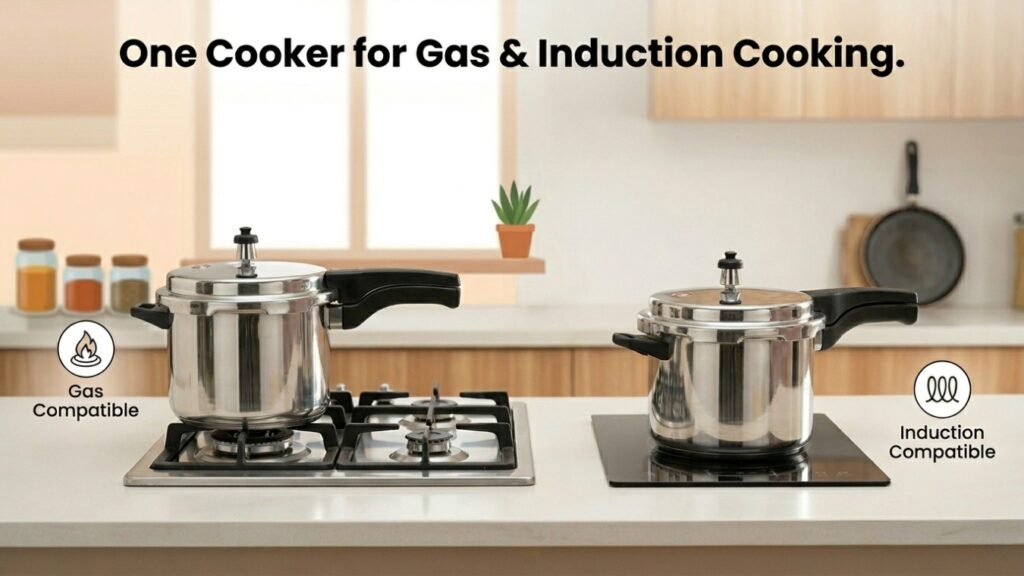
More and more Indian homes are using induction and gas stoves together.
If your kitchen uses or could potentially use induction in the future, it is best to buy a cooker that is induction compatible.
Cookers that are induction compatible have:
- A thicker base
- Better heat distribution
- Longer durability
It is a small feature, but it makes the product more versatile.
6. Weight and Base Thickness
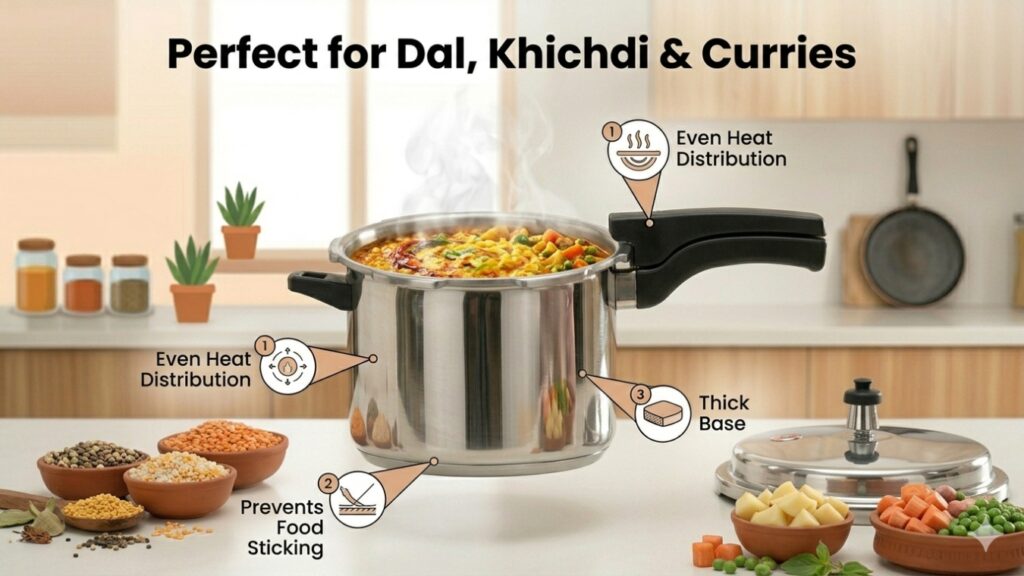
A good pressure cooker should be substantial, not heavy.
Base thickness is also important as it impacts:
- Heat distribution
- Consistency in cooking
- Preventing food from sticking to the base
A thicker base can be especially useful for cooking:
- Dal Tadka
- Khichdi
- Halwa
- Vegetable Curries
Food cooks more evenly and requires less stirring.
Why a Good Pressure Cooker Still Stands Out
In today’s world of kitchen gadgets and gizmos, there is still no denying the fact that a pressure cooker is one of the most trusted kitchen tools in Indian cuisine.
But why is this so?
The fact of the matter is pressure cooking allows for quick cooking of food without losing out on flavor. Be it dal, rajma, or vegetables, they cook to perfection.
Indian cuisine has been relying on pressure cooking for decades. Our parents and grandparents used this method of cooking not just for convenience but also for saving on time and fuel.
Today’s pressure cookers have simply made this process safer and easier.
In fact, for many of us, the pressure cooker whistle is almost akin to a kitchen timer, signaling to everyone in the house that lunch is almost ready. 🔥🥣
Conclusion
Selecting the best pressure cooker for your kitchen does not have to be complicated. The key is to look for the essentials: the right size for the task, robust build, safety, and ergonomics.
A good pressure cooker becomes an extension of your daily life. It cooks weeknight dinners, lazy Sunday lunches, and even festival preparations without complaint.
If your existing pressure cooker is no longer reliable or you’re starting a new kitchen from scratch, take a few minutes to select the right one. It will last you for years—and likely whistle thousands of times along the way.
Sometimes the most basic tools can have the greatest impact.