
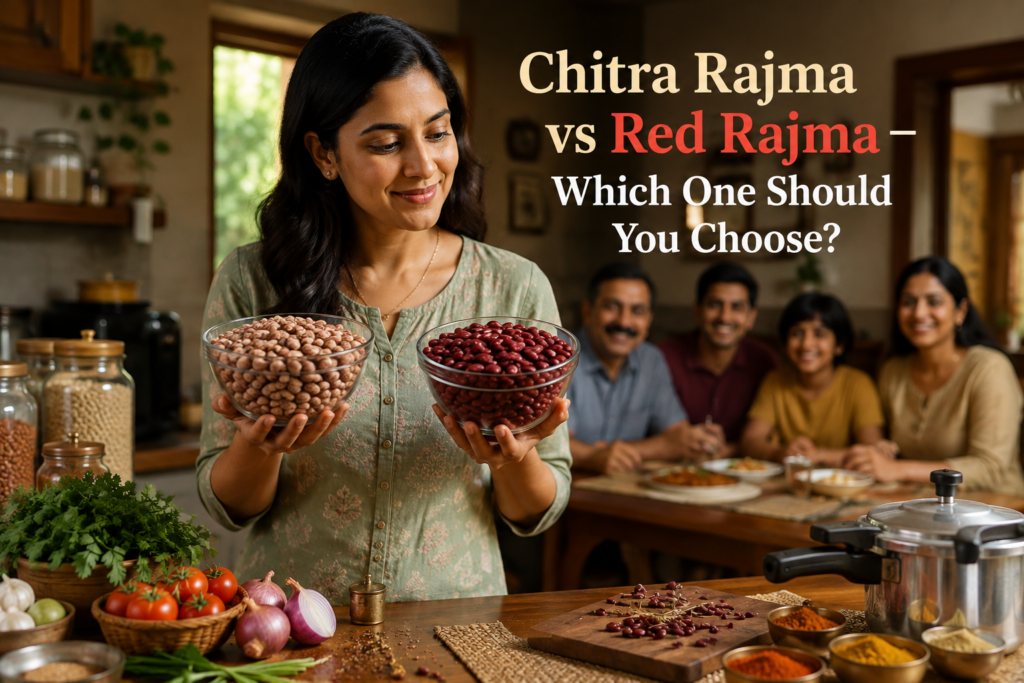

Rajma is one of those comfort foods that instantly reminds many of home. Whether it’s a Sunday lunch with steaming rice or a hearty bowl of rajma curry after a long day, kidney beans have earned a permanent place in Indian kitchens. But when you visit a grocery store or shop online, you might notice two popular varieties— Chitra Rajma and Red Rajma.
They may look similar at first glance, but they differ in appearance, taste, texture, cooking time, and even the dishes they’re best suited for.
So, Chitra Rajma vs Red Rajma—which one should you choose?
Let’s compare them side by side to help you make the right choice for your family and cooking style.
What is Chitra Rajma?
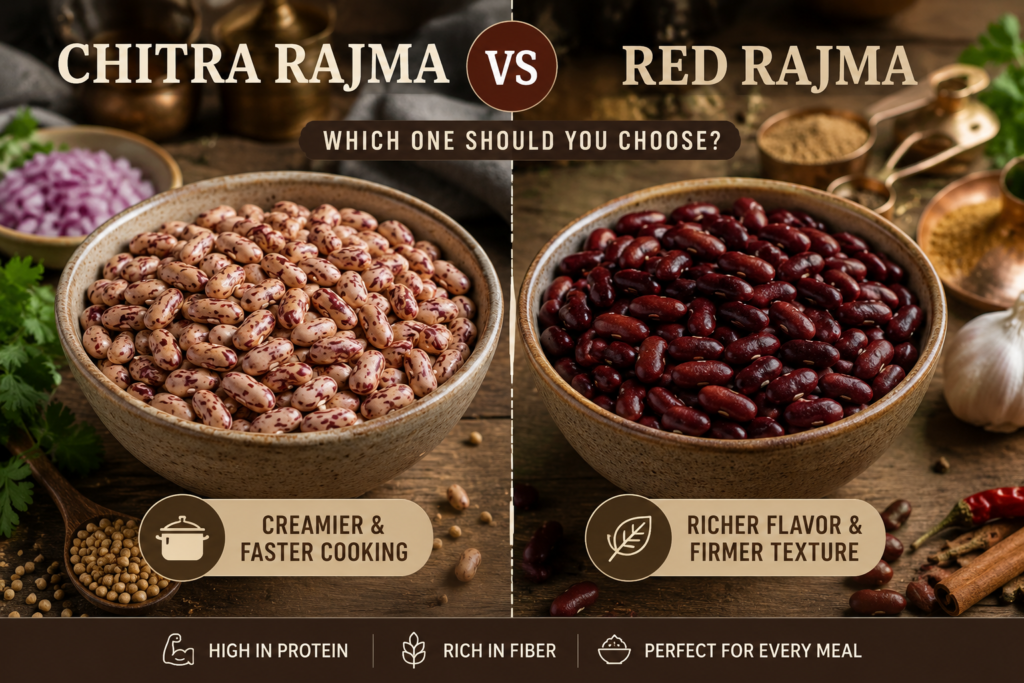
Chitra Rajma is easily recognized by its cream or light beige colour with reddish-brown speckles. It has a thinner skin than many other rajma varieties and becomes soft quickly after cooking.
It is widely preferred in North Indian households because it cooks faster and develops a smooth, creamy consistency that’s perfect for everyday meals.
Best for:
- Daily home cooking
- Creamy rajma curry
- Punjabi-style rajma
- Quick weekday meals
What is Red Rajma?
Red Rajma has a deep reddish-maroon colour and slightly thicker skin. The beans remain firmer even after cooking and have a richer, earthier flavour.
Because of their robust texture, Red Rajma is commonly used in dishes where the beans need to hold their shape.
Best for:
- Restaurant-style rajma
- Salads
- Mexican recipes
- Rice bowls
- Slow-cooked gravies
Chitra Rajma vs Red Rajma: Quick Comparison
| Feature | Chitra Rajma | Red Rajma |
|---|---|---|
| Colour | Beige with red speckles | Dark red |
| Texture | Soft and creamy | Firm and hearty |
| Cooking Time | Faster | Slightly longer |
| Skin | Thin | Slightly thick |
| Taste | Mild and buttery | Rich and earthy |
| Best For | Home-style rajma curry | Restaurant dishes, salads |
| Water Absorption | High | Moderate |
| Gravy | Thick and creamy | Rich with distinct beans |
Nutritional Comparison
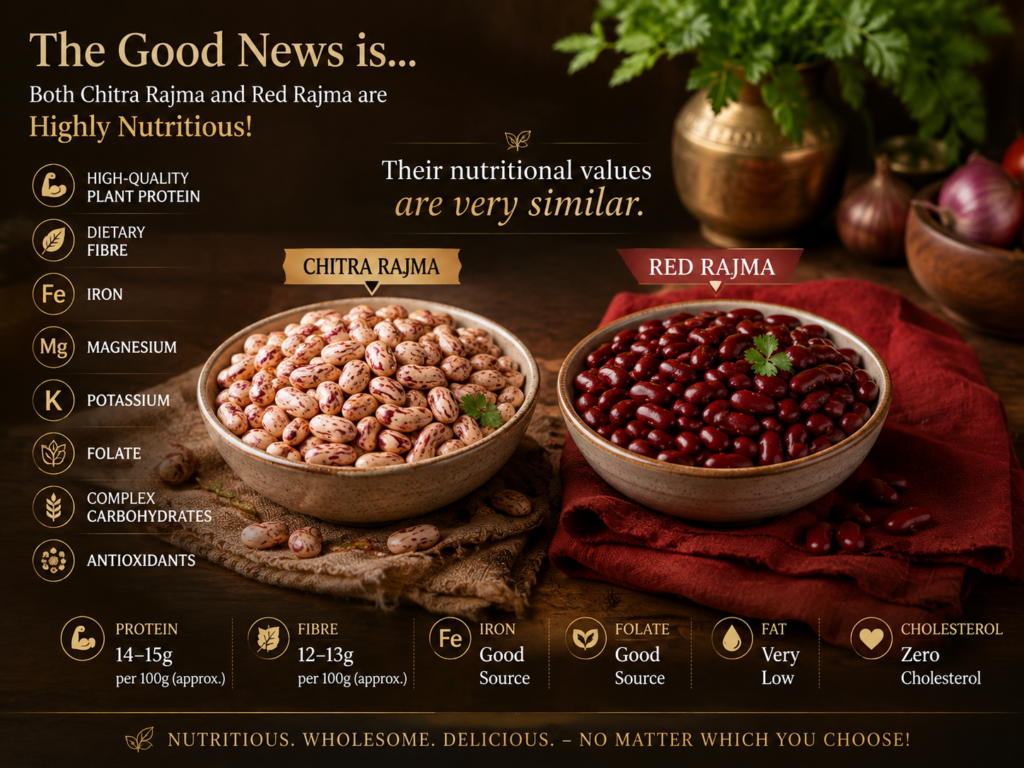
The good news is that both Chitra Rajma and Red Rajma are highly nutritious. Their nutritional values are very similar.
Both provide:
- High-quality plant protein
- Dietary fibre
- Iron
- Magnesium
- Potassium
- Folate
- Complex carbohydrates
- Antioxidants
A typical cooked serving of rajma contains:
- Around 14–15g protein
- Nearly 13g fibre
- Good amounts of iron and folate
- Very little fat
- No cholesterol
From a nutrition perspective, there isn’t a clear winner. Both are excellent choices for a balanced diet.
Which Rajma Tastes Better?
Taste depends on personal preference.
Choose Chitra Rajma if you like:
- Smooth gravy
- Creamy texture
- Mild flavour
- Soft beans that almost melt into the curry
Choose Red Rajma if you prefer:
- Stronger bean flavour
- Firmer texture
- Restaurant-style curry
- Slightly nutty taste
Many families actually keep both varieties in their pantry and use them depending on the recipe.
Which Rajma Cooks Faster?
One of the biggest differences is cooking time.
Chitra Rajma
- Softer skin
- Absorbs water quickly
- Usually cooks faster after soaking
- Ideal for busy households
Red Rajma
- Slightly denser
- Requires a longer soaking period
- May need a few extra whistles in the pressure cooker
If convenience matters, Chitra Rajma has the advantage.
Which Rajma is Better for Health?
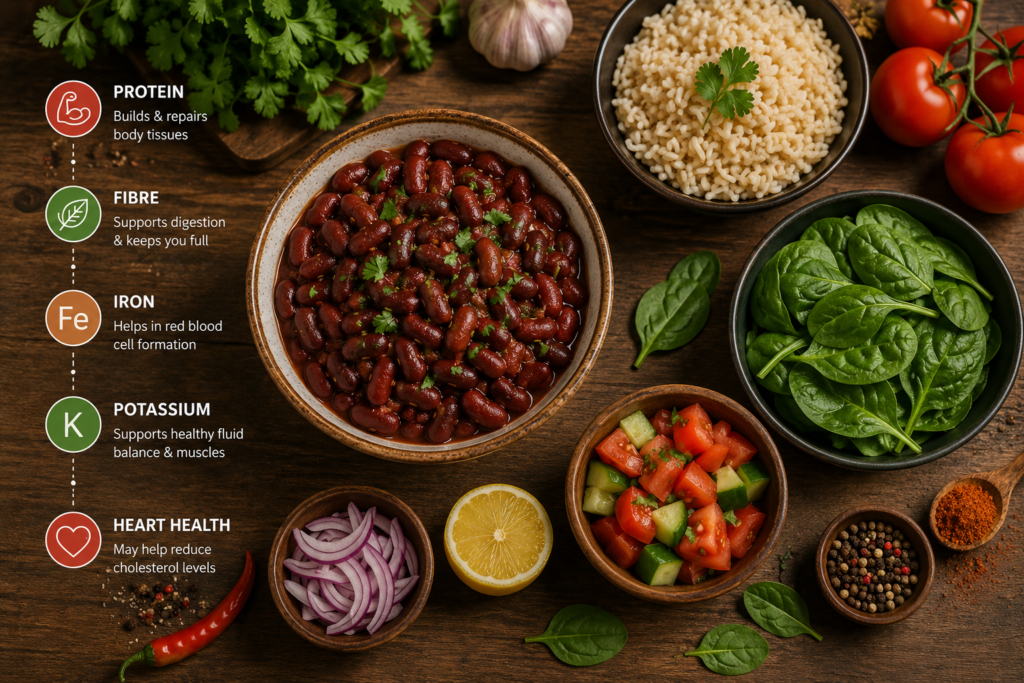
Since both are kidney beans, their health benefits are almost identical.
Regularly including rajma in your meals may help:
- Support heart health
- Improve digestion
- Keep you full for longer
- Help manage weight
- Provide plant-based protein
- Support healthy blood sugar when eaten in balanced portions
Remember to soak rajma overnight and cook it thoroughly, as raw or undercooked kidney beans contain natural compounds that should be destroyed through proper cooking.
Which Rajma is Better for Different Recipes?
Choosing the right rajma also depends on what you’re cooking.
Chitra Rajma works wonderfully for:
- Punjabi Rajma Chawal
- Rajma Masala
- Creamy gravies
- Home-style lunches
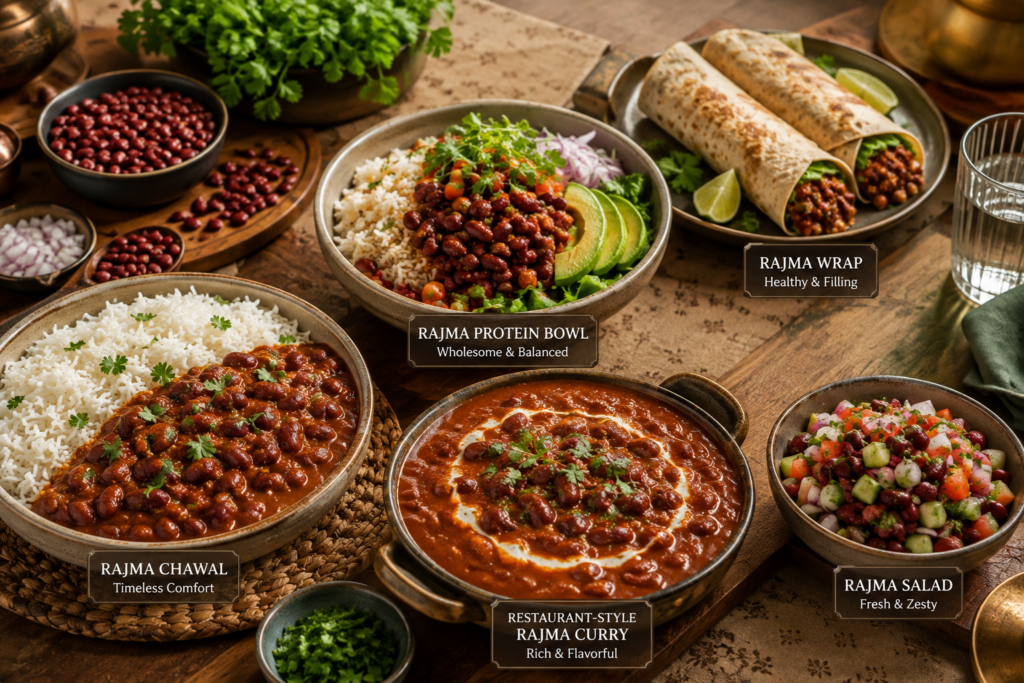
Red Rajma shines in:
- Mexican bean bowls
- Burritos
- Bean salads
- Restaurant-style curries
- Protein bowls
Tips for Cooking Perfect Rajma
For delicious, tender rajma every time:
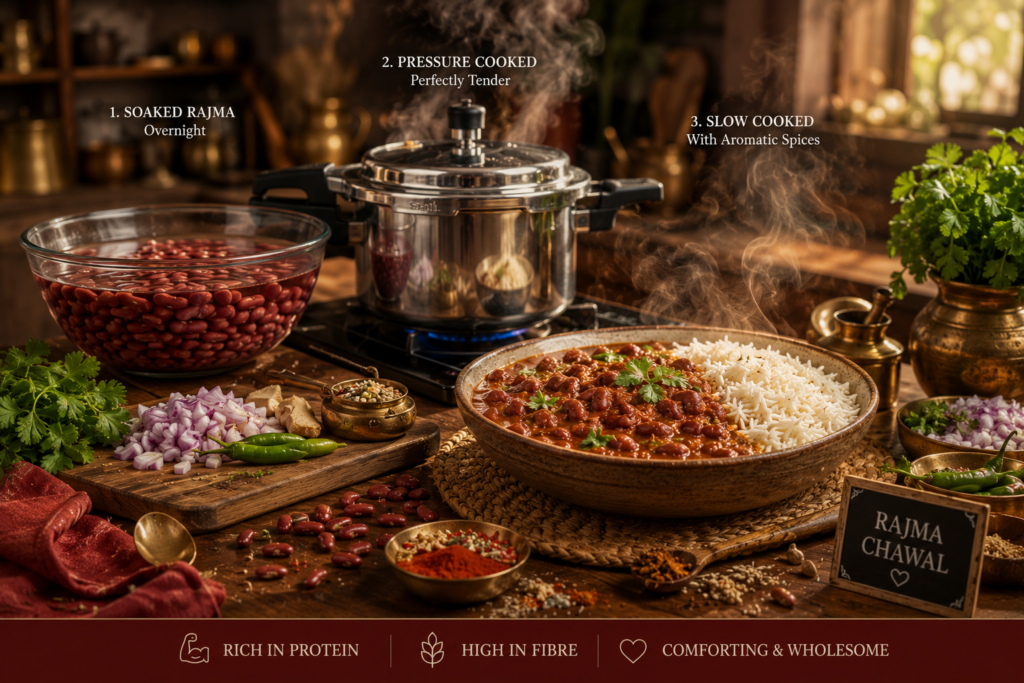
- Soak the beans for 8–10 hours or overnight.
- Discard the soaking water before cooking.
- Pressure cook until completely soft.
- Use fresh ginger, garlic, onion, and tomatoes for a rich gravy.
- Allow the curry to simmer so the flavours blend well.
- Finish with fresh coriander and a little butter or ghee for extra flavour, if desired.
Which One Should You Buy?
Here’s a quick guide:
Choose Chitra Rajma if you want:
- Faster cooking
- Creamier curry
- Everyday family meals
- Softer texture
Choose Red Rajma if you want:
- Rich flavour
- Firmer beans
- Restaurant-style dishes
- Salads and international recipes
If you cook rajma regularly, keeping both varieties at home gives you the flexibility to prepare different styles of dishes.
Conclusion
Honestly, it’s not really a Chitra vs Red Rajma debate — there’s no clear winner here. Both are packed with protein, both are good for you, and both taste great when cooked right.
If you’re after that soft, creamy curry your mom used to make, go with Chitra Rajma — it cooks faster too, so it’s great for busy weeknights. But if you want something with more bite and a richer flavour, Red Rajma’s your pick. It holds up really well in restaurant-style gravies, and honestly works great in salads too if that’s your thing.
At the end of the day, just pick based on what you’re cooking, how much time you’ve got, and what you’re in the mood for. Either way, a good bowl of rajma — cooked properly — is hard to beat.