

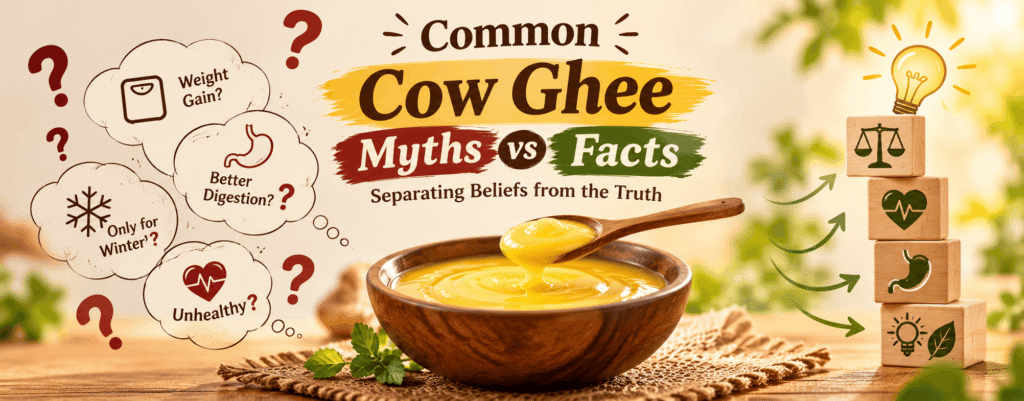
Cow Ghee has been a household staple in India for years. From the addition of a tablespoon of ghee in steaming hot dal and rotis to the preparation of authentic Indian desserts, it has been an important ingredient in our daily meals. Nevertheless, there are numerous myths about ghee, which confuses people regarding its nutritional value.
While some think that consuming ghee causes obesity, others take it as an essential food item during winters. But then what is the truth? Let’s shed some light on some of the popular myths of ghee along with facts and learn about cow ghee as a part of our balanced diet.
Myth 1: Eating Ghee Always Leads to Weight Gain

Fact: Consuming ghee doesn’t mean that it will definitely lead to gaining weight. The weight you gain depends on your calorie consumption and many other factors. But one thing to be noted is that ghee is rich in calories; therefore, consuming too much of it may cause excess calorie consumption.
Myth 2: Ghee Is Completely Unhealthy
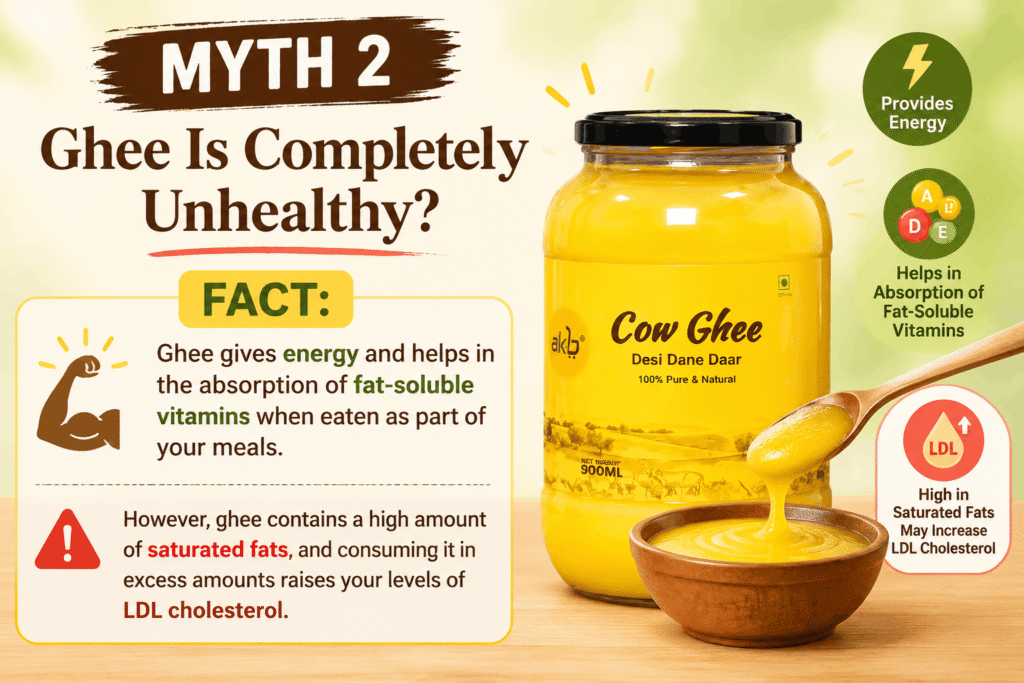
Factual Information: To term ghee as unhealthy entirely is an understatement. Ghee gives energy and helps in the absorption of fat-soluble vitamins when eaten as part of your meals. On the other hand, ghee contains a high amount of saturated fats, and consuming it in excess amounts raises your levels of LDL cholesterol.
Myth 3: Cow Ghee Is Only Useful During Winter
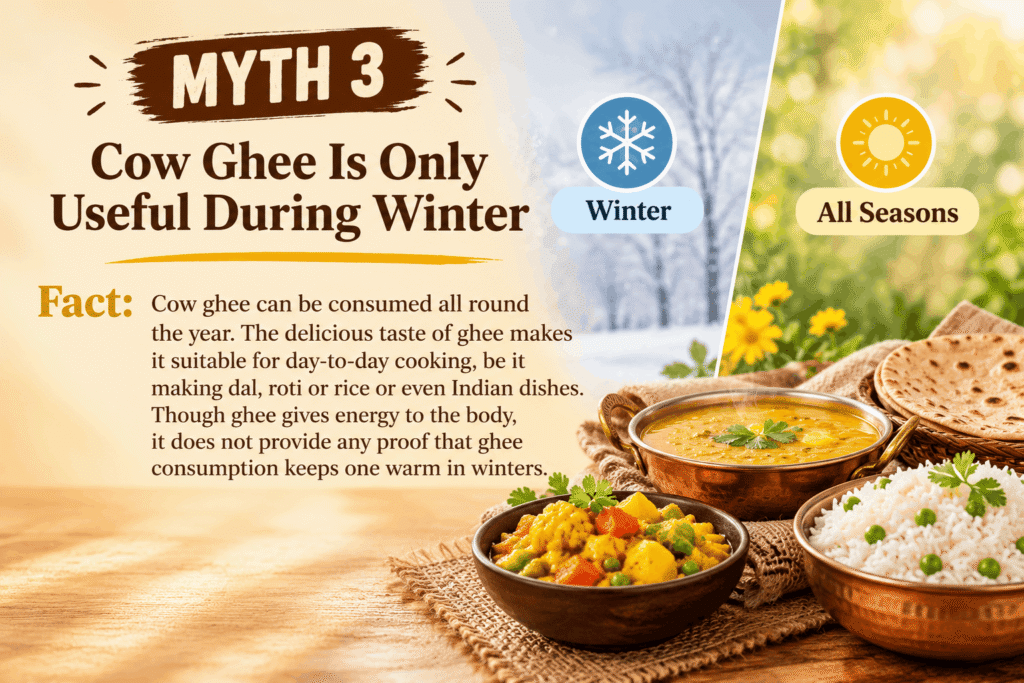
Factual information: Cow ghee can be consumed all round the year. The delicious taste of the ghee makes it suitable for day-to-day cooking, be it making dal, roti or rice or even Indian dishes. Though ghee gives energy to the body, it does not provide any proof that ghee consumption keeps one warm in winters.
Myth 4: Ghee Automatically Improves Digestion
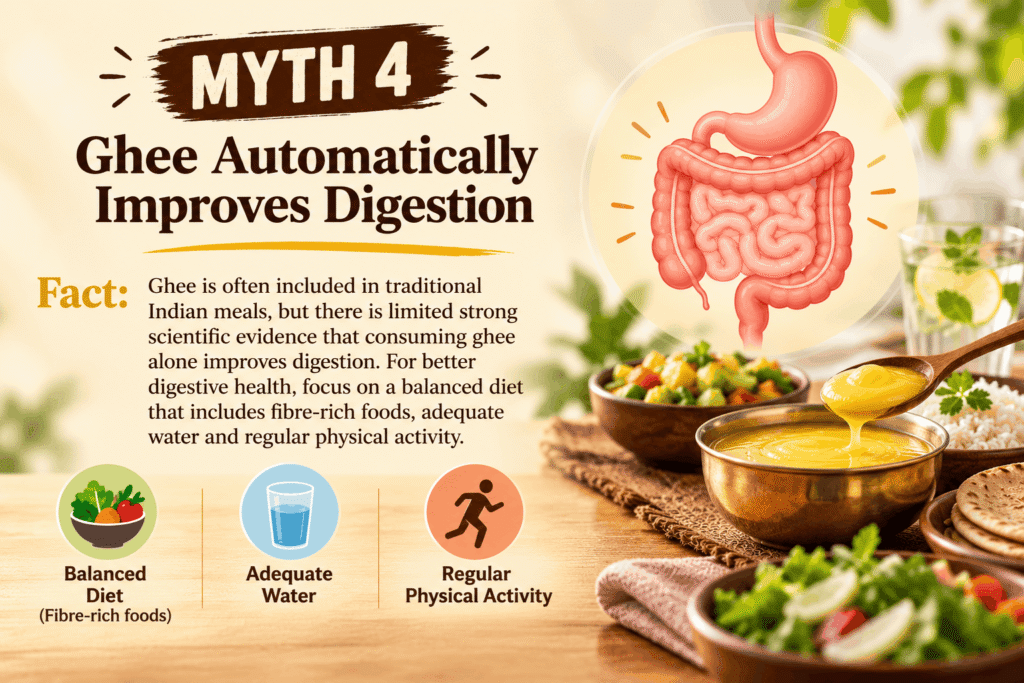
Fact: Ghee is often included in traditional Indian meals, but there is limited strong scientific evidence that consuming ghee alone improves digestion. For better digestive health, focus on a balanced diet that includes fibre-rich foods, adequate water and regular physical activity.
Myth 5: All Cooking Fats Are the Same
Fact: Different cooking fats have different nutritional compositions. Ghee contains a higher proportion of saturated fat, whereas oils such as mustard and olive oil contain more unsaturated fats. The right choice depends on your overall diet and health needs. Using ghee in moderation rather than relying on it as your only cooking fat can help maintain dietary balance.
How to Include Cow Ghee in Your Daily Diet
Cow ghee can be enjoyed in several simple ways:
- Add a small amount to hot dal or khichdi for extra flavour.
- Spread a little over freshly prepared roti.
- Use it to prepare traditional sweets such as halwa and ladoo.
- Include it in selected recipes as part of a balanced cooking routine.
Remember that ghee is calorie-dense, so the quantity you consume is important. People managing high cholesterol or other dietary restrictions should consider their overall saturated fat intake.
Traditional Flavour of AKB Cow Ghee
Having knowledge of ghee will help you make an informed choice while preparing your daily food items. Be it winter preparations or any traditional recipe, AKB Cow Ghee will provide the taste you have been used to.
Indulge in the traditional taste with the sense of moderation.
AKB Cow Ghee – A Taste of Tradition in Your Food.