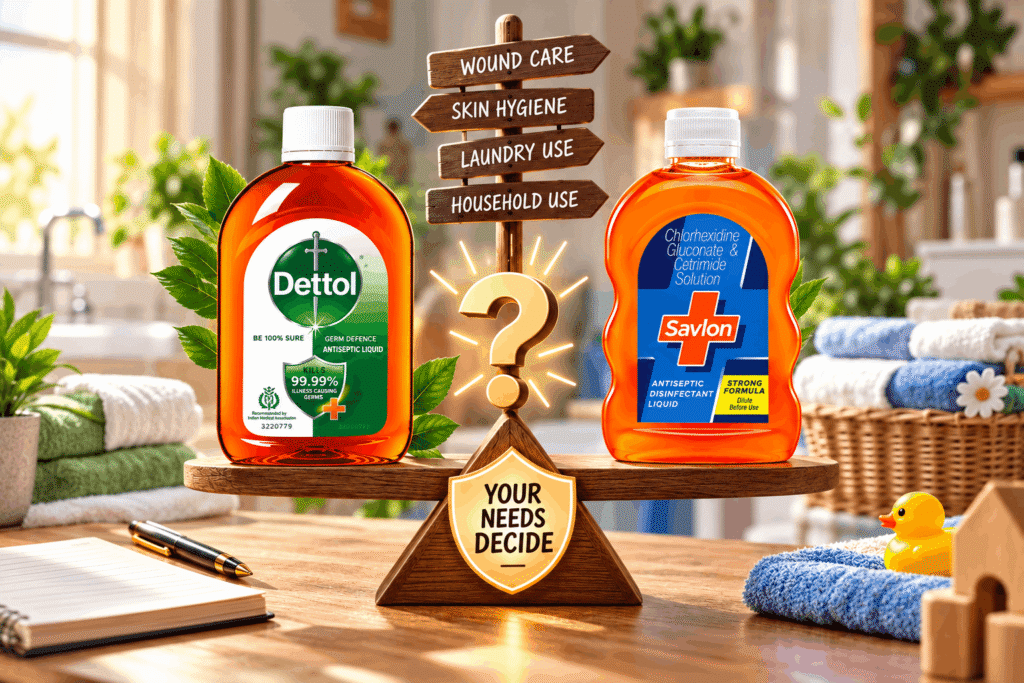

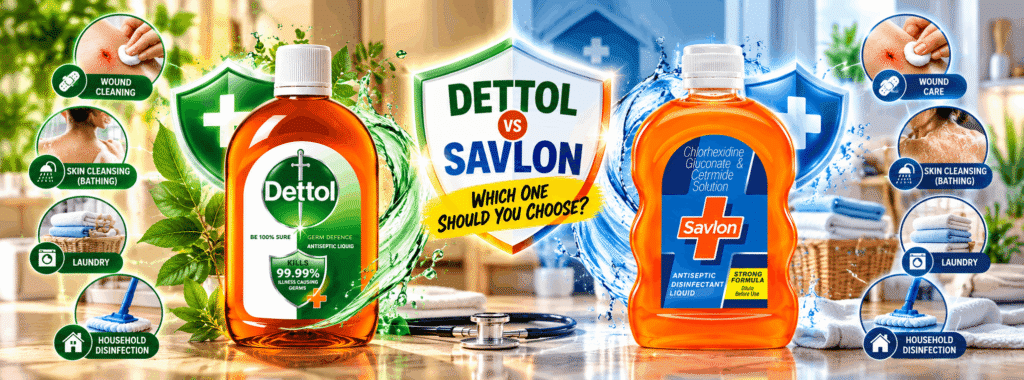
When it comes to everyday hygiene and first-aid essentials, Dettol and Savlon are two names that are familiar in many Indian households. Both brands offer antiseptic liquids that can be used for purposes such as cleansing minor wounds, personal hygiene, and certain household cleaning applications.
But when you see Dettol vs Savlon, you may wonder: Which one should you choose?
The answer depends on what you are looking for, because their formulations and recommended uses are different.
What Is Dettol Antiseptic Liquid?
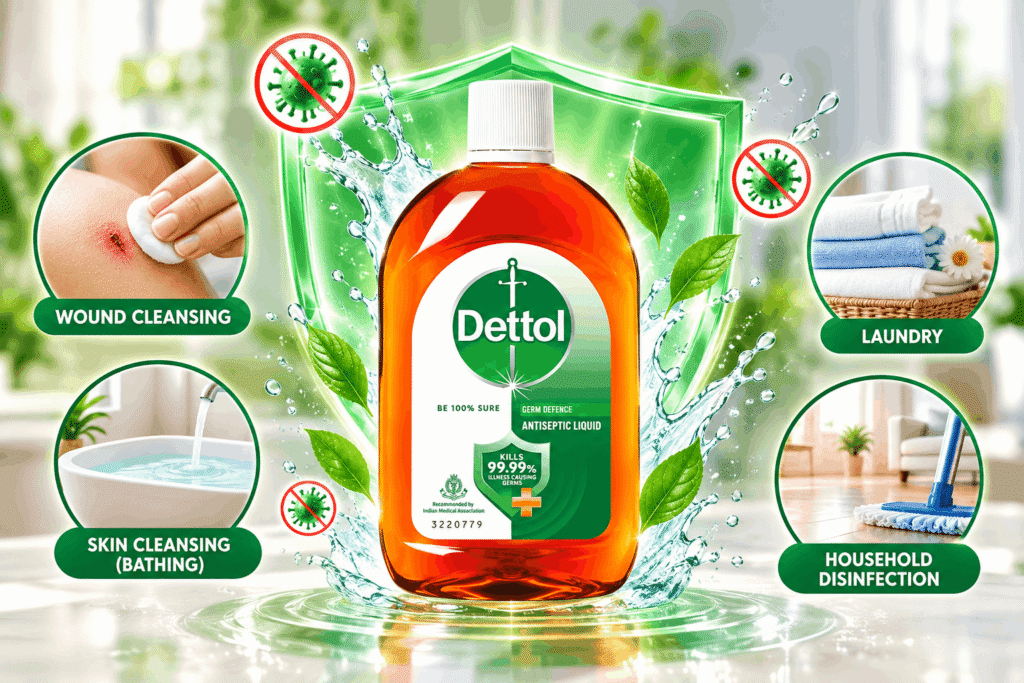
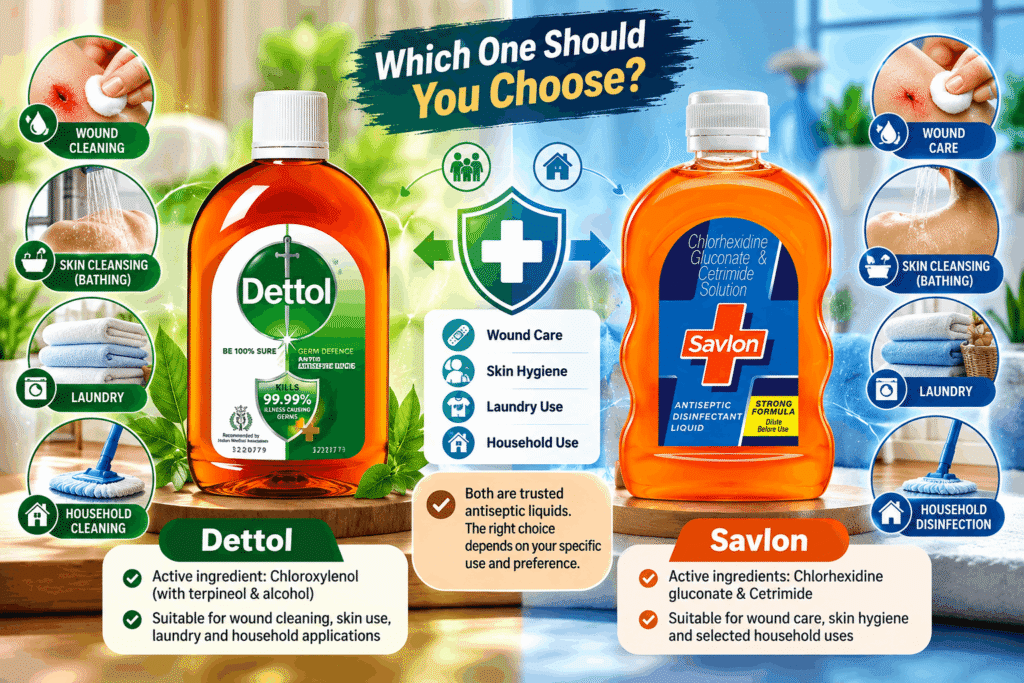
Dettol Antiseptic Liquid Original is a concentrated antiseptic and disinfectant solution. Its active germ-protection ingredient is chloroxylenol, along with terpineol and alcohol. According to Dettol’s official product information, it can be used for antiseptic wound cleansing, skin cleansing, laundry and certain household applications when diluted as directed.
For example, Dettol recommends 5 ml in a 10-litre bucket of water for bathing and 15 ml in 300 ml of water for first aid. The product should always be diluted and used according to the instructions on the pack.
What Is Savlon Antiseptic Liquid?
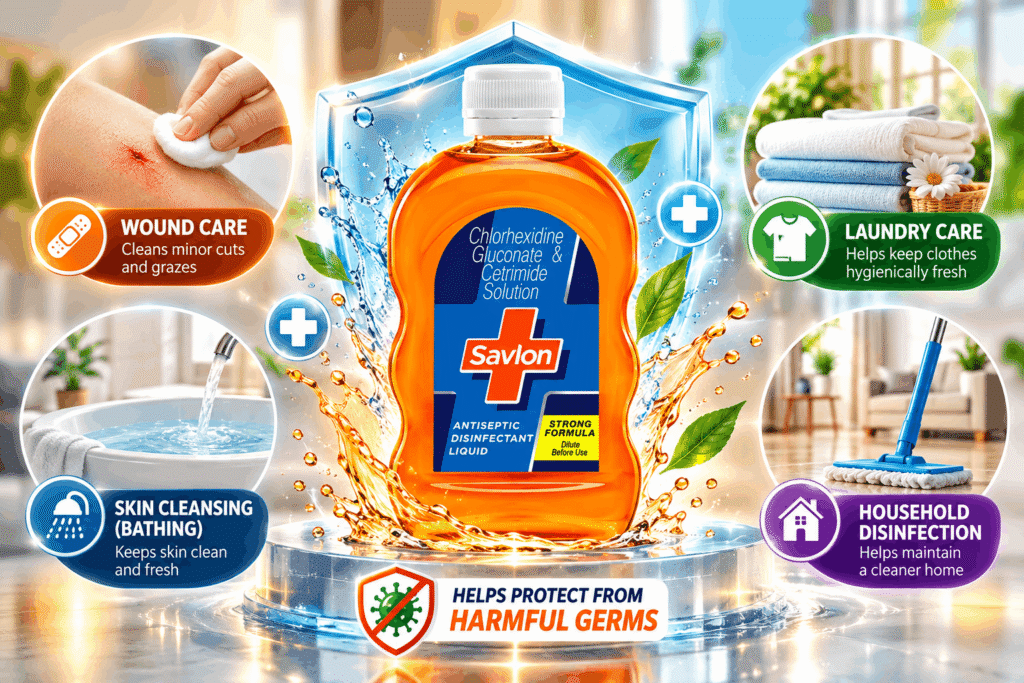
Savlon Antiseptic Liquid is another commonly used antiseptic solution. Its formulation contains chlorhexidine gluconate and cetrimide, which work together for antimicrobial and cleansing action. Savlon describes the product as suitable for wound care, skin use and certain household applications.
For minor cuts and grazes, Savlon recommends diluting 1 part Savlon in 15 parts clean water. For bathing, its official website recommends 15 ml in an 8-litre bucket of water.
Dettol vs Savlon: Key Differences
| Feature | Dettol Antiseptic Liquid | Savlon Antiseptic Liquid |
|---|---|---|
| Main active ingredient | Chloroxylenol | Chlorhexidine Gluconate + Cetrimide |
| Wound cleansing | Yes, when diluted as directed | Yes, when diluted as directed |
| Skin hygiene | Yes | Yes |
| Household applications | Yes, for specified uses | Yes, for specified uses |
| Recommended bathing dilution | 5 ml / 10 litres water | 15 ml / 8 litres water |
| Formulation focus | Antiseptic + disinfectant | Antimicrobial + cleansing action |
The different dilution quantities should not be interpreted as one product being stronger than the other. They are different formulations with different instructions.
Which One Should You Choose?
Instead of asking which brand is universally better, consider what you need it for.
For those who have already been using Dettol and find its formula convenient, it might be an ideal choice for purposes mentioned on its label. Dettol’s official description states that it is useful for wound cleaning, skin cleansing, laundry and other household purposes.
If you prefer Savlon, its antiseptic liquid is also designed for wound care, skin hygiene and selected household uses. Savlon highlights its combination of chlorhexidine gluconate and cetrimide and describes the product as having broad antimicrobial action.
So, Dettol and Savlon can both be useful antiseptic products, but the right choice depends on your specific use, formulation preference and the instructions provided on the product pack.
A Couple of Safety Measures
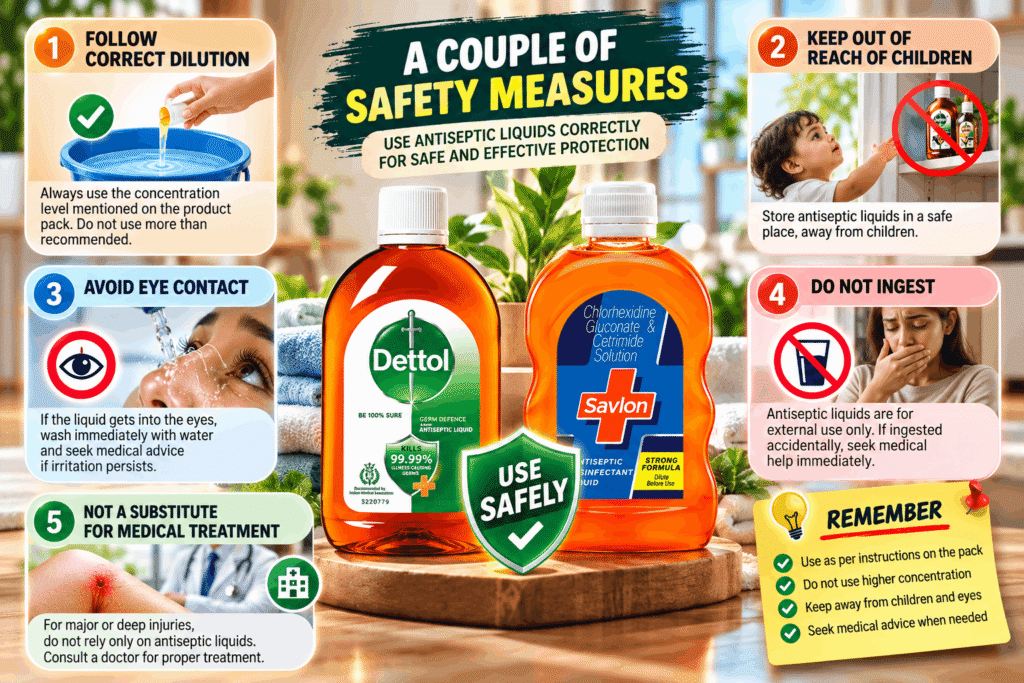
Regardless of which type of antiseptic you pick, ensure that you strictly adhere to the concentration level indicated on the product package. This is because it would be wrong to think that using a higher concentration of an antiseptic liquid will make it work better than before.
Ensure that antiseptic liquids are kept out of reach of children and the eyes. In case of eye contact with Dettol, wash it off immediately and see a doctor in case it is ingested.
In case of major injuries, do not use antiseptic liquids as a substitute for any form of medical treatment.
Final Thoughts
The question of which one wins Dettol vs Savlon depends on what you need and not on the overall winner. Each brand has developed antiseptic solutions but they are formulated differently and offer different directions of use.
Prior to using any of them, it is important to study the instructions on the bottle label and use the solution according to the recommended dilution and directions for use provided by the manufacturers.
Note: This content was written for general information and should be considered an informational resource.