
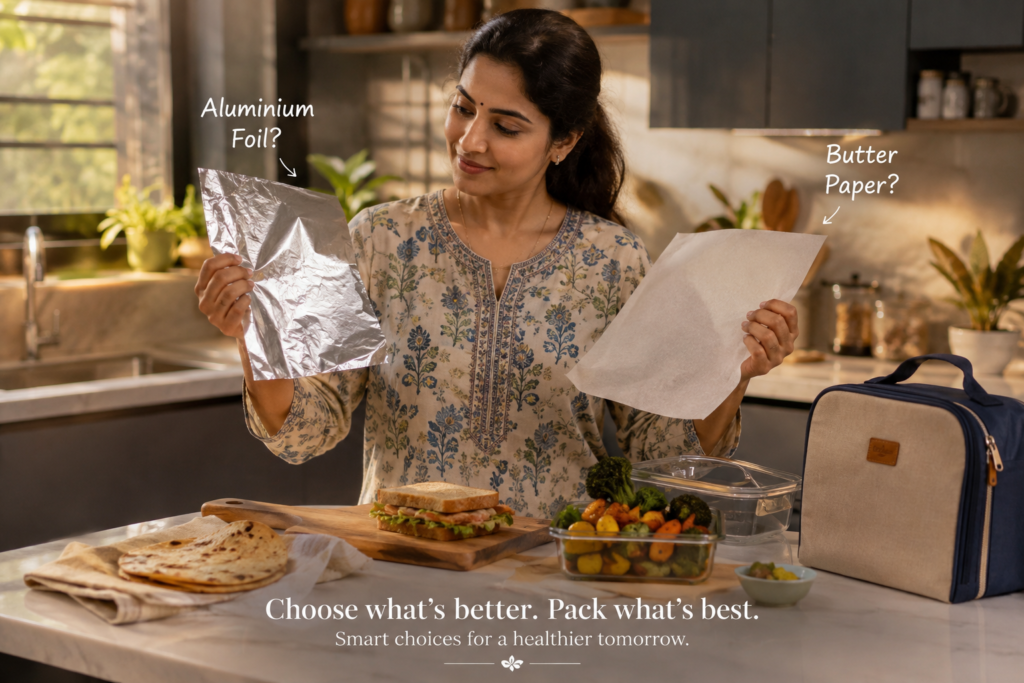

You’re packing tomorrow’s lunch, wrapping leftover rotis, or getting ready to bake—and then comes the familiar question: aluminium foil or butter paper? Both are common kitchen essentials, but they behave very differently when they come into contact with food.
For everyday food wrapping and baking, food-grade butter paper or parchment paper is often a convenient choice, particularly when you want to avoid direct contact between food and aluminium. However, that doesn’t mean aluminium foil is automatically unhealthy. Foil has important advantages, especially for grilling, roasting, and protecting food from heat.
The better choice ultimately depends on what you’re wrapping, how hot the food is, and how you plan to cook or reheat it.
Let’s break down the difference so you can make a smarter choice in your kitchen.
Aluminium Foil vs Butter Paper: At a Glance
| Feature | Aluminium Foil | Butter/Parchment Paper |
|---|---|---|
| Material | Thin sheet of aluminium | Paper designed for food use |
| High-heat cooking | Excellent | Good within product temperature limits |
| Baking | Useful for some applications | Excellent for lining trays |
| Microwave use | Generally unsuitable | Often suitable, if labelled microwave-safe |
| Acidic foods | Better to avoid prolonged direct contact | Usually a better option |
| Grilling | Excellent | Generally unsuitable unless specifically designed for it |
| Food wrapping | Excellent barrier | Good for many dry foods and baked goods |
| Reusable | No | Usually no |
| Main advantage | Heat resistance and strong barrier | Non-stick surface and easy food release |
Is Aluminium Foil Safe for Food?
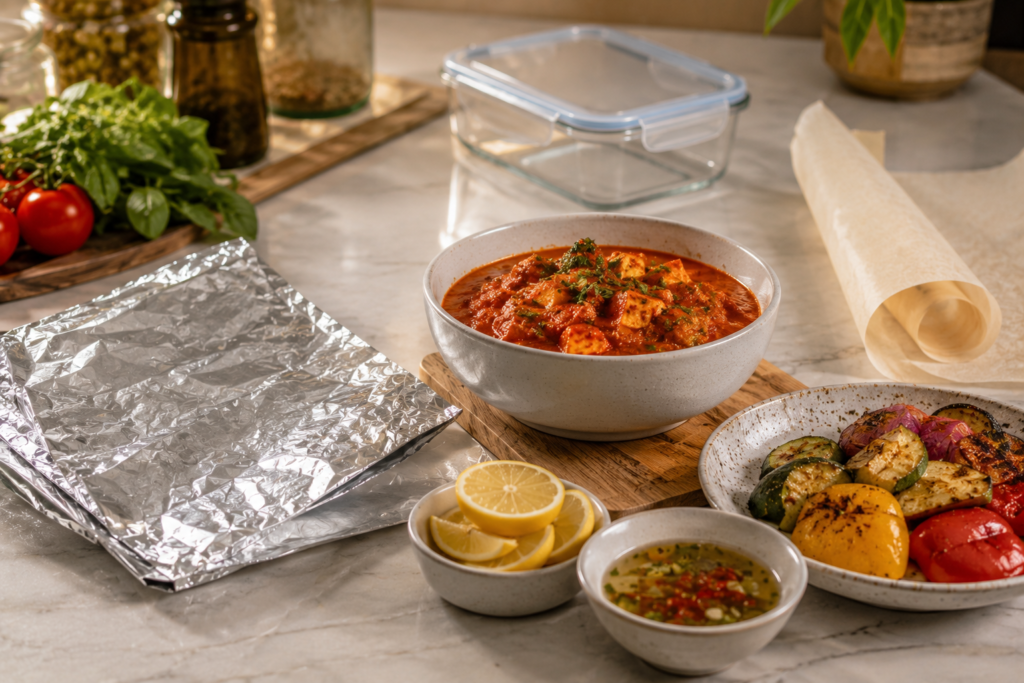
Yes, aluminium foil can be safely used for many everyday food applications. The concern isn’t that foil is inherently poisonous. The important consideration is that aluminium can transfer into food in certain conditions.
Research has found that aluminium leaching can increase when foil comes into contact with acidic or salty foods, particularly at higher temperatures and for longer periods.
Foods such as:
- Tomatoes and tomato-based gravies
- Lemon or citrus-based preparations
- Vinegar-containing foods
- Very salty foods
- Marinades
are therefore better kept from prolonged direct contact with aluminium foil.
This doesn’t mean that wrapping a sandwich in foil once in a while is dangerous. Rather, it is about using the material appropriately and avoiding unnecessary prolonged contact under conditions that encourage leaching.
When Aluminium Foil Makes Sense
Foil remains extremely useful when you need:
- High heat resistance
- A strong barrier against air and moisture
- Protection during roasting or grilling
- Easy wrapping of chapatis and dry foods
- Covering food during oven cooking
- Short-term storage of suitable foods
Its biggest strength is simple: foil can handle heat that ordinary paper cannot.
Is Butter Paper Healthier?
The term “butter paper” can be confusing because different products are sold under similar names.
For cooking and baking, look for food-grade parchment paper or baking paper that clearly states its intended use. Parchment paper is generally treated to provide a non-stick surface and resistance to grease and moisture.
For everyday food preparation, it can be an excellent alternative to foil because the food doesn’t need to come into direct contact with aluminium.
However, don’t assume that every sheet marketed as “paper” is automatically suitable for cooking. Always check the manufacturer’s instructions, temperature rating, and whether the product is food-safe.
Why It Works: Choosing the Right Material for the Job
The biggest mistake is trying to decide which material is universally “healthier.”
Instead, think about the job you’re asking the material to do.
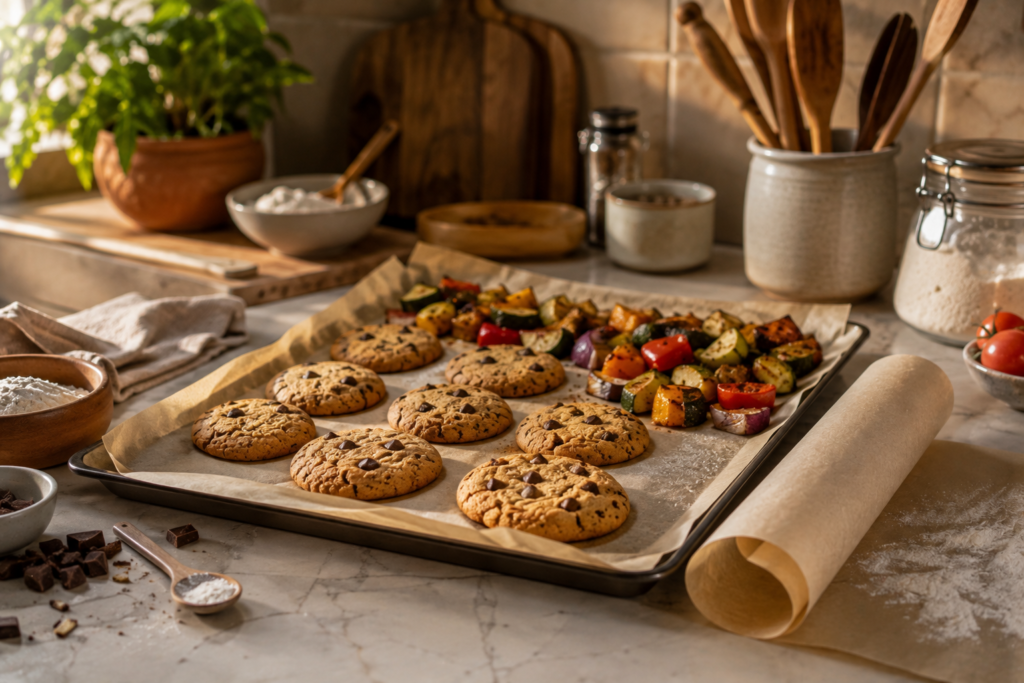
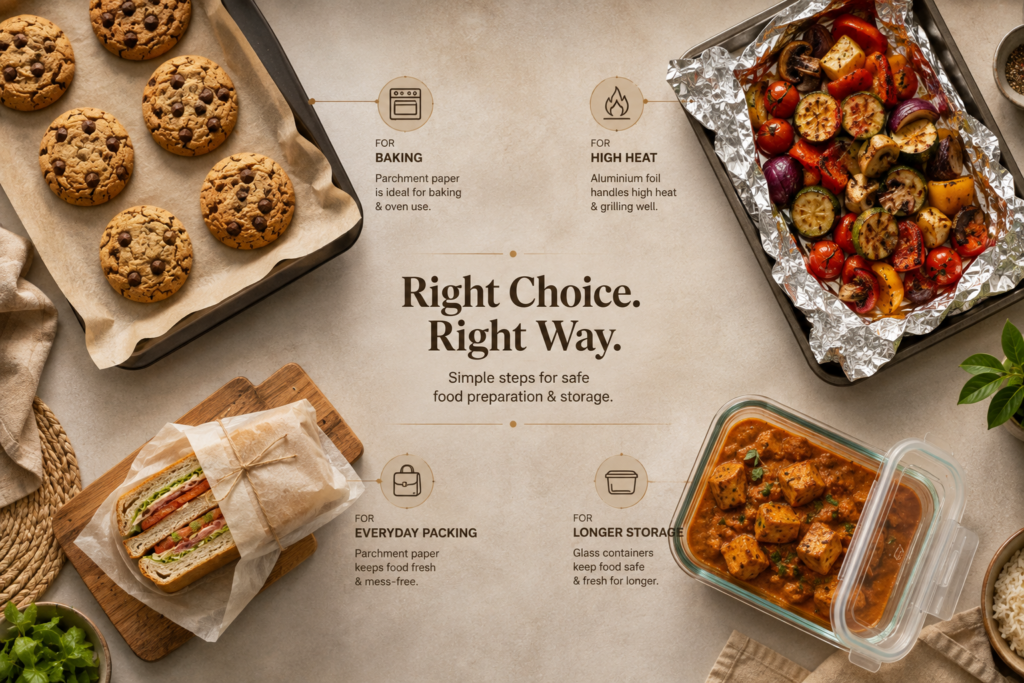
1. For Baking: Choose Parchment Paper
Parchment paper is particularly useful for:
- Cookies
- Cakes
- Pastries
- Roasted vegetables
- Baking tray liners
- Homemade bread
It helps prevent food from sticking and makes cleanup easier.
Just stay within the temperature limit printed on the package.
2. For Grilling: Aluminium Foil Has the Advantage
When you’re grilling or roasting at high temperatures, aluminium foil is generally much more practical.
It can withstand temperatures that many paper products cannot.
Never put ordinary butter paper directly over a flame or use it beyond its stated temperature limit.
3. For Acidic Foods: Be More Careful With Foil
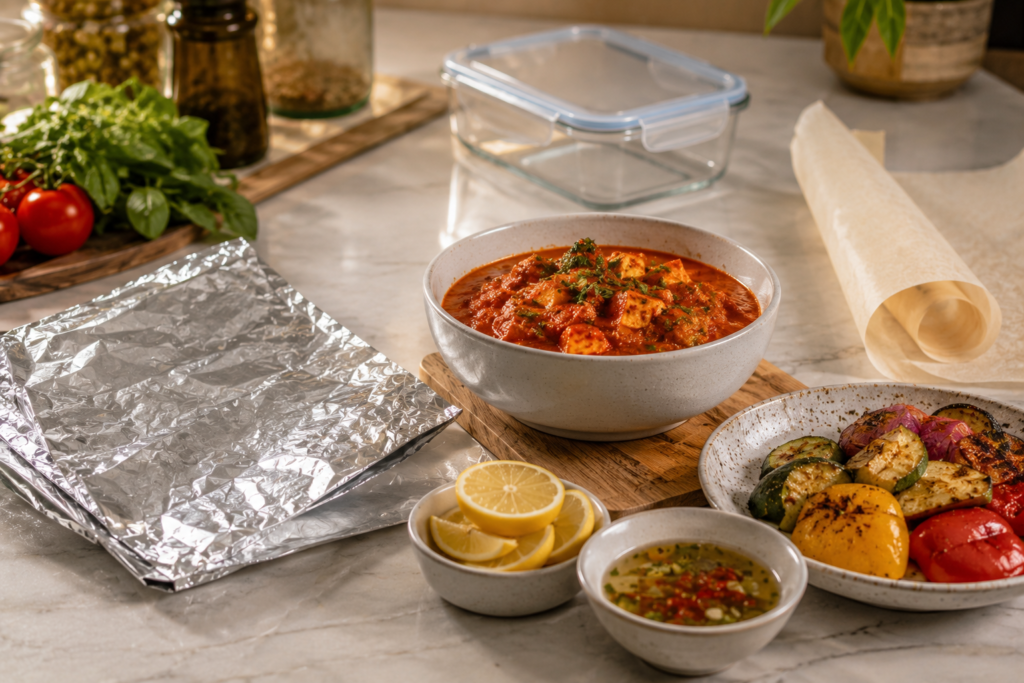
If you’re wrapping a lemony, tomato-rich, or vinegar-based preparation for a long period, consider using a suitable food-safe container or parchment paper instead of placing the food directly against aluminium foil.
This is particularly useful when the food is hot and acidic at the same time.
4. For Microwave Reheating: Check the Label
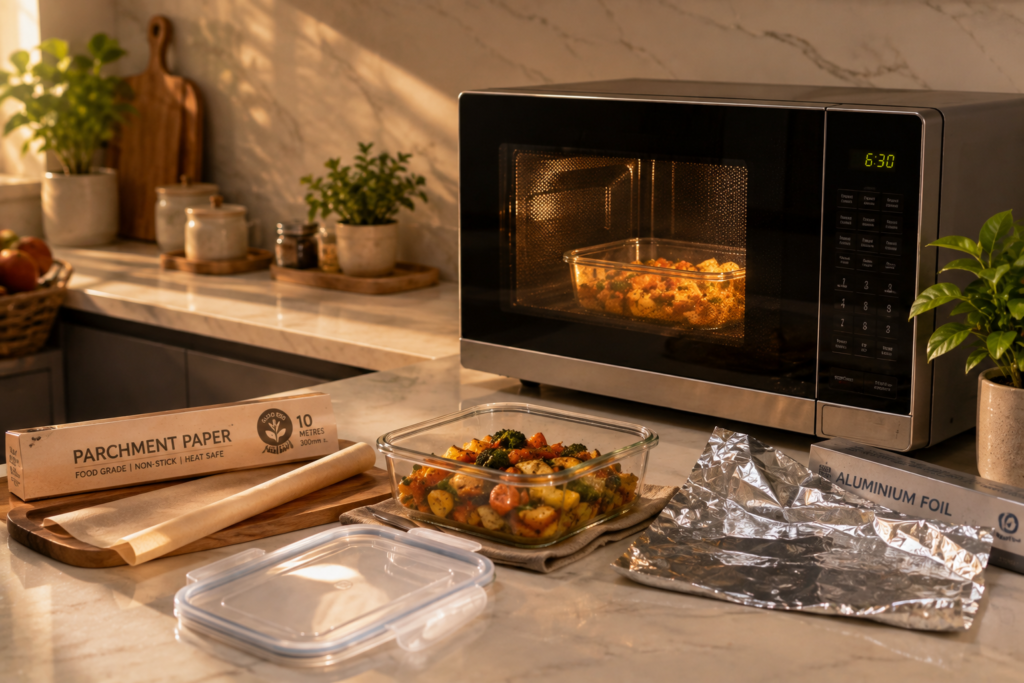
Aluminium foil should generally not be placed in a microwave, because metal can interact with microwave energy and potentially cause arcing.
Parchment paper may be suitable for microwave use, but check the packaging first.
The safest habit is simple: follow the manufacturer’s microwave instructions rather than assuming every type of butter paper is microwave-safe.
Aluminium Foil or Butter Paper for Lunchboxes?
For a sandwich, roti, dry snack, or baked item, either material may work depending on your preference.
Butter or parchment paper can be especially useful when you want to:
- Separate individual food portions
- Wrap sandwiches
- Prevent baked goods from sticking
- Reduce direct aluminium-food contact
- Create neat food parcels
Foil can be more useful when you want to retain warmth or create a stronger moisture and air barrier.
For foods with substantial moisture, however, a food-safe airtight container is often a better long-term storage solution than either wrapping material.
5 Smart Kitchen Habits for Safer Food Wrapping
1. Choose food-grade materials
Don’t use ordinary craft, decorative, or unknown paper for direct food contact.
2. Read the packaging
Check whether the product is intended for baking, cooking, microwave use, or food storage.
3. Avoid prolonged foil contact with acidic foods
Especially when the food is hot, salty, or acidic.
4. Don’t exceed temperature limits
Parchment paper isn’t a substitute for foil in every high-temperature application.
5. Use containers for longer storage
For leftovers, especially moist foods, a suitable food-storage container can be more practical than repeatedly wrapping food.
So, Which Is Better for Health?
If you’re asking “aluminium foil or butter paper—which should I use every day?”, there isn’t one universal winner.
For baking, sandwiches, dry snacks, and many everyday food-preparation tasks, food-grade parchment or suitable butter paper is a practical choice.
For grilling, roasting, and high-temperature applications, aluminium foil offers an important advantage because of its heat resistance.
The key isn’t to completely eliminate one material from your kitchen. It’s to match the material to the food and cooking method.
The Bottom Line
Butter paper isn’t some magic “healthy” material, and foil isn’t the villain everyone makes it out to be. Honestly, both do their job fine as long as you’re using food-grade stuff the way it’s meant to be used.
Simple way to think about it — parchment or butter paper works great for baking and most dry stuff you’re cooking. Foil earns its spot when you actually need that heat resistance or want something to seal in moisture properly. And if you’re stashing leftovers for a few days, just put them in a proper airtight container instead of wrapping them up.
At the end of the day, cooking smart isn’t about swearing off one material and worshipping another. It’s just picking whatever actually makes sense for what you’re making.