
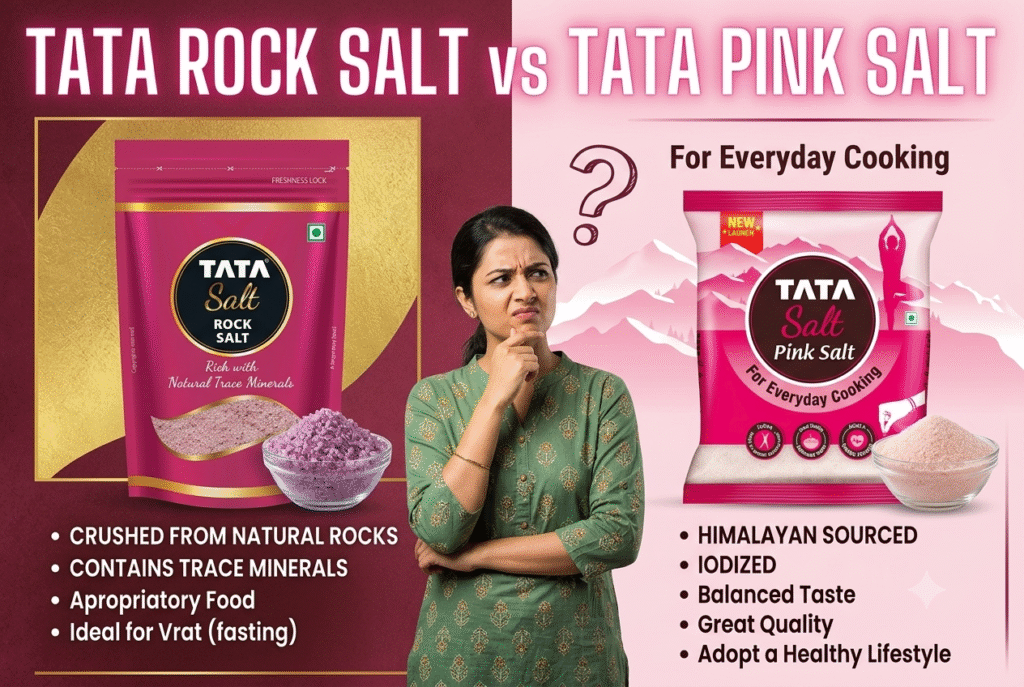

When you’re shopping for salt, you’ve probably noticed both Tata Pink Salt and Tata Himalayan Rock Salt on the shelf. Since both have a similar pink appearance and are sourced from the Himalayas, it’s easy to wonder which one is healthier or whether one is actually better than the other.
Let’s look a little closer.
Tata Himalayan Rock Salt (Sendha Namak)
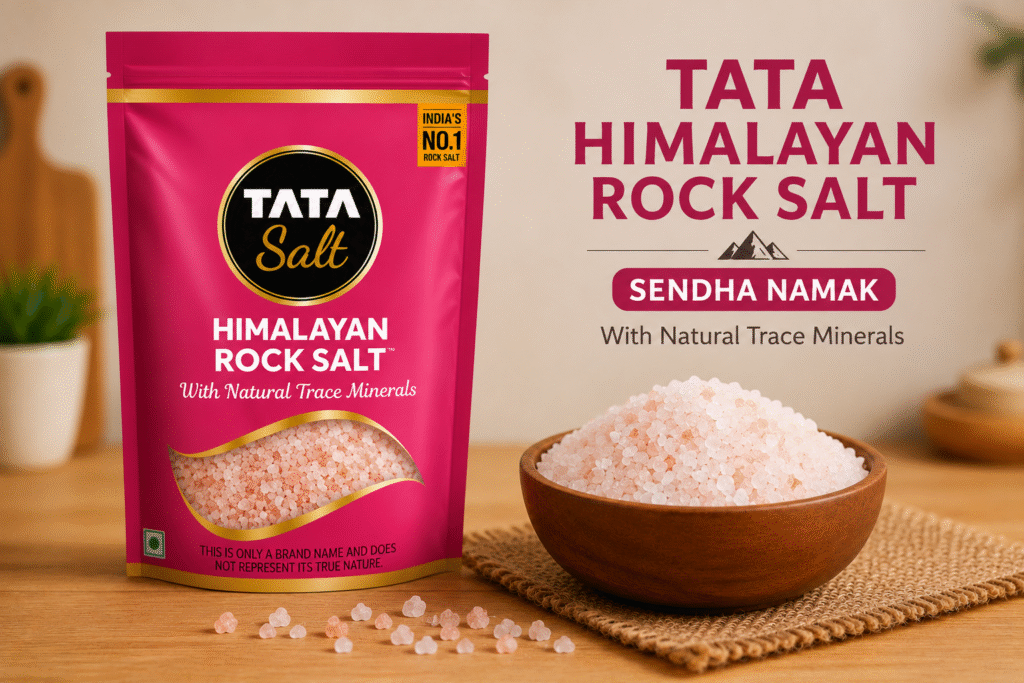
Source
Tata Himalayan Rock Salt (Sendha Namak) is sourced from natural deposits of Himalayan rock salt. It is popularly known as Sendha Namak and is traditionally used in Indian homes especially during fasting (vrat) and in authentic regional recipes.
Nutritional Value
This salt contains naturally:
- Sodium chloride
- Small trace amounts of calcium, magnesium and potassium
- Organic electrolytes
It contains no unnecessary additives and offers a simple, natural option for those who prefer minimally processed ingredients.
Taste and texture
The crystals in Tata Himalayan Rock Salt are slightly coarse and can be crushed before using if you like. Has a mild earthy flavour which gives a traditional touch to many recipes. Particularly good in dishes where texture and natural flavour is enjoyed.
Most Popular Uses
- Vrat and Fasting Foods
- Advantages of fresh chutneys Raita and chaat
Benefits
- Friendly to the Stomach
- Aids in maintaining electrolyte balance during fasting
- Adds a natural, rustic flavor to foods
Tata Pink Salt
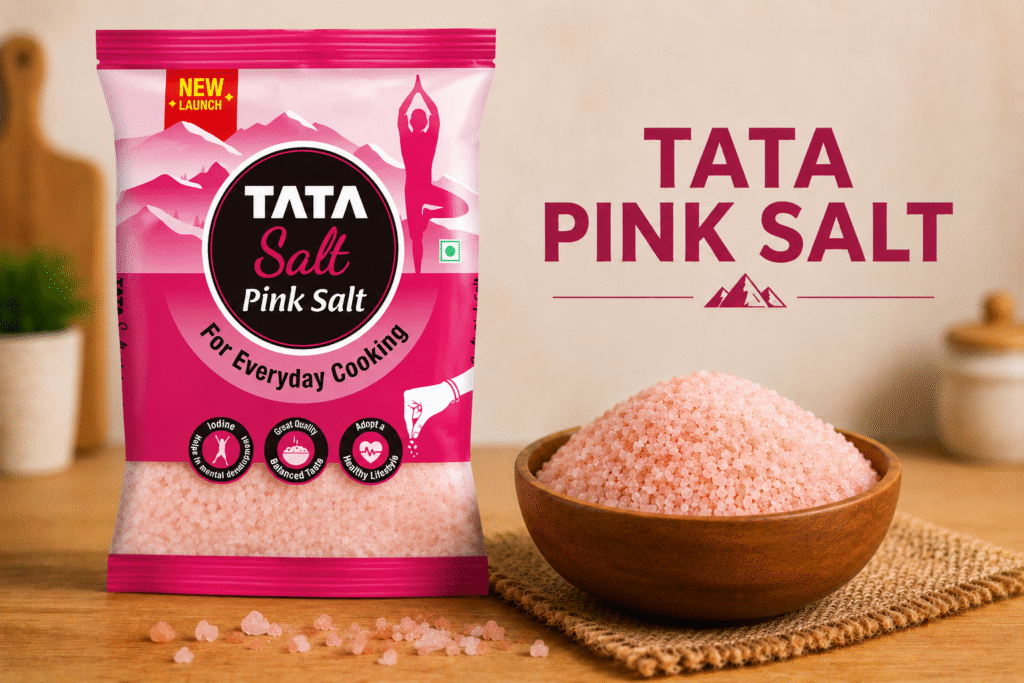
Source
Tata Pink Salt also comes from Himalayan salt deposits. It is processed into fine crystals, making it suitable for everyday cooking while retaining its natural origin.
Nutrition Information
- Thyroid health and iodine
- Sodium for fluid balance and electrolytes
- Trace minerals in small amounts that are found naturally
It offers the essential nutrients one would expect from an iodized cooking salt, not overblown health claims.
Taste & Texture
Its fine texture makes it melt away easily, so it’s a convenient choice for everyday meals. It mixes into dishes seamlessly and does not alter the natural flavor profile.
Most Popular Uses
- Cooking daily
- Curries and dals
- Salad Dressings
Benefits
- Contains iodine to support normal thyroid function
- Helps to maintain electrolyte balance
- Comfortable for everyday use
- Cheap option
Tata Pink Salt vs Tata Himalayan Rock Salt
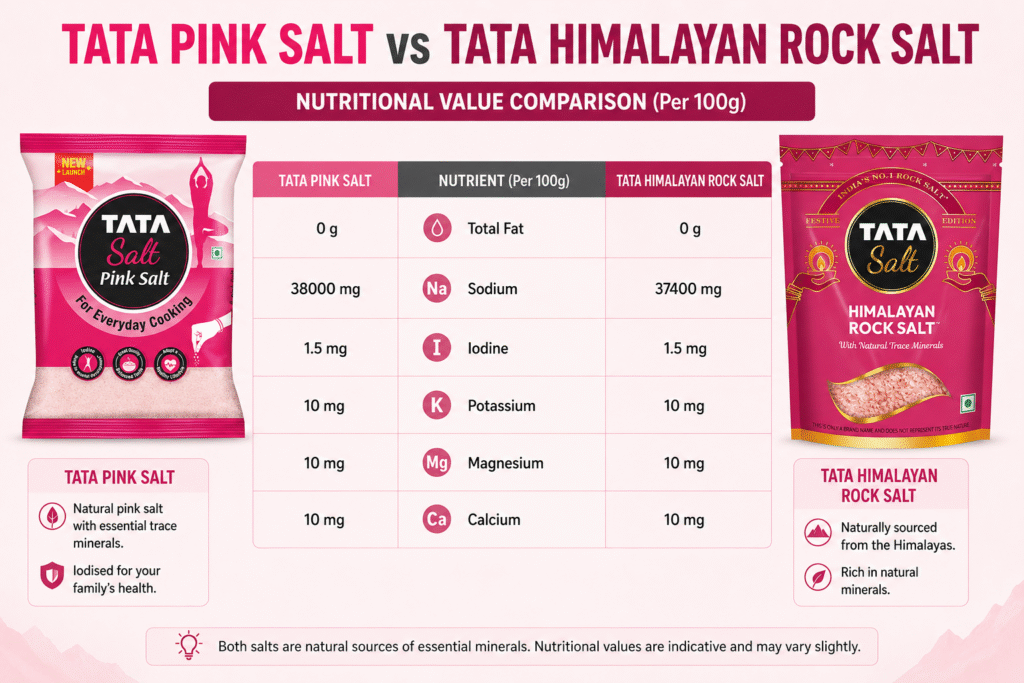
Tata Pink Salt contains naturally occurring trace minerals such as calcium, magnesium, and potassium, which give it its characteristic pink color. Tata Rock Salt (Sendha Namak) is also an unrefined natural salt with its own mineral profile. However, these minerals are present only in trace amounts, so both salts offer similar nutritional value and are used primarily for seasoning.
What Really Sets Them Apart ?
Iodine :
Both Tata Pink Salt and Tata Himalayan Rock Salt contain 1.5 mg of iodine, which helps support normal thyroid function.
(Some Himalayan salts that are loose or unbranded may not have added iodine.)
Texture :
This is one of the major practical differences.
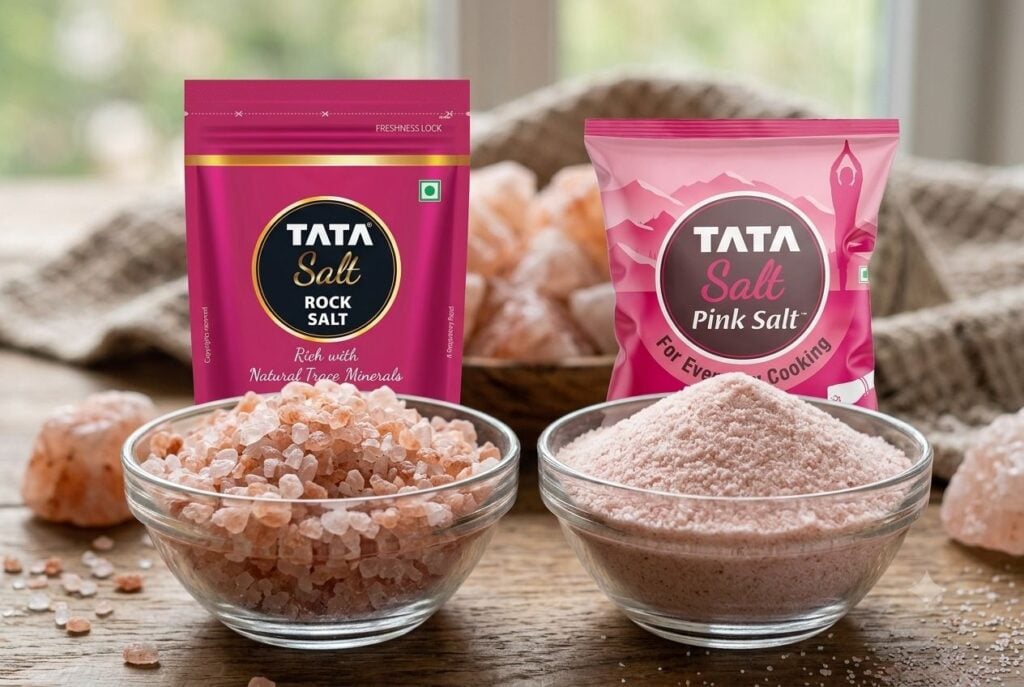
- Tata Pink Salt has fine crystals which dissolve quickly.
- Tata Himalayan Rock Salt has a slightly coarse grain which makes it ideal for grinding fresh or using in vrat recipes
Which One Should You Buy?
Choose Tata Pink Salt if you:
- Need an everyday cooking salt
- Prefer fine grains
- Want an affordable option
- Want iodized salt for daily use
Choose Tata Himalayan Rock Salt if you:
- Observe fasting (vrat)
- Enjoy traditional Indian cooking
- Prefer a slightly coarse texture
- Specifically want Sendha Namak for authentic recipes
Final Verdict
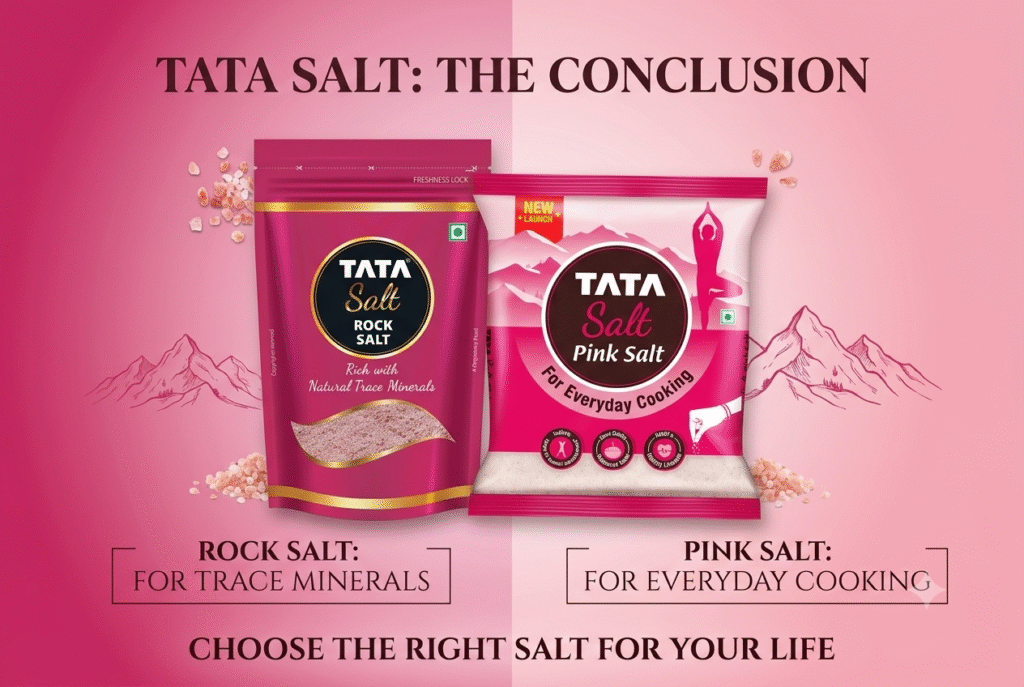
There isn’t a clear winner between Tata Pink Salt and Tata Himalayan Rock Salt because both are sourced from the Himalayas and offer nearly identical nutritional value.
The real differences come down to:
- Texture
- Packaging
- Price
- Intended use
If you’re looking for a versatile salt for everyday cooking, Tata Pink Salt is an excellent choice. If you regularly prepare fasting meals or enjoy traditional recipes, Tata Himalayan Rock Salt is a better fit.
Whichever option you choose, both are reliable choices that can easily be purchased at great prices from Aap Ka Bazar.