
Lotus sunscreen becomes part of daily life very quickly when you live in a hot Indian city where stepping outside for even 10 minutes can leave your face feeling oily, sticky, and dull.
That’s exactly why so many people end up trying Lotus sunscreen at least once. It’s available almost everywhere, the price feels manageable, and the matte finish catches attention immediately. But the real question is — does it actually work well for Indian skin and weather, or is it just another popular shelf product?
After years of being one of the most visible sunscreen brands in India, Lotus still gets mixed reactions. Some people genuinely love the lightweight feel, while others question the level of protection. So instead of generic skincare talk, let’s properly break down what makes Lotus sunscreen popular, where it works well, and where it may disappoint.
What Is Lotus Sunscreen?
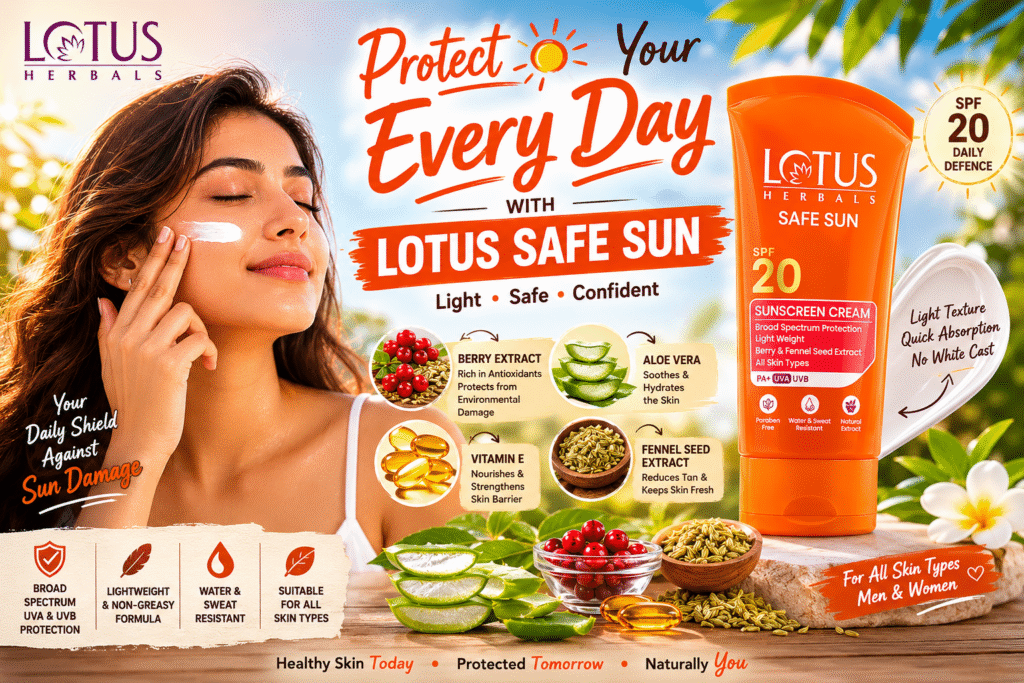
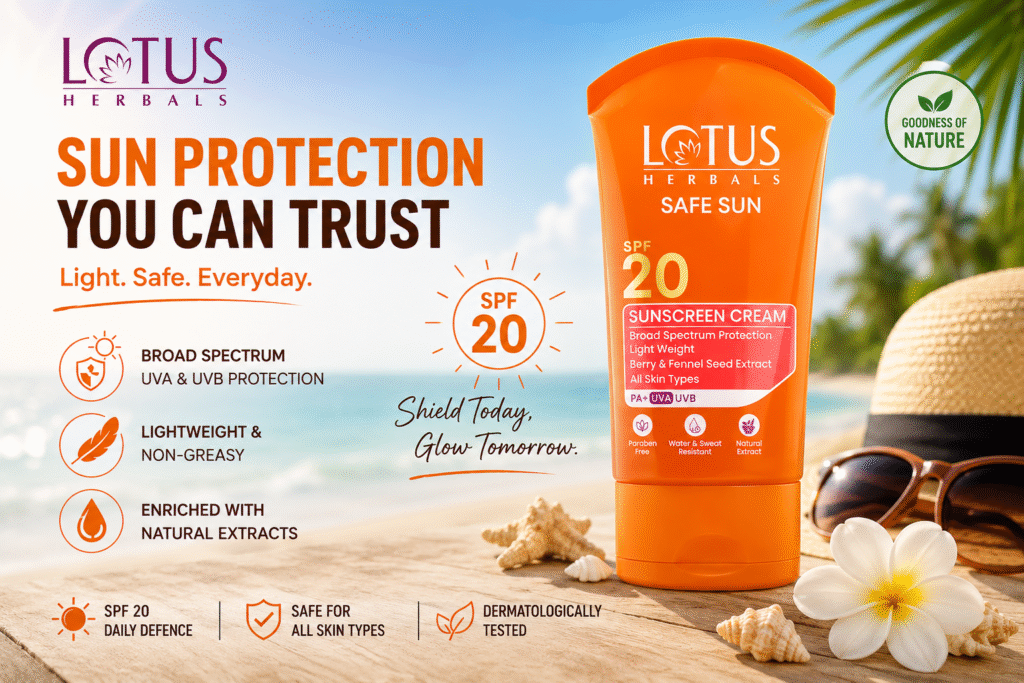
Lotus Herbals offers multiple sunscreen ranges under the “Safe Sun” line. The most commonly used ones include matte gel sunscreens, tinted sunscreens, sports variants, and lightweight daily-use creams. Some newer versions also include ingredients like niacinamide and vitamin E for added skin support.
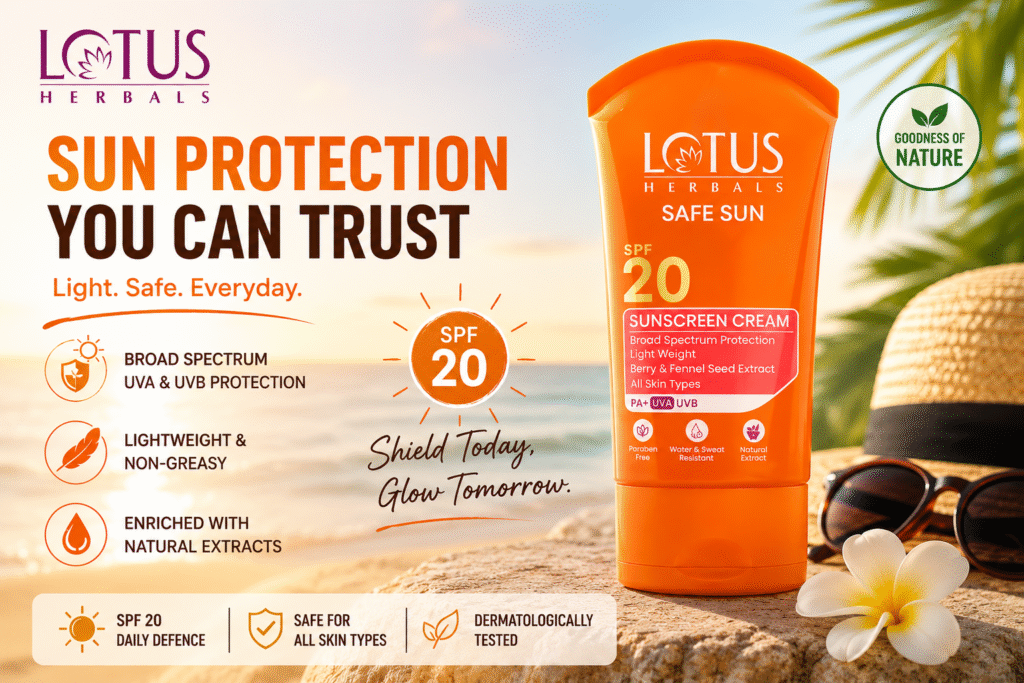
A few popular variants include:
- Lotus Herbals Safe Sun UV Screen Matte Gel PA+++ SPF 50 Sunscreen
- Lotus Herbals Safe Sun 3-In-1 Matte Look SPF 40 Daily
- Lotus Herbals Safe Sun Sports Daily-Defence UV Block SPF 50+
- Lotus Herbals Safesun UltraRX Sunscreen Serum
Many people choose Lotus mainly because the texture feels lighter than older greasy sunscreen creams that used to leave a heavy layer on the face.
Ingredients That Matter 🌿
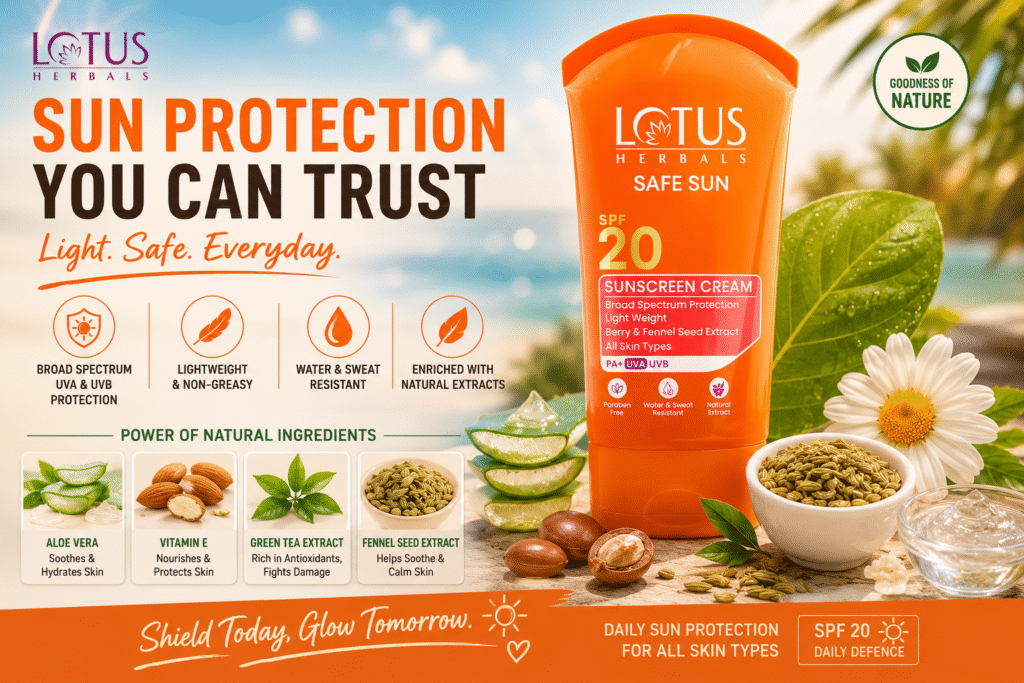
Different Lotus variants contain different ingredient combinations, but these are the commonly highlighted ones:
1. Niacinamide
Found in some newer variants, niacinamide helps reduce the appearance of uneven skin tone and dullness. It’s especially liked by people who spend long hours outdoors or in front of screens.
2. Vitamin E
Vitamin E helps support the skin barrier and reduces the dry, stretched feeling that some sunscreens leave behind after a few hours.
3. Green Tea Extract
Professional variants use green tea extracts for a soothing effect and lighter feel on oily skin.
4. UV Filters
Lotus sunscreens mainly rely on chemical UV filters for broad-spectrum protection against UVA and UVB rays. SPF 30, SPF 40, SPF 50, and even SPF 80 variants are available.
But Is Lotus Sunscreen Actually Effective?
This is where opinions become divided.
Many users appreciate the texture and comfort, especially for indoor use or short daily exposure. Some Reddit discussions mention that the sunscreen feels lightweight, doesn’t pill, and gives a smooth finish.
At the same time, other users have questioned the actual level of protection during strong outdoor exposure, especially during sweating or beach travel.
That’s why the experience depends heavily on:
- Which Lotus variant you use
- How long you stay outdoors
- Whether you reapply properly
- Your skin type and sweating level
People who use sunscreen daily also prefer gentle cleansing routines. That’s why many skincare users explore simple herbal face cleansers like Medimix Face Wash for everyday skin care.
Best Lotus Sunscreen Variants for Different Skin Types
| Skin Type | Recommended Variant | Why It Works |
|---|---|---|
| Oily skin | Lotus Herbals Safe Sun UV Screen Matte Gel PA+++ SPF 50 Sunscreen | Matte texture feels lighter |
| Combination skin | Lotus Herbals Safe Sun 3-In-1 Matte Look SPF 40 Daily | Balances glow and oil control |
| Outdoor users | Lotus Herbals Safe Sun Sports Daily-Defence UV Block SPF 50+ | Designed for sweat-heavy use |
| People wanting lightweight serum texture | Lotus Herbals Safesun UltraRX Sunscreen Serum | Feels more modern and fast absorbing |
Small Things People Notice After Regular Use
These are the kind of observations real users often care about more than technical skincare terms:
- Face looks less greasy in humid weather
- Makeup or compact sits better on matte sunscreen
- Easier to wear daily because it doesn’t feel “heavy”
- Some variants leave minimal white cast
- Reapplication feels easier compared to thick creams
And honestly, consistency matters more than perfection.
A sunscreen people actually enjoy applying daily often becomes more useful than an expensive product that sits untouched on a shelf.
Who Should Use Lotus Sunscreen?
Lotus sunscreen works best for:
- College students
- Office commuters
- Oily skin users
- Beginners starting skincare
- People wanting affordable daily SPF
- Those who dislike greasy sunscreens
Who May Not Like It
Some people may prefer other options if:
- They have extremely sensitive skin
- They want mineral sunscreen formulas
- They spend long hours in harsh direct sunlight
- They sweat heavily outdoors all day
In those situations, stronger water-resistant sunscreens with frequent reapplication may feel more dependable.
Final Thoughts 🌞
Lotus sunscreen became popular in India mainly because it solved one very practical problem — greasy sunscreen discomfort.
It may not be perfect for every situation, but for everyday city use, quick travel, office routines, and oily skin management, many people still find it convenient and easy to stick with.
The biggest advantage is probably this: it feels wearable.
And when skincare feels easy instead of annoying, people actually stay consistent with it available in aapkabazar.