
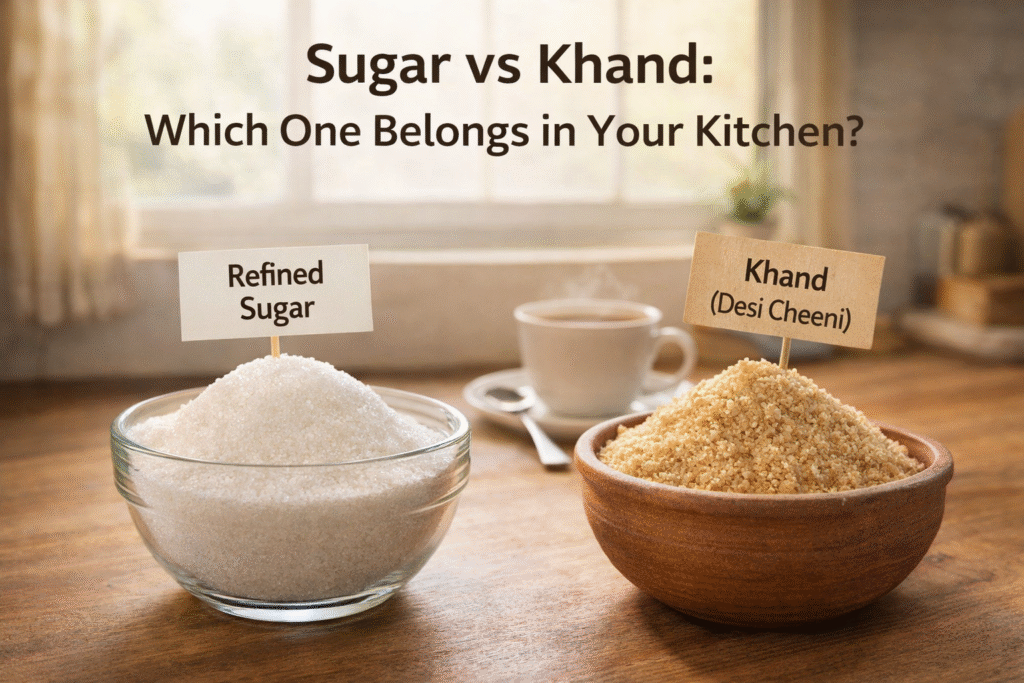

Open any Indian kitchen and you’ll almost always find a sugar dabba sitting quietly on the shelf. We’ve grown up adding sugar to chai, sweets, kheer, and even everyday sabzi at times. But over the last few years, another name has slowly started entering Indian households — khand. Your nani might call it desi cheeni, your local kirana uncle might say yeh thodi natural hoti hai, and health-conscious families are increasingly asking the same question:
Is khand actually healthier than sugar, or is it just another trend?
Let’s talk about this honestly, without exaggeration, medical jargon, or marketing drama — just real facts, real experiences, and common sense.
What Exactly Is Sugar?
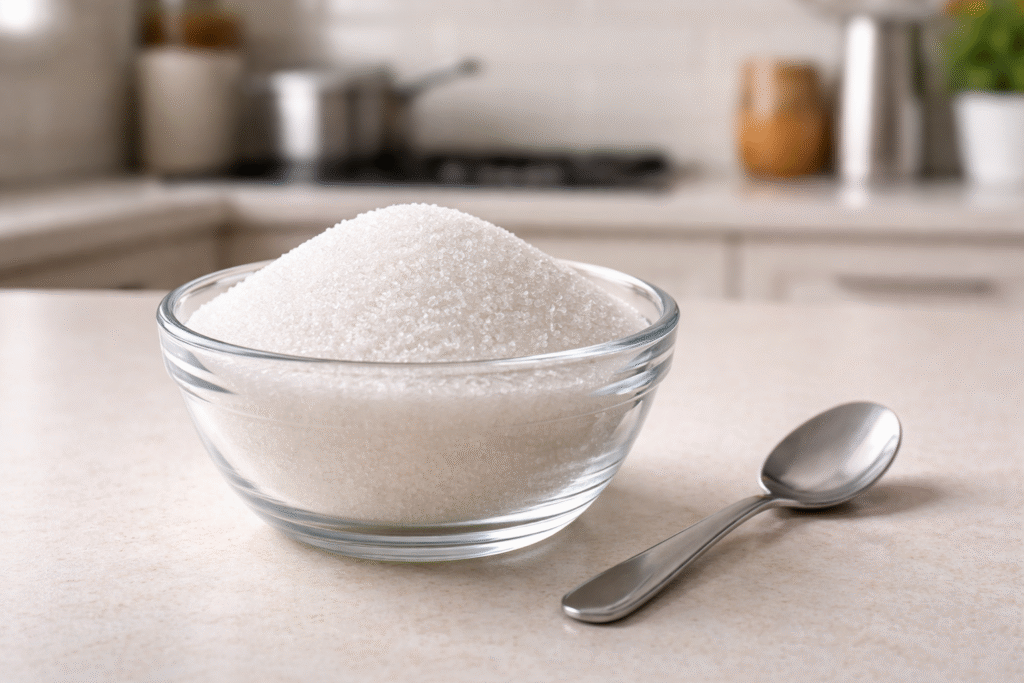
The white sugar most of us use daily is refined sugar, usually made from sugarcane (or sometimes beetroot). It goes through heavy processing where:
- Molasses is completely removed
- Crystals are bleached
- Nutrients are stripped away
What’s left is pure sucrose — empty calories with zero fibre, zero minerals, and zero nutritional value.
It gives instant sweetness, yes. But it also gives:
- Sudden sugar spikes
- Energy crashes
- Increased cravings
That’s why doctors often warn people with diabetes, PCOS, or weight issues to cut down on refined sugar.
Then What Is Khand?
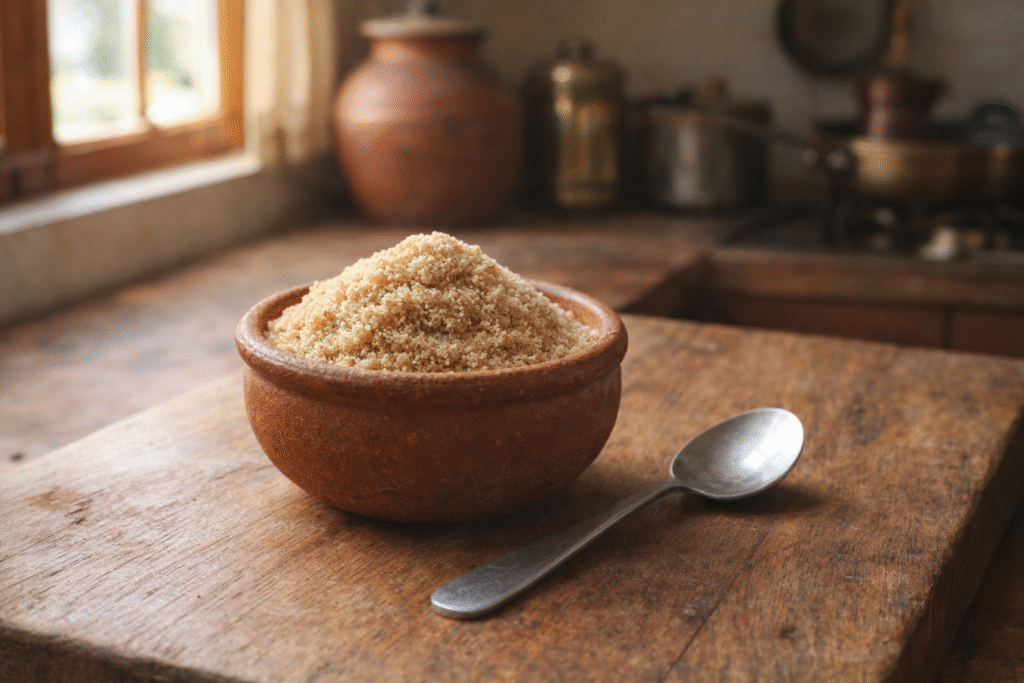
Khand is also made from sugarcane, but here’s the key difference — it’s less processed.
- It is not chemically refined
- Some natural molasses remains
- It retains trace minerals like iron, calcium, and potassium
In simple words, khand is closer to its natural form than white sugar.
No bleaching, no harsh chemicals — just traditional processing methods that our ancestors relied on long before packaged sugar became common.
Sugar vs Khand: The Real Difference (No Confusion)
Let’s break it down in a way that actually makes sense:
1. Processing Level
- Sugar: Highly refined, heavily processed
- Khand: Mildly processed, more natural
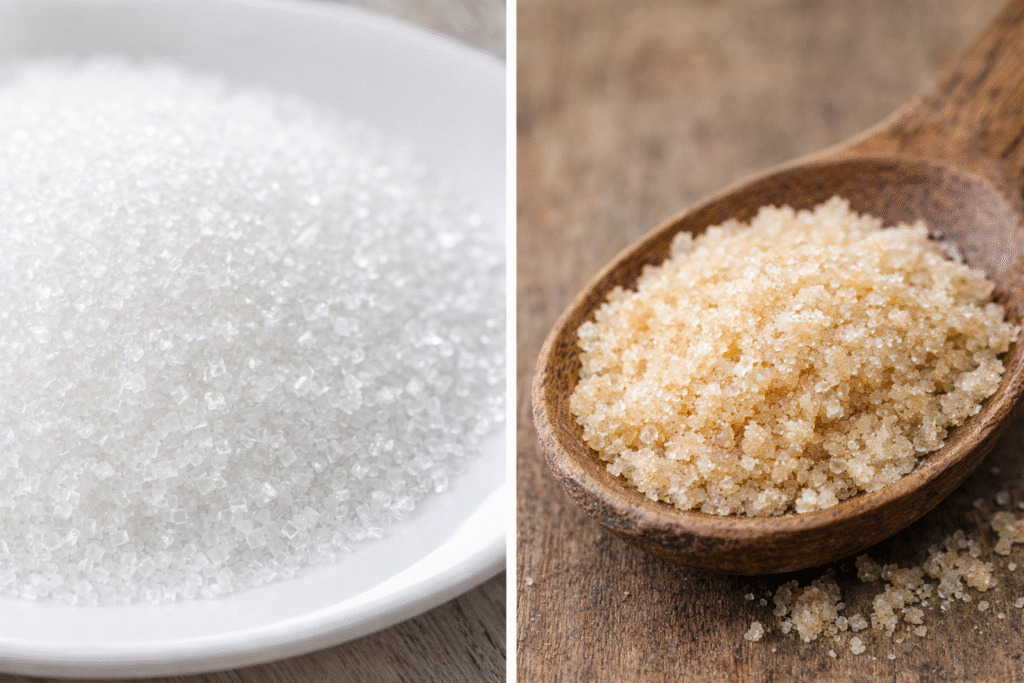
2. Nutritional Value
- Sugar: Zero nutrients
- Khand: Small amounts of minerals (not a miracle food, but better)
3. Impact on Blood Sugar
- Sugar: Causes quick sugar spikes
- Khand: Slower absorption compared to refined sugar
(Important note: Khand still affects blood sugar — it’s not sugar-free.)
4. Taste
- Sugar: Sharp, instant sweetness
- Khand: Mild, earthy, slightly caramel-like
Many people notice that chai made with khand feels “lighter” and doesn’t leave that sticky sweetness in the mouth.
Why Are More Indians Switching to Khand?
This shift isn’t happening because of Instagram trends alone. It’s happening because people are listening to their bodies.
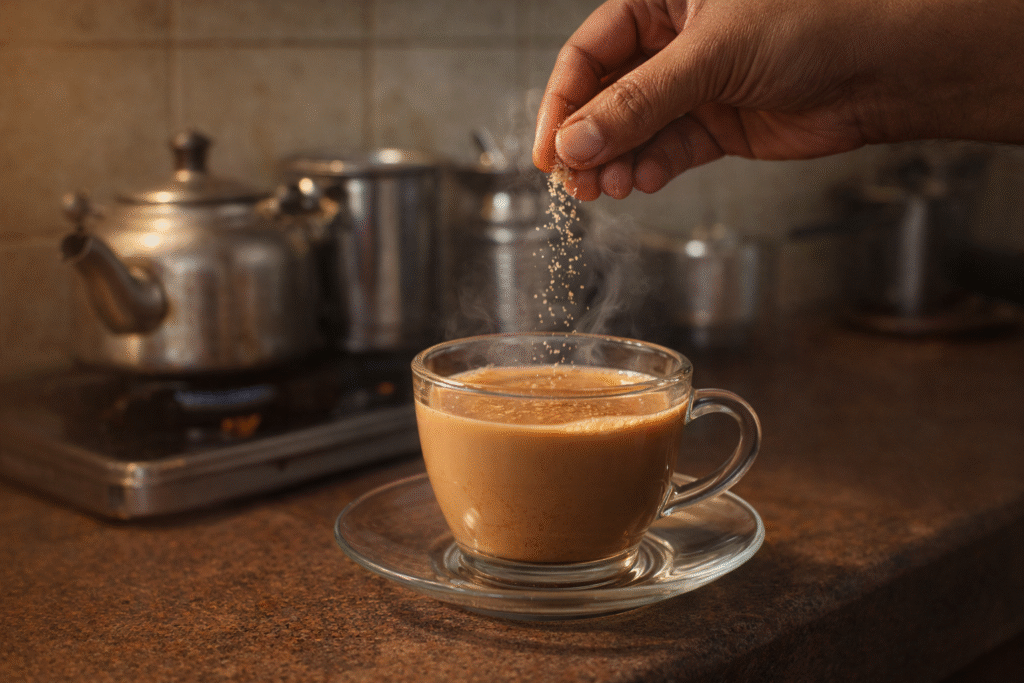
1. Digestive Comfort
Refined sugar often causes bloating or heaviness for many people. Khand, being less harsh, is generally easier on the stomach.
2. Traditional Wisdom Is Making a Comeback
From cold-pressed oils to millets, Indians are slowly returning to foods their grandparents trusted. Khand fits perfectly into this movement.
3. Growing Lifestyle Diseases
With diabetes, obesity, and hormonal issues rising in India, families are becoming cautious — not eliminating sugar completely, but choosing better alternatives.
4. Cleaner Ingredient Labels
People are reading labels now. Chemical-sounding names scare them, and rightly so.
Is Khand Safe for Diabetics?
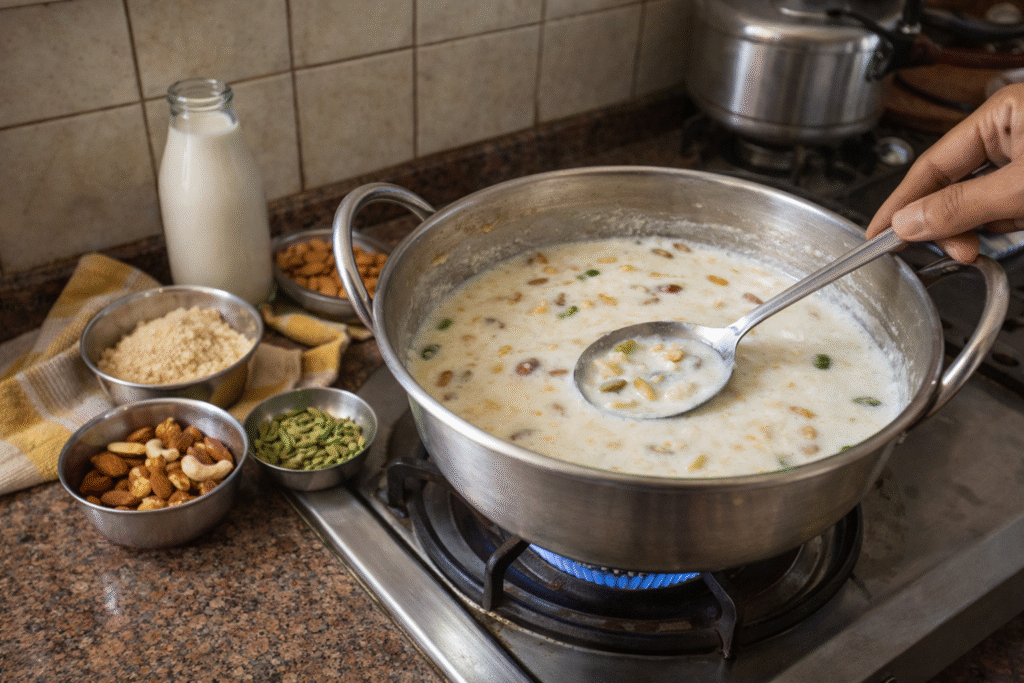
Let’s clear this up honestly — khand is NOT a diabetic-friendly sweetener.
It may be:
- Less refined
- Slightly lower on the glycaemic impact
But it is still sugar.
If you are diabetic:
- Use khand only after consulting your doctor
- Portion control is non-negotiable
- Don’t assume “natural” means “safe in large amounts”
Many people make this mistake and regret it later.
Sugar vs Khand for Weight Loss: Which Is Better?
Neither sugar nor khand helps with weight loss. But if you’re choosing between the two:
- Khand is the less harmful option
- Sugar encourages overeating and cravings
- Khand feels more satisfying in smaller quantities
So instead of 2 spoons of sugar, you might feel content with 1 spoon of khand. That itself makes a difference over time.
How to Use Khand in Everyday Indian Cooking
Switching doesn’t mean changing your entire kitchen routine. Khand fits easily into Indian meals.
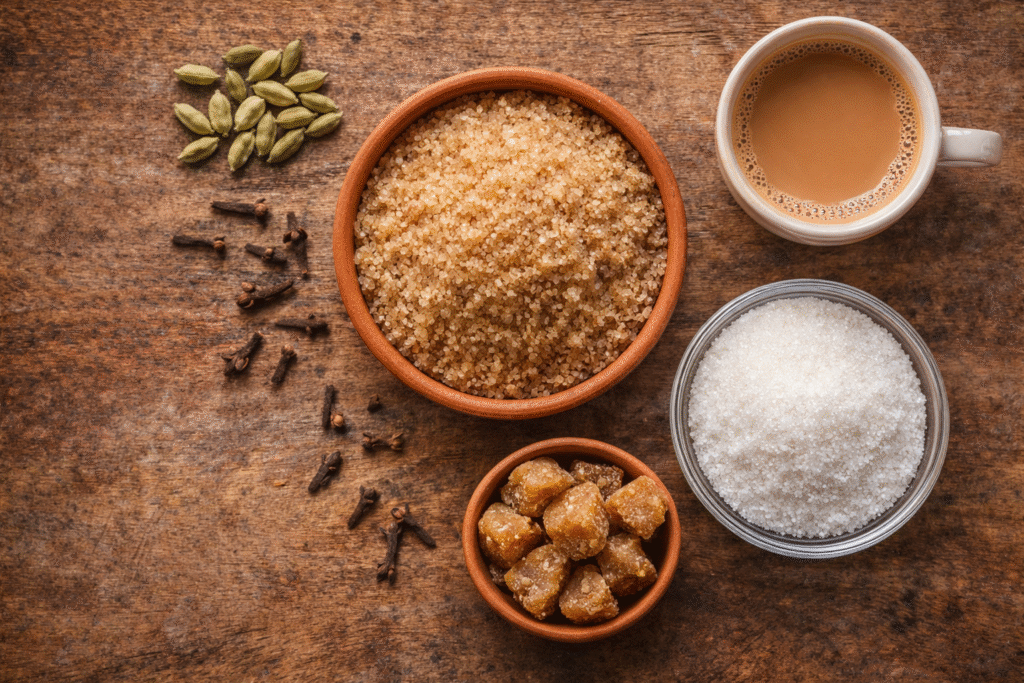
Best ways to use khand:
- Morning chai or coffee
- Homemade sweets like halwa or kheer
- Lassi and chaas
- Festival sweets in moderation
Where sugar still works better:
- Bakery items requiring exact sweetness
- Commercial desserts
At home, though, khand blends beautifully with desi flavours.
Is Khand the Same as Jaggery?
Not exactly.
| Khand | Jaggery |
|---|---|
| Powdered, dry | Solid blocks or liquid |
| Mild flavour | Strong molasses taste |
| Easier replacement for sugar | Needs adjustment |
If you want a direct sugar replacement, khand is more convenient than jaggery.
The Honest Truth: Should You Switch?
Here’s the balanced answer — yes, but wisely.
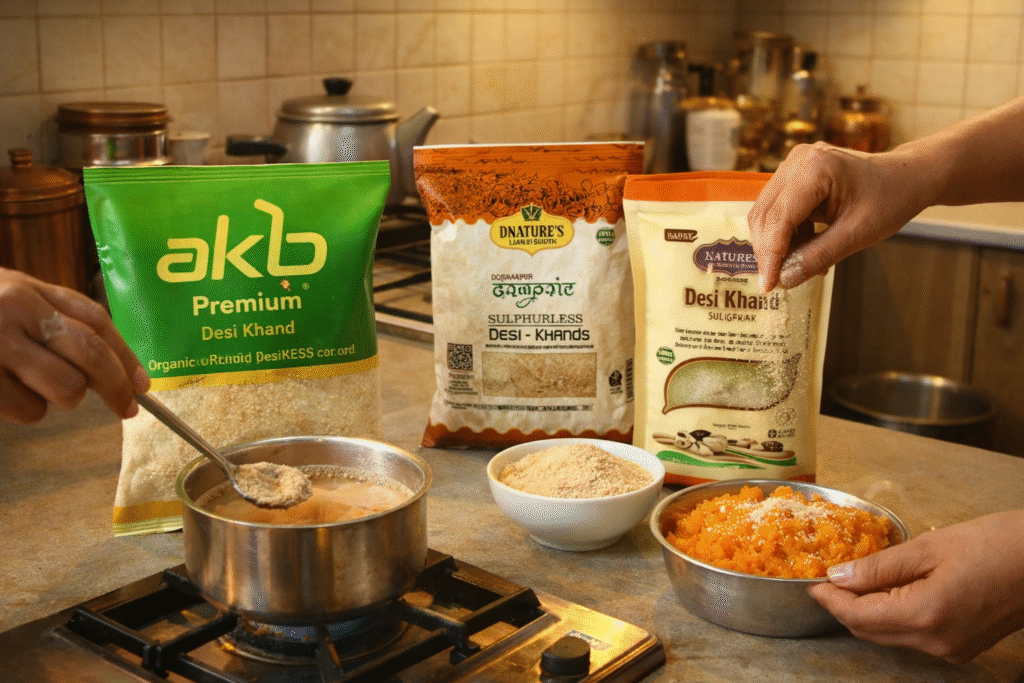
Switching from sugar to khand:
- Is a healthier step
- Supports cleaner eating
- Aligns with traditional Indian food habits
But:
- It’s not a free pass to overconsume
- Moderation still matters
- Lifestyle matters more than one ingredient
No single food will fix poor eating habits — but small better choices add up.
Final Thoughts (From One Indian Kitchen to Another)
We don’t need extreme diets or imported superfoods to eat better. Sometimes, the solution is already in our culture — quietly waiting to be rediscovered.
Sugar vs khand isn’t about good vs bad.
It’s about better vs worse.
If you’re anyway adding sweetness to your food, choosing khand over refined sugar is a small but meaningful change — one your body will thank you for in the long run.
And like our elders always said — “Meetha thoda ho, par sahi ho.” 😊



I was just searching for this info for some time. After 6 hours of continuous Googleing, finally I got it in your website. I wonder what’s the lack of Google strategy that do not rank this type of informative sites in top of the list. Usually the top websites are full of garbage.