


Poha benefits for health become obvious on those rushed mornings when there’s no time to think. You’re hungry, already late, and still want something that won’t make you feel heavy or sleepy too soon. That’s when poha quietly saves the day.
In many Indian homes, poha isn’t planned—it just happens. While the chai is boiling, the pan is already on the stove. The smell is mild, comforting, and familiar. It’s not fancy food, but it feels right 🥣.
What Is Poha and Why Does It Feel So Light?
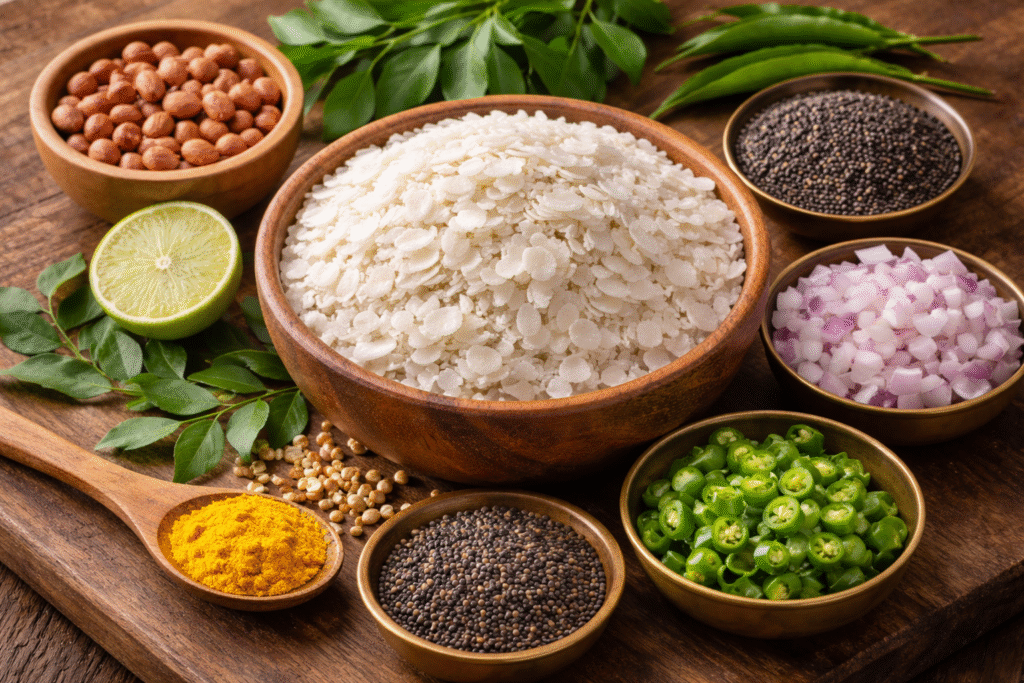
Poha is made from flattened rice. The rice grains are soaked, pressed thin, and dried. This simple process changes everything.
Once cooked, poha becomes soft very quickly. It doesn’t sit in the stomach for hours or cause heaviness. That’s why it’s often given to children, elderly people, and even someone who isn’t feeling well. The stomach doesn’t struggle, yet the body still gets energy 🌿.
Steady Energy Without Feeling Lazy
One of the biggest poha benefits for health is the kind of energy it gives. You don’t feel stuffed, and you don’t feel tired either.
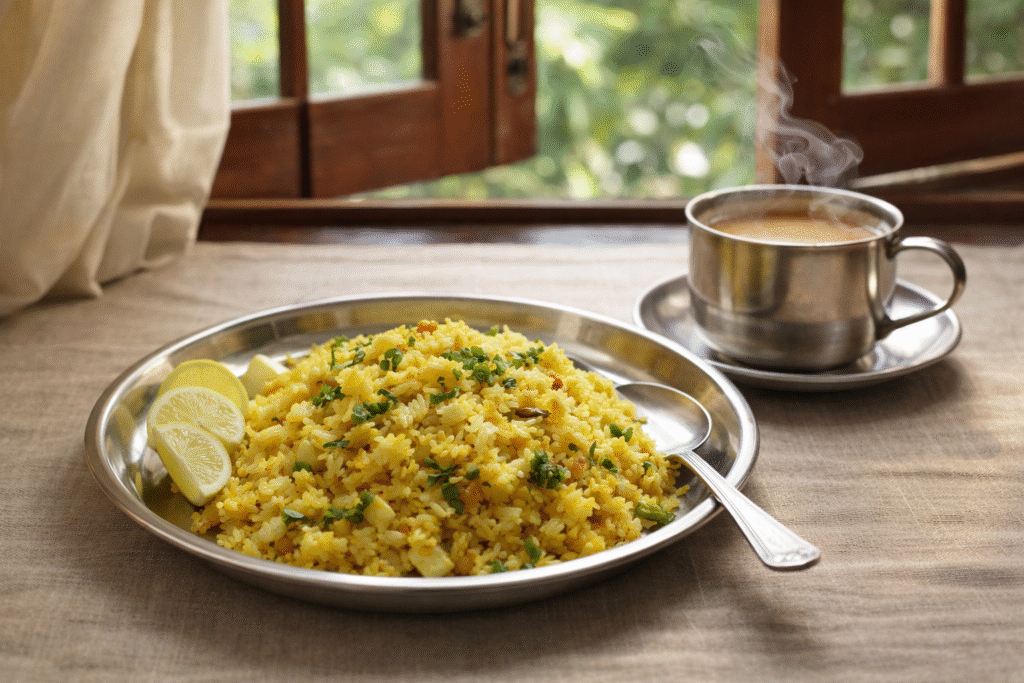
Poha contains carbohydrates that release energy slowly. When peanuts are added, they bring protein and good fats. Vegetables add fibre. Without even realising it, you end up eating a balanced breakfast.
That’s why poha works so well for:
- Office mornings
- School-going kids
- Busy household routines
It helps you stay active instead of slowing you down 🔥.
Light to Eat, Yet Surprisingly Filling

Poha may look light on the plate, but it keeps hunger away longer than expected. Once cooked, the flattened rice fluffs up and creates volume.
Add onions, peas, carrots, or even lauki, and the fibre helps you feel full without that tight, uncomfortable feeling. Especially in summer, when heavy food feels irritating, poha feels easy on the body 🪷.
Simple Ingredients That Support the Body
Poha works because of its simplicity. Each ingredient does its job quietly.
- Flattened rice gives quick energy
- Peanuts add protein and healthy fats
- Mustard seeds and curry leaves help digestion
- Vegetables bring vitamins and fibre
- Lemon juice improves iron absorption 🍋
Nothing extra. Nothing forced. Just real food.
Gentle on Digestion and Morning Appetite
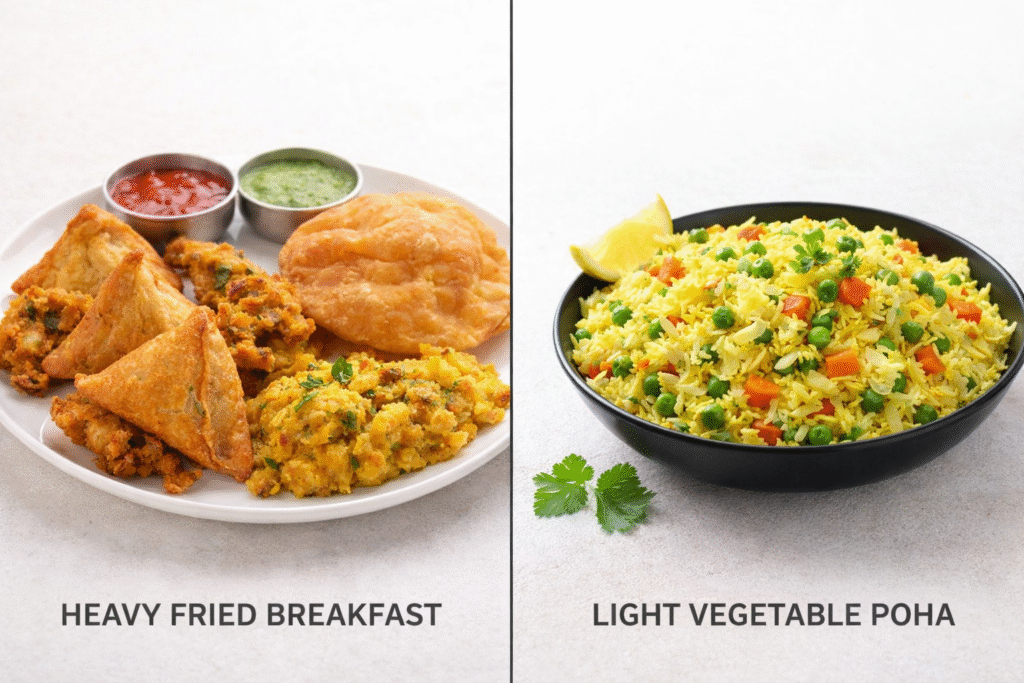
Many people don’t feel very hungry in the morning. Some deal with acidity or bloating. Poha fits well here.
It’s lightly cooked, not oily, and doesn’t irritate the stomach. It’s also easier to digest than many wheat-based breakfasts. Adding hing or ginger—something most Indian kitchens do naturally—makes it even gentler 🌿.
Why Poha Fits Indian Daily Life So Well
Indian mornings are unpredictable. Sometimes breakfast is eaten calmly, sometimes in a hurry, sometimes packed and eaten later. Poha adjusts easily.
It reheats well, doesn’t lose texture immediately, and allows regional changes—coconut in the south, sev in the west, potatoes and peas in the north. Still, the base remains nourishing and light.
A Breakfast That Changes with the Season
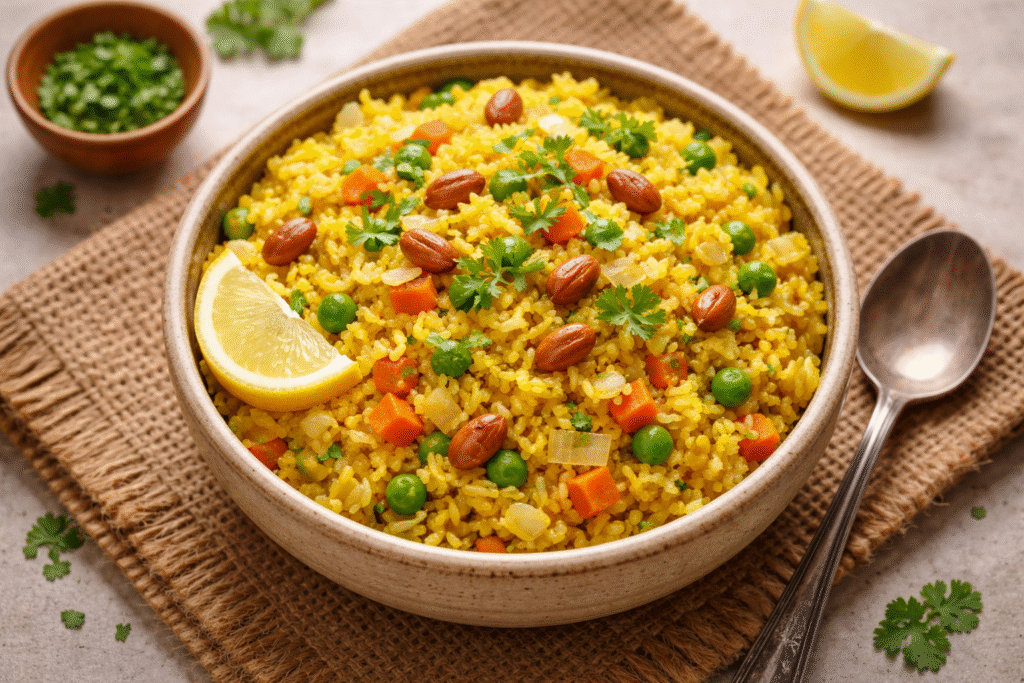
In summer, poha feels light and comfortable. In winter, adding peanuts, vegetables, or a little ghee makes it more warming.
The recipe changes slightly, but the comfort stays the same. That’s traditional food wisdom at work 🥣.
Final Thoughts
Poha benefits for health are simple and reliable. It doesn’t rely on trends or labels. It works because it respects the body’s pace—giving energy without overload.
For busy mornings and calm digestion, poha remains one of the most dependable breakfasts in Indian homes. Sometimes, simple food really does the most work 🍯.


