

Tawa not being right is often the actual cause for rotis not being soft, even though we often attribute it to our dough or technique.
I am sure you too must have experienced those situations where your roti is too hard, or it is burnt at one side and raw at the other. And somehow, everything seems to be slightly off.
The truth is, a good tawa makes a big difference to our cooking, and once you start using the right one, everything falls into place.
1. Why a Tawa Matters So Much
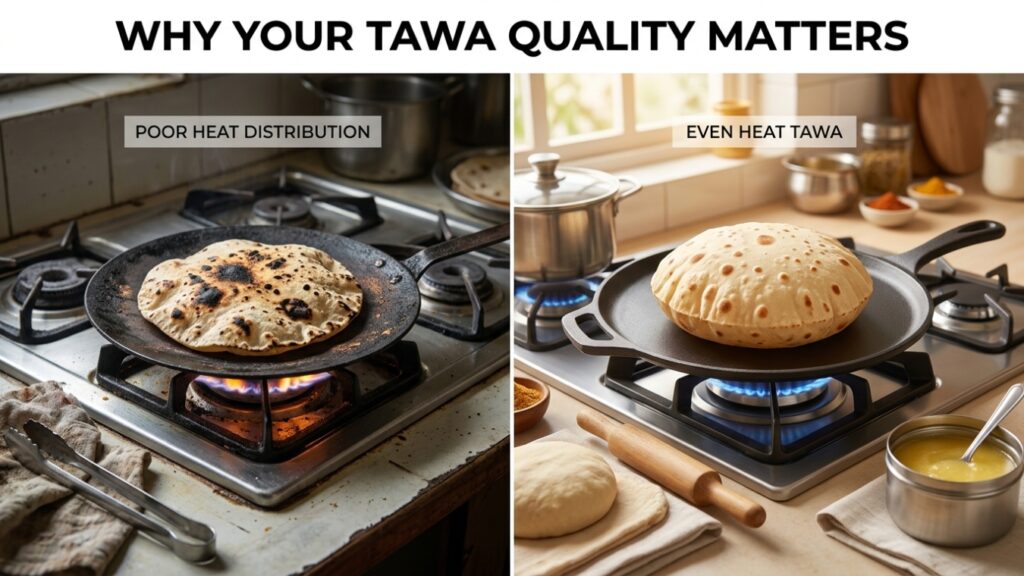
In our Indian kitchen, a tawa is not just another kitchen utensil but one that is used every single day.
From rotis and parathas to dosas and cheela, so many dishes depend on how well your tawa is functioning.
In case the heat is not distributed evenly, you may end up with:
• Rotis are being cooked improperly
• Food sticking and burning
• Taste and texture are being affected
A good tawa ensures steady heat, which means better results without constant adjusting.
2. Types of Tawa (Which One Suits You Best?)
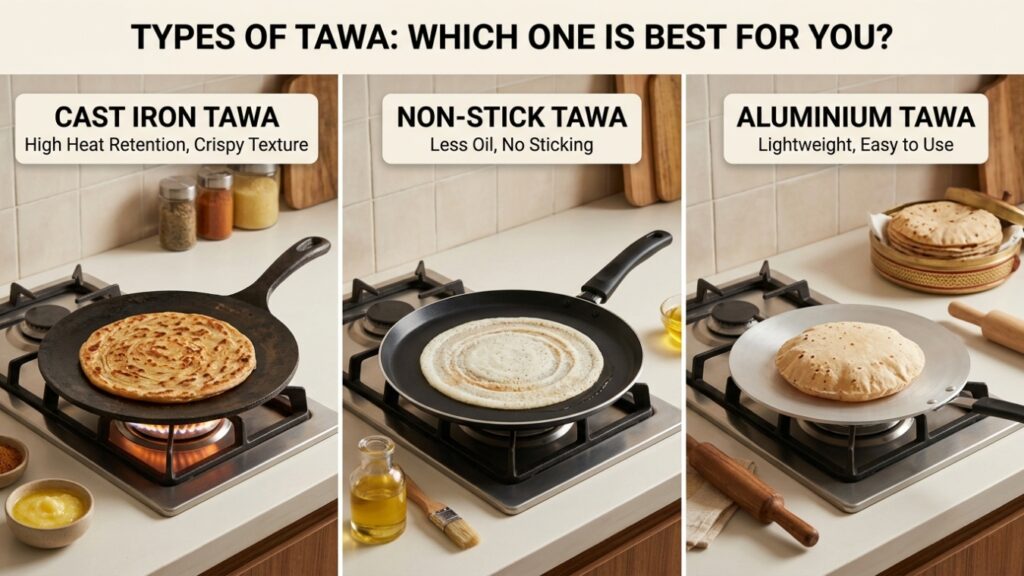
a) Cast Iron Tawa
This is one of the most popular and favorite tawas used in many Indian households.
Cast iron has high heat retention capacity, which helps to cook rotis evenly and provides that crispy texture to rotis.
One advantage of this tawa is that food cooked on this tawa contains iron, which is naturally preferred by many people.
b) Non-Stick Tawa
For all those who prefer to use non-stick tawas for easy cooking!
Food does not stick to this tawa, and one can use less oil for cooking. This is very useful for making quick breakfasts on busy mornings.
c) Aluminium Tawa
Aluminum tawa is another popular choice for many people!
It is easy to use and can be handled without any problems. Aluminum tawa is easy to clean and can be used for quick cooking. However, one disadvantage is that food cooked on this tawa may not be evenly cooked because aluminum has poor heat retention capacity.
It’s a practical choice, but not the most durable in the long run.
3. How to Choose the Right Tawa
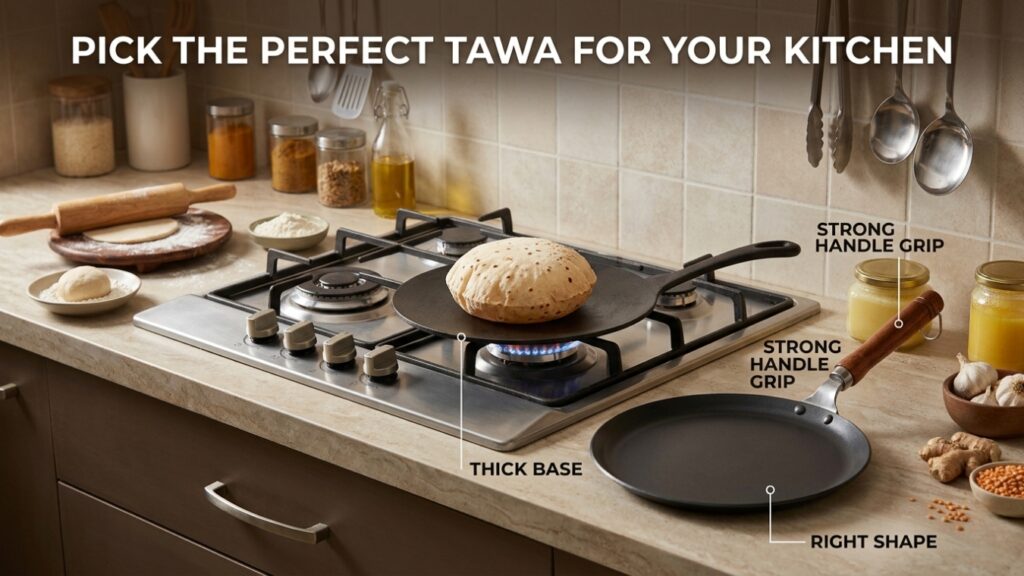
Thickness and Base Quality
Thicker tawas will help you cook more evenly and prevent burning. Thin ones may burn your food too quickly and spoil the texture.
Handle Grip
The handle should be strong and not burn even when you’re using it to cook.
Shape (Flat or Slightly Curved)
Flat ones are best for making rotis and parathas.
Slightly curved ones are best for making dosa and pancakes.
4. The Link Between Your Tawa and Your Ingredients
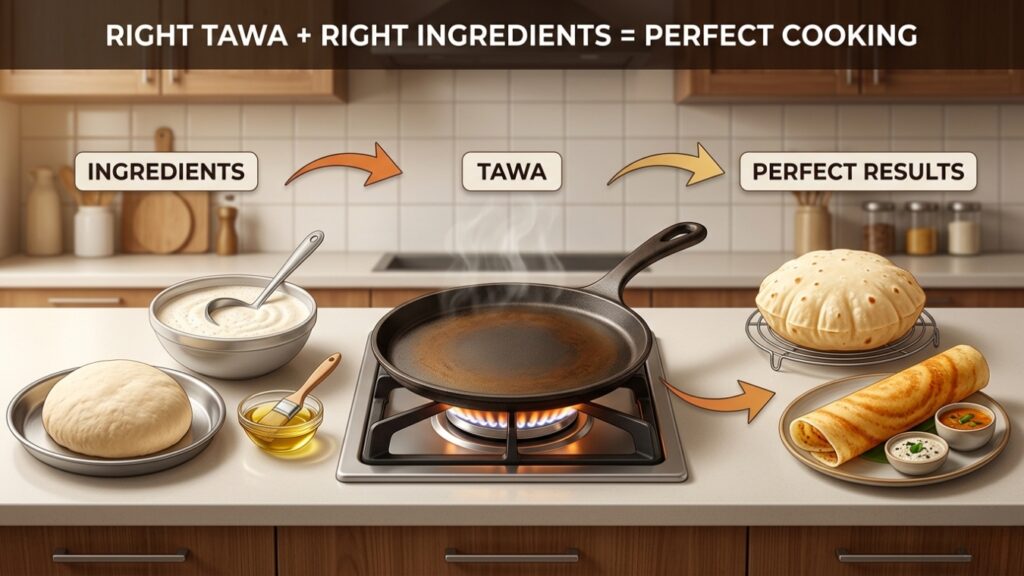
This is something we all seem to forget.
If you are using whole wheat flour, then the flour already contains gluten.
If you want to make a roti puff up and be soft, you want to make sure the roti is cooked on the tawa.
If you are making a dosa, then the batter is already fermented.
If you want the dosa to turn out crispy, you want to make sure the surface of the tawa is at the right temperature.
Even the oil you use can turn out differently depending on the tawa.
So, yes, the ingredients are very important, but the tawa is also very important.
5. How It Changes Your Daily Cooking
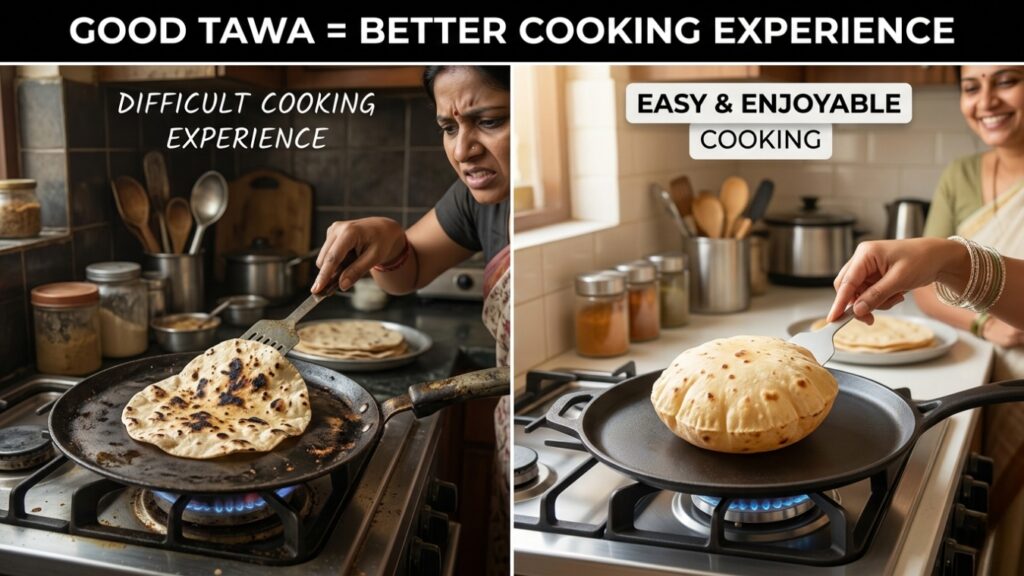
Let’s think of your daily routine.
If your tawa is in good condition:
• Rotis will cook faster
• It’s easier to flip them
• You won’t get frustrated while cooking
It’s one of those small upgrades that make your cooking time more enjoyable.
6. Traditional Wisdom Meets Modern Comfort
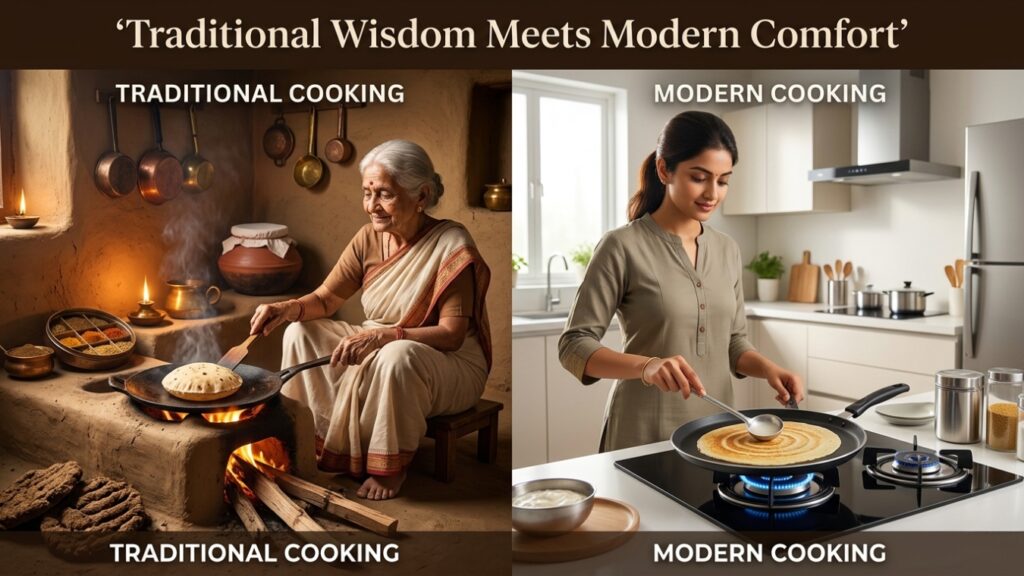
Our grandparents mostly used cast iron tawas. And that is for a reason. They are reliable and work quite well.
The best choice for you depends on your lifestyle.
If you are into traditional cooking and do not mind a bit of work, cast-iron tawa is a great option.
If you are into quick and easy cooking, a non-stick tawa will work wonders for you.
Both can be great options in a modern Indian kitchen.
7. Smart Buying Tip (Aap Ka Bazar)
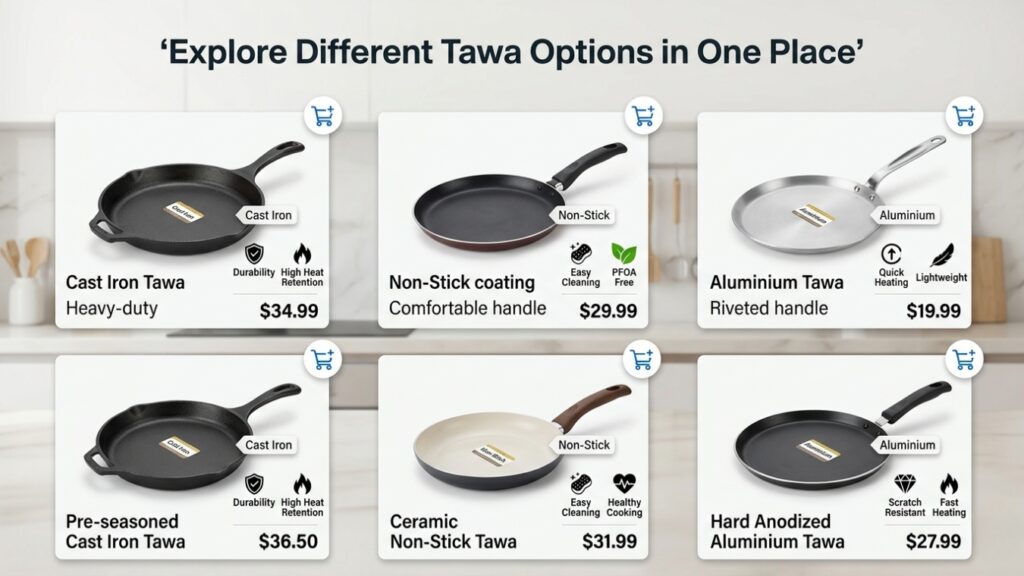
If you are looking to buy a new tawa, you can check out the options available on Aap Ka Bazar.
You can compare the different kinds of tawas available, be it cast iron, non-stick, or aluminium.
Why It Works
A good tawa doesn’t complicate cooking; it simplifies it.
Traditionally, tawas provide longevity and an organic cooking experience; modern tawas provide additional ease of use and efficiency.
What it does best is how it subtly elevates all your cooking. Whether it’s texture or flavor, you can taste the difference in every meal.
Conclusion
Sometimes, the problem lies not in the recipe, but in the equipment you are using.
Are your rotis or dosas not turning out the way you want them to? Well, maybe it’s time to change your tawa.
Making this simple change can make your day-to-day cooking experience easier and more pleasant. Give it a try and see the difference yourself.