


Winter changes how we eat. Not in a big way, just small things. You wake up feeling colder. Evenings feel longer. And food starts mattering a little more. You want it warm. You want it satisfying. When you’re cooking, you don’t overthink. You add a bit more oil or fat without checking the spoon twice. It feels okay in winter. And at some point, you stop and think — Should I use ghee or butter?

It’s not a health question at that moment. It’s about taste and comfort. Both are sitting in the kitchen. Both feel right for the season. And that’s why the choice even comes up.
Both are familiar.
- Both smell amazing.
- Both make food taste better.
- But in winter, they don’t make your body feel the same.
The Quiet Difference We Often Ignore
Butter feels indulgent. A little Western. Great on toast or in baked treats.
Ghee feels homely. Like something your nani insisted on adding to dal without asking.
That difference isn’t just emotional—it’s practical.
Ghee: The Winter-Friendly Fat

Ghee has always been a part of Indian winters for a reason. It warms you from the inside. Not in an instant, dramatic way—but slowly, steadily.
A spoon of ghee in hot dal.
A soft roti brushed lightly with it.
That comforting feeling after lunch where you feel full, not heavy.
That’s ghee doing its job.
It sits easy on the stomach, helps digestion when winter slows everything down, and quietly supports your immunity when seasonal coughs and colds start doing rounds.

Butter: Nice, But Not for Everyday Winter Meals
Butter isn’t bad—it’s just not built for daily winter cooking.
It works beautifully on toast, in cakes, or when you’re treating yourself. But if used regularly in winter meals, it can feel heavy. That uncomfortable fullness? That’s usually butter.
In cold weather, when digestion is already slower, butter can add to that sluggish feeling.
Why Our Elders Always Reached for Ghee
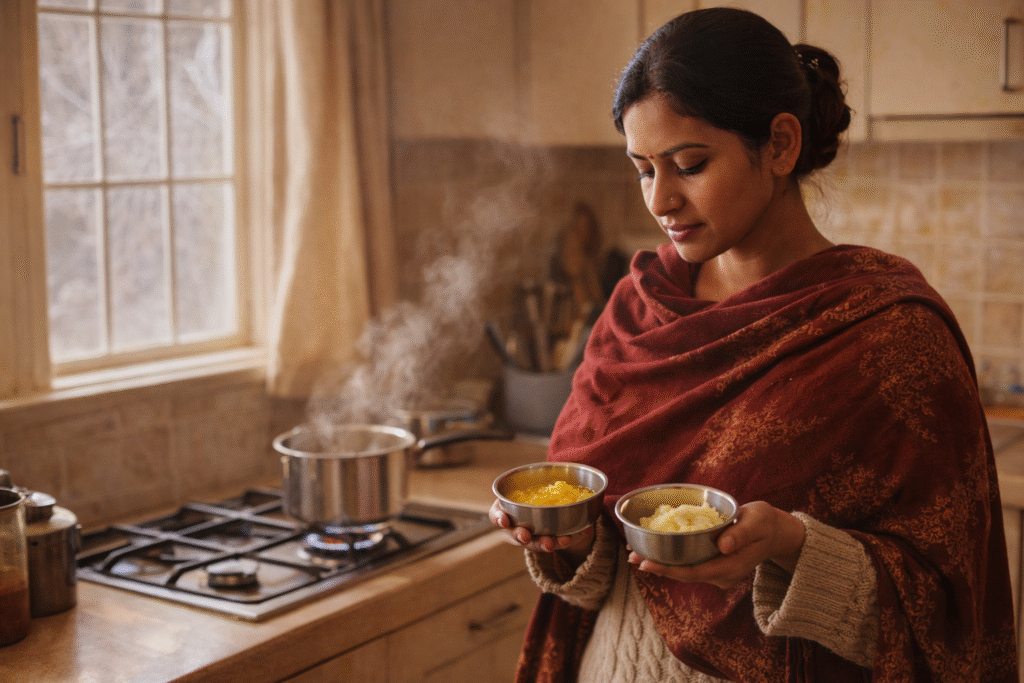
There’s a reason ghee shows up everywhere in Indian homes once winter starts. It’s not about trends or health labels—it’s about how the body feels after eating.
Ghee:
- Keeps the body warm
- Feels light after meals
- Blends perfectly with Indian food
- Works even in small amounts
You don’t need a lot. Just enough to make food nourishing.
Ghee vs Butter: Which One Wins for Winter?
If your goal is daily winter wellness, the answer leans strongly towards ghee.
| Factor | Ghee | Butter |
|---|---|---|
| Warmth | ✅ Excellent | ❌ Limited |
| Digestion | ✅ Improves | ❌ Can slow |
| Immunity | ✅ Supports | ❌ Minimal |
| Daily Use | ✅ Ideal | ❌ Occasional |
Small Winter Habits That Make a Difference

You don’t need to change everything. Just little choices:
- A spoon of ghee on hot rice or khichdi
- Lightly greased rotis straight off the tawa
- Cooking vegetables in ghee instead of oil
- A few drops in warm milk before bed
These aren’t “health hacks”. They’re winter habits we’ve always known.
So, Ghee or Butter?
Butter is for cravings.
Ghee is for care.
In winter, when your body asks for warmth, comfort, and balance, ghee simply understands the assignment better.
Sometimes, listening to old kitchen wisdom is the most human thing you can do.



Woah! I’m really digging the template/theme of this website. It’s simple, yet effective. A lot of times it’s very hard to get that “perfect balance” between user friendliness and appearance. I must say you have done a fantastic job with this. Additionally, the blog loads very fast for me on Safari. Excellent Blog!