
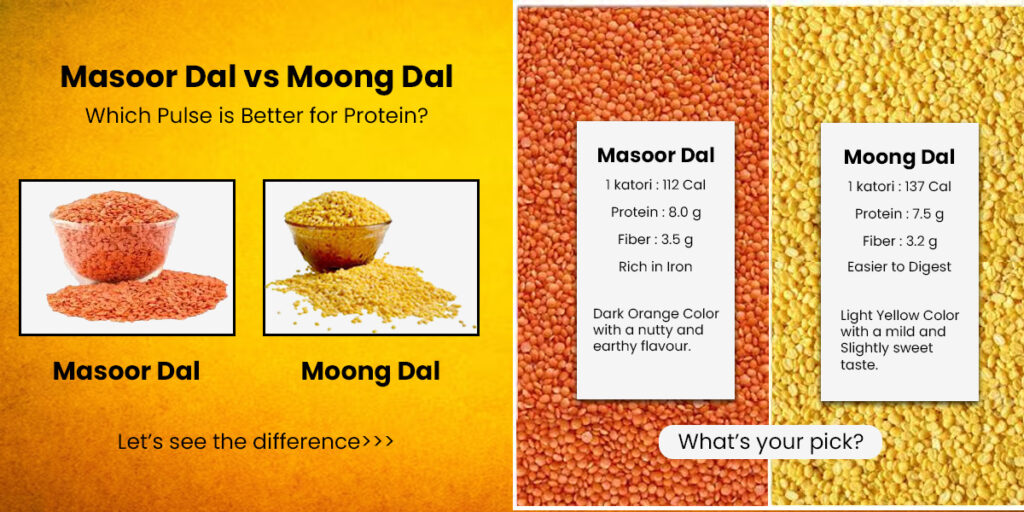

Discover the nutritional benefits of Moong Dal vs. Masoor Dal in this detailed comparison. Learn which pulse is better for protein content and overall health. Find out how these two dals stack up in terms of protein, vitamins, and minerals for a healthy diet.
Nutritional Breakdown: Protein Content in Moong Dal vs. Masoor Dal
Moong Dal (Green Gram)- per 100 gm
- Protein: 24.0 grams
- Calories: 347 kcal
- Carbohydrates: 60.0 grams
- Fiber: 16.0 grams
- Fat: 1.2 grams
- Vitamins & Minerals: Rich in B vitamins, magnesium, and potassium
Masoor Dal (Red Lentils)- per 100 gm
- Protein: 25.0 grams
- Calories: 358 kcal
- Carbohydrates: 63.0 grams
- Fiber: 9.0 grams
- Fat: 1.0 gram
- Vitamins & Minerals: High in iron, folate, and magnesium
Both Moong Dal and Masoor Dal are excellent sources of protein, with Masoor Dal containing slightly more protein. However, Moong Dal has a higher fiber content, which can support digestion.
Health Benefits of Moong Dal: Why It’s a Top Choice for Protein
- Heart Health: Moong Dal‘s fiber and antioxidant properties support heart health by lowering cholesterol and improving blood circulation.
- Skin and Hair: Packed with antioxidants and vitamins, Moong Dal helps maintain healthy skin and promotes hair growth.
- Muscle Building: Due to its high protein content, Moong Dal aids in muscle recovery and growth, making it beneficial for active individuals.
Health Benefits of Masoor Dal: The Protein Powerhouse
- Weight Loss: Low in fat and high in fiber, Masoor Dal helps with weight management by promoting satiety and curbing hunger, making it an ideal choice for weight loss.
- Diabetics: With its low glycemic index, Masoor Dal is an excellent option for diabetics as it helps regulate blood sugar levels and promotes steady energy.
- Digestion: The high fiber content of Masoor Dal aids digestion, prevents constipation, and supports gut health, making it an excellent choice for digestive well-being.
Moong dal vs masoor dal ultimate comparison
Digestive Health:
- Moong Dal: Known for better digestive support due to higher fiber.
- Masoor Dal: Also aids digestion but with less fiber.
- Winner: Moong Dal (superior for digestion).
Weight Loss:
- Moong Dal: Due to its high fiber and protein, it promotes satiety and aids weight loss.
- Masoor Dal: Also supports weight loss, but slightly less fiber may impact long-lasting fullness.
- Winner: Moong Dal (higher fiber supports longer fullness).
Muscle Building:
- Moong Dal: A good source of protein, helping with muscle recovery.
- Masoor Dal: Slightly higher protein content, aiding in muscle repair and growth.
- Winner: Masoor Dal (slightly higher protein).
Diabetic-Friendly:
- Moong Dal: Low glycemic index, helps manage blood sugar levels.
- Masoor Dal: Also low glycemic but slightly higher in carbs.
- Winner: Moong Dal (better for controlling blood sugar).
Heart Health:
- Moong Dal: Supports heart health with high fiber and antioxidants.
- Masoor Dal: Also supports heart health with its fiber content and antioxidants.
- Winner: Tie (both are heart-healthy options).
How to Incorporate Moong Dal and Masoor Dal into Your Diet for Maximum Protein
1. Moong Dal in Soups & Stews
- Why: Moong Dal cooks quickly and has a mild flavor, making it perfect for adding to soups and stews. It helps thicken the dish while boosting protein content.
- How: Add cooked Moong Dal to your vegetable soups, lentil stews, or broth-based soups for an extra protein punch. Pair with whole grains for a complete protein.
2. Masoor Dal in Curries
- Why: Masoor Dal has a rich, earthy flavor and a creamy texture when cooked, making it ideal for flavorful curries and dals.
- How: Prepare Masoor Dal curry by cooking it with tomatoes, onions, garlic, and spices like turmeric, cumin, and coriander. Serve with brown rice or quinoa for a balanced, protein-rich meal.
3. Moong Dal Sprouts
- Why: Sprouting Moong Dal enhances its protein content and nutrient profile, making it an even more nutritious food choice.
- How: Soak Moong Dal overnight, then sprout it by keeping it in a damp cloth for 2-3 days. Add the sprouts to salads, sandwiches, or smoothies for a crunchy, protein-packed addition.
4. Masoor Dal Salad
- Why: Masoor Dal can be boiled and used in cold dishes, providing a protein boost while remaining light and refreshing.
- How: Cook Masoor Dal, then let it cool. Toss with chopped vegetables, herbs, olive oil, lemon juice, and seasonings to create a nutritious salad.
5. Moong Dal Pancakes (Chilla)
- Why: Moong Dal can be ground into a batter and made into savory pancakes or chillas, providing a high-protein, gluten-free meal option.
- How: Blend soaked Moong Dal with water, spices, and optional vegetables like spinach or grated carrots. Cook like pancakes on a griddle for a nutritious breakfast or snack.
6. Masoor Dal and Rice for a Complete Protein
- Why: While neither Moong Dal nor Masoor Dal is a complete protein alone, pairing them with rice provides all nine essential amino acids for a complete protein profile.
- How: Serve Masoor Dal or Moong Dal with a side of brown rice, quinoa, or whole wheat bread to ensure you’re getting a complete protein. You can also add some nuts or seeds for added protein.
Ultimately, the choice between Moong Dal and Masoor Dal comes down to your personal taste preferences, nutritional goals, and how you plan to incorporate them into your meals. For those seeking a higher fiber intake, Moong Dal may be the better choice, while Masoor Dal may be preferred for its slightly richer protein profile. Either way, both are powerful protein sources that can be enjoyed in a variety of delicious dishes, helping you meet your nutritional needs and supporting your overall health.
Aap Ka Bazar®, a monthly grocery app, website, and chain of stores, has gathered this information, including nutritional values, through online research and writing tools.
With its affordability, accessibility, and numerous health benefits, masoor dal and moong dal both deserve to be a staple in your meals. #yahasabmilega


Great comparison! I had no idea there were so many benefits to each type of dal. I’ve always favored moong dal, but I’m intrigued by the nutritional highlights of masoor dal. I’ll definitely be trying to incorporate both into my meals. Thanks for the insights!
Great comparison! I always wondered about the protein content differences between moong dal and masoor dal. This post is super helpful in making a more informed choice for my meals. Looking forward to trying new recipes with both!
Great comparison! I always thought moong dal was the healthier option, but your insights on masoor dal’s protein content really opened my eyes. I’ll definitely be incorporating more of both into my meals!
Great comparison! I always used to think moong dal was the healthier option, but your article really highlighted the benefits of masoor dal too. I appreciate the detailed insights on protein content and how each pulse can fit into different diets. Thanks for sharing!
Great comparison! I’ve always favored moong dal for its lightness and ease of digestion, but I’m intrigued by the nutritional benefits of masoor dal. This post has given me a lot to think about for my meal prep. Thanks for the insights!
Great comparison! I’ve always used moong dal in my meals, but now I’m curious to incorporate masoor dal more often given its high protein content. Thanks for the insights!
Great post! It’s interesting to see the comparison between Moong Dal and Masoor Dal. I appreciate the nutritional breakdown and how versatile both pulses are in cooking. Personally, I love using Moong Dal for its lighter texture, but Masoor Dal has a rich flavor that can’t be beat. What are your favorite recipes for each?
Great comparison! I’ve always wondered about the protein content in different dals, and this post clarified a lot for me. It seems like both have their unique benefits. I think I’ll start incorporating more moong dal into my meals. Thanks for the insights!
Great comparison! I always struggled to choose between moong dal and masoor dal for my protein intake. This post clarified their nutritional benefits perfectly. I appreciate the detailed insights and the way you explained the best uses for each. Looking forward to trying out some new recipes!