

When considering the comfort bites, a pack of crunchy rusks along with a cup of tea is the ultimate combination. These golden, crispy slices are not just another quick bite they are home, nostalgia, and warmth all at once. No matter whether it is your morning tea ritual or a snug night break, crunchy rusks smoothly suit every moment.
The Simple Joy of Crunchy Rusks
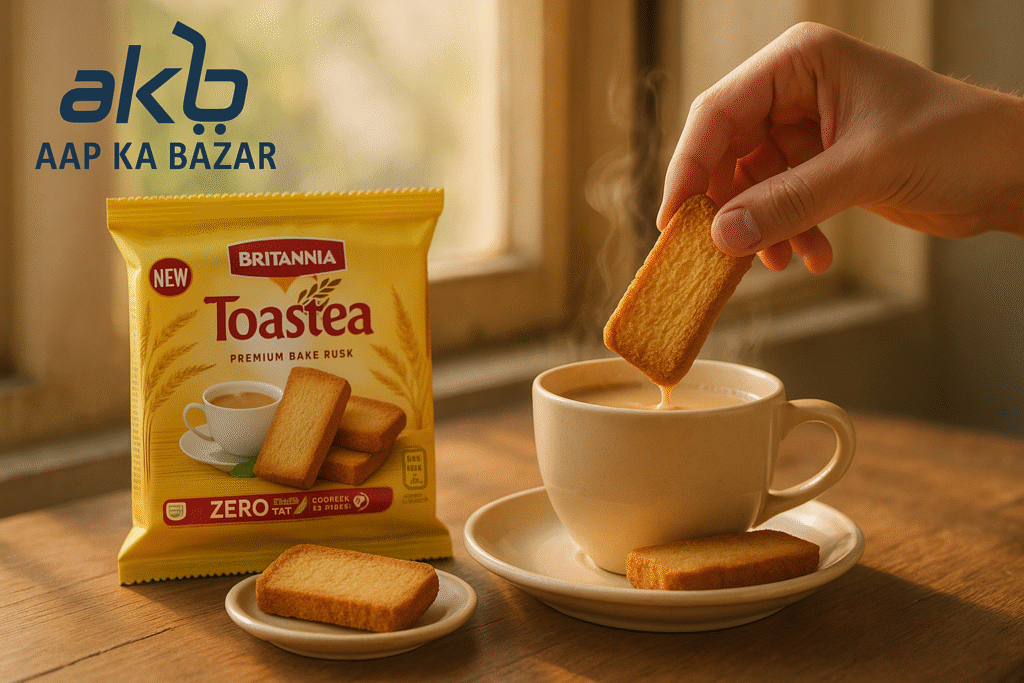
Simple yet delightful, crunchy rusks are a real treat. Double-baked, they are the kind of bread that has to be baked twice before they become totally dry and crisp, and there, thus, is the pleasure of crackling in every bite. They are very light in weight, very airy, and full of flavors but are neither greasy nor heavy.
In contrast to most packaged snacks, rusks are not so bold. They are not sugar and spice coated but still they manage to hit the right spot somehow. The ‘crunch’ sound that is familiar to everyone makes them timeless regardless of age and preference.
A Perfect Partner for Your Tea or Coffee

To be candid — the flavor combination of crunchy rusks and tea is the best ever. That minute of dipping one of the rusks into your hot chai or coffee gives it the right amount of flavor and after that, it melts in your mouth. The combination of crisp and soft is nothing less than magic.
In most of the Indian families, tea-time is not completed without rusks. These crunchy pastries unite people for a little at a time dunk during an early morning, a 4 PM office break or a leisurely Sunday evening.
A Healthier Alternative to Fried Snacks

In case you are the one, who is determined, to make healthier snacking choices, biscuit and toasted rusks will be your buddies. As they are baked and not fried, thus, they are less oily and have fewer calories than chips or namkeen.
Presently, there are even multigrain or homemade rusks, which are made from whole wheat, suji, or oats. The fiber content in these versions is increased, and thus your snack is not only tasty but also guilt-free. They provide you with the satisfying crunch without compromising your health a real win-win situation!
The Rise of Homemade and Artisanal Rusks

Homemade rusks have been rediscovered by many people as a charming treat, though they are not a new thing. They are simple to prepare, have a long shelf life, and their crispiness can be maintained for days. Now, many households are making them of the crusts of bread, a little butter, and with the same amount of love which makes the rusks lighter and fresher, hence customized.
Artisanal bakeries, too, have come into the picture and are trying out new flavors such as cardamom, jeera, cinnamon, and honey. Every batch seems to unfold a story—warm, soothing, and filled with the goodness of home.
Why Crunchy Rusks Will Always Stay a Classic

The reason crunchy rusks are so popular is straightforward. They are uncomplicated, adaptable and comforting. You can eat them on their own, with tea or top them with butter, jam or cheese and have a snack.
They travel well, they keep well, and they satisfy every appetite (from the early morning craving to the late-night snack). It is therefore no surprise that they have been a pantry staple in the Indian household for decades.
A Crunch That Connects Generations
At the end of the day, crunchy rusks aren’t just snacks — they’re memories baked into golden slices. They remind you of slow mornings, shared laughter, and those simple joys that make everyday life special.
So next time you crave something light yet fulfilling, skip the chips and open that rusk packet instead. Take a bite, enjoy the crunch, and feel the warmth of home in every crumb.



I’ve always found that rusks bring people together. Whether it’s an early morning with the family or a quiet evening alone, they just make the moment feel complete. That little crunch really does add a unique touch to your tea break.
Rusks with chai genuinely are the ultimate comfort combo — that nostalgia angle is so true. The way you tied it to morning rituals and cozy night breaks captures it perfectly. Now craving a cup and a couple of those crispy slices.
The pairing of rusks with chai is deeply embedded in South Asian snacking culture — the article captures that ritual quality well. The texture difference between oven-dried and twice-baked rusks affects how they absorb tea, which dedicated rusk enthusiasts definitely notice.
This was a genuinely useful read on crunchy rusks – the irresistible snack that makes every t…. The section covering – the irresistible snack offered a perspective I hadn’t considered. For visual work in my projects, I’ve been using Nano Image — it handles text-to-image generation and photo editing in the browser, which works well for fast iterations. Thanks for the post.
The history of rusks in South Asian tea culture is a warm read — the way these baked goods have adapted across regions while keeping their core character is a nice metaphor for culinary tradition in general. The baking technique notes for achieving that signature crunch without over-drying were unexpectedly detailed and useful. This has inspired me to try making a batch from scratch this weekend.
Really solid breakdown here on Crunchy Rusks – The Irresistible Snack That Makes Every Tea Break Better. The connection between AI capabilities and creative workflows is something I’ve been thinking about a lot lately. This adds useful context to that conversation.
Rusks are such a nostalgic snack — the way you describe the crunch-to-softness ratio after dunking in tea is spot on. They’re underrated compared to biscuits, and your post makes a great case for bringing them back to the everyday snack rotation.
Rusks and chai really are an unbeatable combination — that satisfying crunch that softens just enough when dunked is one of those simple pleasures that never gets old. The variety breakdown you’ve put together is a nice guide for trying different styles.
There’s something deeply comforting about rusks with tea — that satisfying crunch is hard to replicate with anything else. The variety options covered here make it clear this isn’t just a nostalgic snack but a genuinely versatile accompaniment. Perfect reading for the next tea break.
The way you framed crunchy rusks – the irresistible snack that makes every tea break better is helpful. When considering the comfort bites, a pack of crunchy rusks along with a cup of tea is the ultimate combination makes the piece feel grounded rather than just theoretical.
I’ve been pairing baked rusks with my morning tea for years, and that combination really turns every simple break into pure comfort. Nothing beats that initial crunch right before the slice softens and melts in your mouth.
Very interesting perspective and well written post! Thanks for sharing this. (22116)
I like how you described rusks as that light, crispy bite that fits so naturally into a tea break. The “guilt-free” angle makes sense too, especially compared with heavier snacks, though I think the best part is still that satisfying crunch after a quick dip in tea.
I like how you describe rusks as a light, guilt-free comfort snack rather than just another biscuit. Their crisp texture really does make them ideal for dunking into tea, and the reminder that they appeal to all ages brought back memories of relaxed family tea breaks.
The description of rusks as a light, guilt-free companion for tea really resonated with me. I especially like that they work for all ages—there’s something comforting about dipping a crisp baked rusk into tea and turning an ordinary break into a small ritual.
The description of rusks as a light, crispy baked snack really captures why they pair so well with tea. I like that the article presents them as a comforting treat for all ages without making them sound overly indulgent.
I like how you highlight rusks as a light, guilt-free option rather than just another sweet snack. Their crisp texture really does make them ideal for dunking into tea, and the simple comfort of that combination brings back memories of relaxed afternoon tea breaks.
The piece captures the appeal of rusks well, especially the point about them being double-baked and light rather than greasy or heavily coated. I’d push back slightly on the idea that their restraint is what makes them timeless; for many people the draw is precisely that they’re plain enough to carry butter, jam, or cheese without competing. The nostalgia angle is also doing a lot of work here, and it might be worth separating genuine texture appeal from childhood association. One small gap: the article promises to explain why they pair with tea or coffee but cuts off before making the case, so the central claim stays asserted rather than argued. Still, the description of the crackle and airiness is vivid and matches what makes a good rusk distinct from ordinary toast.
I love how you describe crunchy rusks as a guilt-free comfort bite for all ages. It makes me want to grab a cup of tea right now! The idea of a light, crispy snack that fits any tea break sounds really nice.
The point about double-baking really explains why rusks stay crisp for days without becoming greasy, and the detail about dipping them in chai until they soften just enough feels very true to how most Indian families actually enjoy them. I also liked that the article treats homemade and artisanal versions, like cardamom or jeera, as part of the same tradition rather than a trend. It made me think about how a simple baked snack can carry so much memory across generations.
Golden rusks with tea is one of those combinations that is less about the snack and more about the pause. The nostalgia point is fair — a crunchy slice next to a cup is a morning ritual in a lot of households, not a trend. I would only add that the rusk has to stay dry enough to dunk without collapsing, otherwise the whole ritual falls apart.
Double-baked until they crackle is the whole point of a rusk, and pairing them with tea is still the most honest description. The nostalgia angle works because they really are more texture than flavor. I keep a tin for late-night breaks for exactly that reason — light, dry, and not a full snack.
Double-baked rusks with evening tea is exactly the ritual I grew up with, so the nostalgia angle landed. Calling them home, warmth, and a golden crunch is more honest than the usual snack-review hyperbole. I also liked that you treated them as a moment, not a category to optimize.
The point about double-baking being what gives rusks their dry, crackling texture is well made, and it explains why they keep so much longer than soft bread. I also liked the reminder that baked rusks are a lighter option than fried chips or namkeen, though the article could have said more about how much sugar and fat store-bought versions actually contain. The cardamom and jeera flavor ideas from artisanal bakeries make me want to try baking a batch at home.
The point about double-baking really explains why rusks stay crisp for days, and I liked how the post contrasted them with fried snacks without overstating the health angle. The detail about families dipping rusks in chai during the 4 PM office break felt familiar and grounded. I also appreciated the mention of cardamom, jeera and cinnamon versions from artisanal bakeries, though I wondered how homemade ones compare in shelf life.
The point about double-baking is what makes this piece convincing, since it explains why rusks stay crisp without being greasy or heavy like most packaged snacks. I also liked the reminder that tea-time in Indian households is rarely complete without them, and the mention of cardamom, jeera and cinnamon versions shows how a simple bake can be varied. The comparison with fried snacks feels fair rather than exaggerated, though I would have enjoyed a little more on how homemade batches keep their crunch over several days.
This piece captures something I rarely see in snack writing: the idea that rusks are not bold or heavily coated, yet still hit the right spot. The detail about double-baking and the crackle in every bite makes the texture feel tangible. I also appreciated the point that tea-time in many Indian families isn’t complete without rusks, which turns a simple biscuit into a shared ritual. The homemade and artisanal section left me curious about how cardamom or jeera versions compare with the plain ones.