


Milk forms an essential part of Indian households’ grocery requirements. Whether it be for their morning tea/ coffee or for breakfasts, sweets and general meals, it is a key component of daily consumption. Hence any minor rise in its price level will impact the budget and regular grocery expenditures of the household.
The recent hike in the Amul milk prices, becoming effective from November 12, 2026, has been widely reported throughout India. The Gujarat Cooperative Milk Marketing Federation (GCMMF), which distributes milk products as Amul, has hiked the prices of popular fresh pouch milk variants by around 4% to 5%. Consumers will now have to shell out ₹2 to ₹4 extra per litre of different variants.
But the current rise in milk packet price is not only about the hike in the price of milk packets. In addition, it also reflects the increasing cost of dairy production, geographical factors, the cost of farmers and inflationary effects on food in the Indian economy.
Let us understand the new Amul milk prices, their history and its implications on Indian consumers.
1. Amul Milk Price Hike: What Are the New Rates?
Amul has adjusted the price of their key fresh pouch milk products as of November 12, 2026. This adjustment is different depending on the type of milk and its fat percentage.
Below are the new rates:
| Milk variety | Previous price | New price | Increase |
|---|---|---|---|
| Amul Taaza | ₹60/L | ₹62/L | ₹2 |
| Amul Gold | ₹76/L | ₹80/L | ₹4 |
The product known as Amul Taaza with 3% milk fat has been made two rupees costlier per litre, while the product Amul Gold that comes with 6% milk fat has risen in price by four rupees per litre. The other varieties include Amul Shakti and Amul Tea Special.
For the general public, it would mean incurring extra costs for a necessary item. Furthermore, the cost incurred could become apparent in case the family purchases multiple litres of milk daily.
2. How Have Amul Milk Prices Changed Over the Years?
The recent change in milk prices in Amul is one of several instances of fluctuating dairy prices in India. Throughout time, prices for milk have been driven by inflation, costs of cattle feed, cost of transportation, production conditions, and payments to dairy farmers.
The previous price adjustment prior to that which occurred in November 2026 was made in May 2026.
Past price changes should be considered in relation to increasing costs. In situations where cattle feed costs are high, dairy farmers will have to incur higher costs in order to take care of the cattle. Likewise, higher costs of fuel and packaging mean higher production costs.
Why is this important?
- Continuous increase in prices may lower the purchasing power of households.
- Families may revise their monthly food budget.
- Small food enterprises may have to think again about pricing of their products.
- Farmers may get good procurement prices, but then production costs may also go up.
A graph of price changes in history may help readers better grasp the trend. But yearwise prices of Amul Gold and Taaza must be taken from previous price announcements, not estimated.
3. Why Does Geography Influence Milk Prices in India?
Various states in India experience varied climatic conditions, rainfall and availability of resources for agriculture. Therefore, there could be variations in milk production and availability.
Geographical factors affect the cost of producing and distribution of milk.
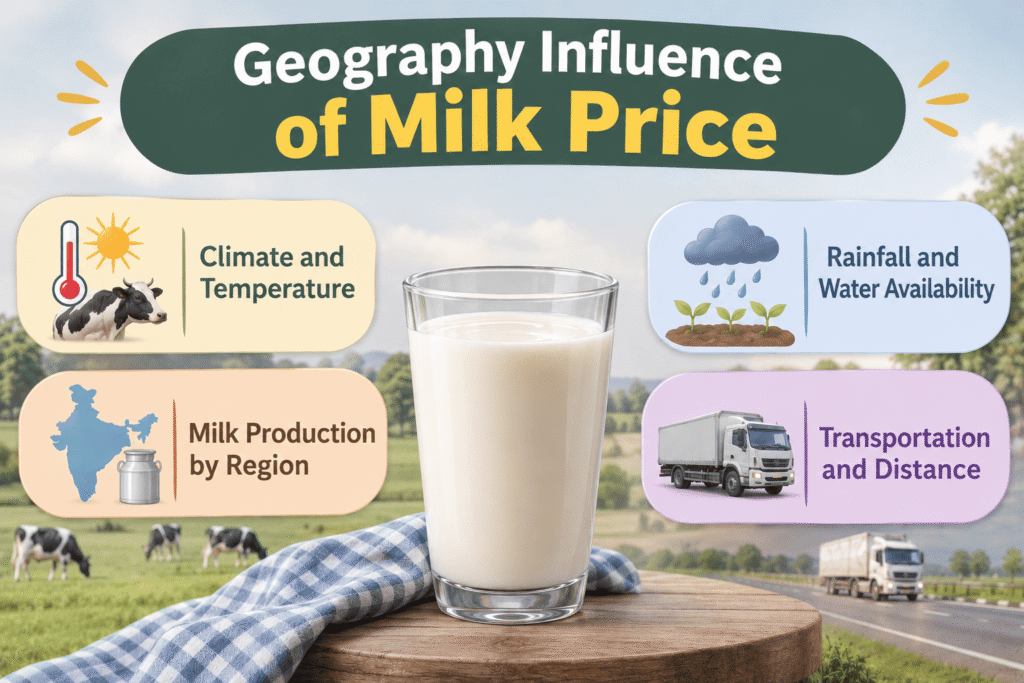
- Climate and temperature
High temperatures or heat waves might affect the health and feeding habits of dairy animals. In such a case, heat affects the health and productivity of the animals. Extra costs incurred due to high temperatures include the cost of cooling and animal welfare.
- Rainfall and availability of water
Rainfall directly impacts the availability of green fodder and water for cattle. For instance, low rainfall or drought may lead to the shortage of fodder. Therefore, the farmers will incur extra costs through purchasing feed for the animals.
- Milk production by region
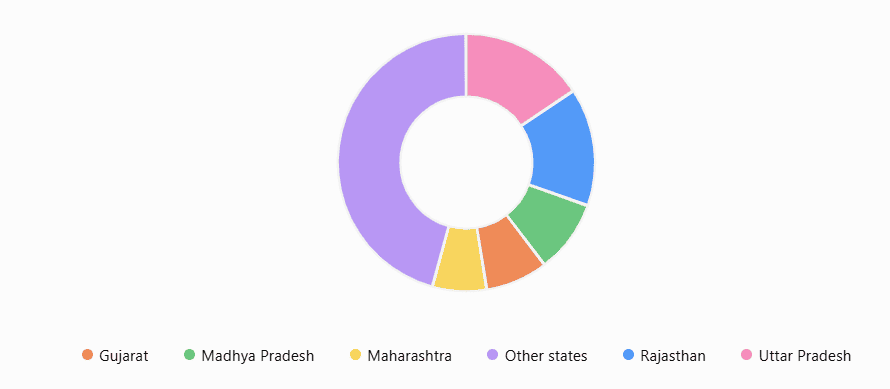
There are Indian states that produce a lot of milk in India. According to APEDA’s data for 2024-25, the states which produce a large amount of milk in India include Uttar Pradesh, Rajasthan, Madhya Pradesh, Gujarat and Maharashtra.
Share of India’s milk production
Top milk producing states, 2024-25. Other states are categorized together.
- Transportation and Distance
Milk is an item that needs adequate storage and temperature regulation. This means that for the transportation of milk from dairy farms in rural areas to cities, there must be collecting centers, chilling centers, cold trucks, among others.
Additionally, costs of fuel, road network and distances may affect the price of milk.
Geographically, this is one of the factors causing the difference in availability and prices of milk.
4. Why Has Amul Increased Milk Prices in November 2026?
Amul milk rate increment is associated with the increase in cost throughout the milk production chain. As per the statement provided by GCMMF, there are various factors that have led to the rate increment.
Following are some of the reasons:
- Increased cost of feed for cows: The cost of materials like maize, oil cake, and molasses has increased, thereby increasing the cost incurred by the farmers.
- Increased cost of fodder: Both green and dry fodder cost contributes to the cost of keeping dairy animals.
- Weather: Scarcity of rain in Gujarat and other states of India makes things difficult for dairy manufacturers.
- Cost of transportation: Higher fuel cost increases the cost of transportation.
- Packaging and processing cost: Increased packaging film cost and processing cost is one of the factors for the increase in cost.
Furthermore, Amul has indicated that its member unions raised milk procurement costs from the farmers by 4% to 5% in the last one year. It has been revealed by the organization that about 80% of its income derived using cooperative model is distributed amongst the 36 lakh milk producers.
Thus, it is linked with the issue of supporting dairy farmers as well.
5. How Does Milk Price Inflation Affect India’s Economy?
Not only is milk a household staple, but it is also a very significant commodity in the agricultural economy of India. Therefore, fluctuation in prices of milk will affect various economic sectors.
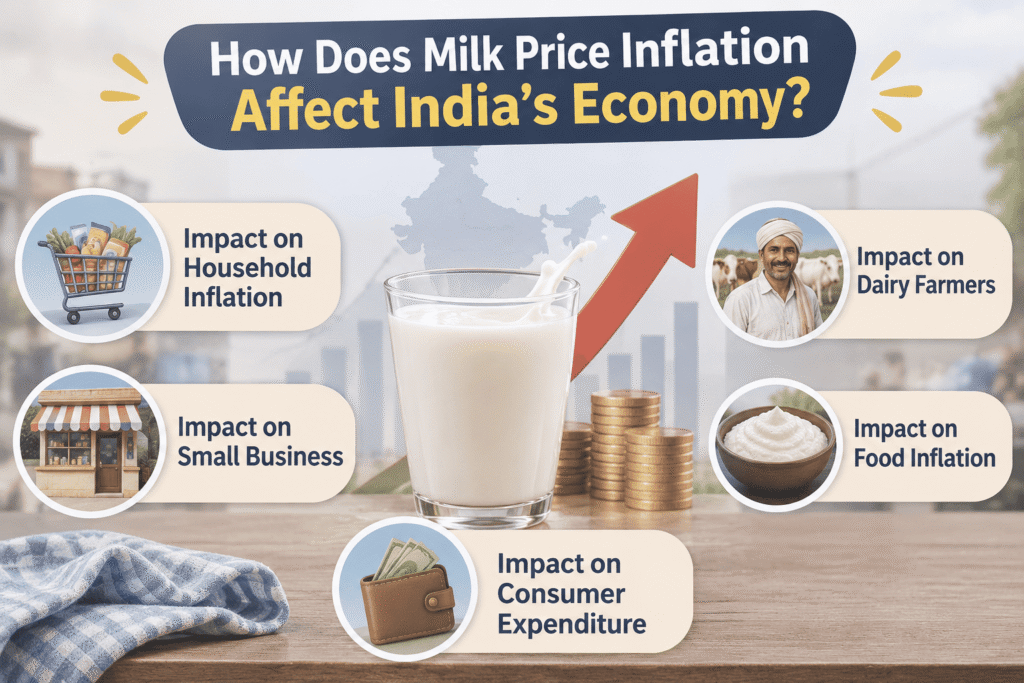
- Impact on household inflation: Because milk is purchased on a regular basis, any increase in its price causes an increase in expenditure for food items. Therefore, families have less disposable income left.
- Impact on dairy farmers: Higher prices of milk can be positive for the income of farmers. Nevertheless, higher prices of cattle feed, fodder, and cattle maintenance cost may lower the profits of farmers.
- Impact on small business: Tea stands, hotels, confectioneries, bakery shops, and other food businesses make use of milk on a regular basis. Therefore, higher prices of milk can affect their operational costs.
- Impact on food inflation: Milk and dairy products are included in household consumption of food. Increase in their prices can increase the level of food inflation. Nonetheless, milk prices are only a portion of factors contributing to inflation in India.
- Impact on consumer expenditure: When basic products become expensive, families can spend less on non-basic goods or choose different products in stores.
6. How Does the Amul Milk Price Hike Affect Indian Households?
For most households, the need for milk is a basic requirement. Any rise in the price of milk, therefore, leads to additional expenses.
For example, take the case of a family which buys two liters of milk on a daily basis. An increase in the price by ₹2 per liter will translate into an extra ₹4 each day, which will add up to ₹120 in 30 days.
This is how an increase in prices will affect various households:
| Daily milk consumption | Additional monthly expense |
|---|---|
| 1 litre | ₹60 |
| 2 litres | ₹120 |
| 3 litres | ₹180 |
| 5 litres | ₹300 |
Increase of ₹2 per litre monthly
Extra cost in 30 days, depending on daily usage of milk.
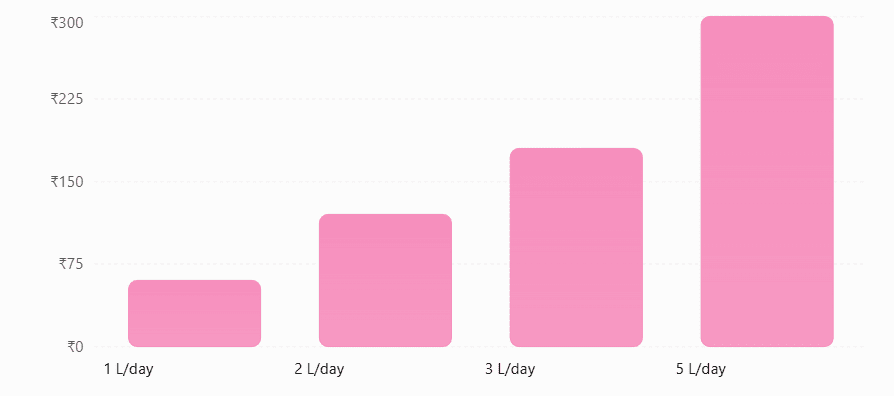
According to the chart above, households which are consuming more quantities of milk will have to bear an additional cost in their monthly grocery bills.
Also, those households which usually buy curd, paneer, butter and other forms of dairy products need to consider this factor.
7. Will Other Dairy Products Become More Expensive?
The milk is a raw material used in making various dairy products, hence variations in costs of acquisition of milk may affect the cost of production of other goods.
Various products whose prices consumers need to look out for are:
- Curd: The milk forms the primary component, hence fluctuations in costs of raw milk may affect production costs.
- Paneer: The process involves the use of large amounts of milk.
- Butter and ghee: Their prices are based on availability of milk fat and costs of production.
- Cheese: The production cost may fluctuate according to milk procurement and production needs.
- Flavoured milk: It consists of milk and additional ingredients.
It is noteworthy that rise in price of milk does not necessarily imply an increase in price of other dairy products since their prices are determined by factors of demand and supply.
8. How Can Consumers Manage Rising Milk and Grocery Expenses?
Even though consumers do not have any say in setting the prices in the market, they can make minor alterations to manage their monthly grocery budgets in a more efficient manner.
Following are the steps that consumers can take to manage rising milk and grocery expenses:
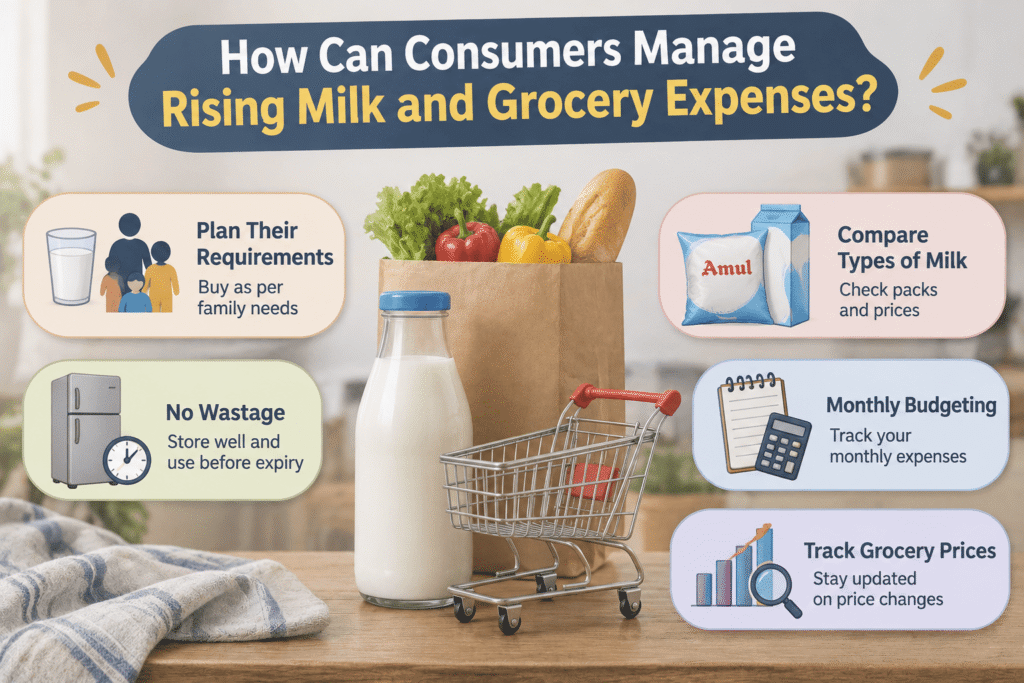
- Plan their requirements: Buy milk depending upon the family consumption.
- No wastage: Ensure proper storage and usage of the milk before its expiry period.
- Compare types of milk: Before buying, compare the different types of milk available, along with different packs and prices.
- Monthly budgeting: Make a record of monthly expenses on milk, along with other necessities.
- Track grocery prices: Make sure you keep yourself updated regarding the price fluctuations of everyday essentials.
Furthermore, online shopping applications can facilitate consumers in organising their regular shopping.
For instance, AAP KA BAZAR is a platform that enables consumers to browse for everyday grocery essentials. Consumers can conveniently manage their grocery requirements by planning them and monitoring their purchases.
In this way, as grocery prices tend to fluctuate, being aware of the household needs will make everyday shopping easy.
9. Amul Milk Prices Compared to Other Dairy Brands
Apart from Amul, other dairy products that are facing a shift in terms of manufacturing and procurement cost include Mother Dairy, Nandini, Verka and Saras, amongst others.
For instance, Mother Dairy hiked the prices of some of its liquid milk variants by ₹2-₹4/litre in Delhi-NCR, effective from November 12, 2026.
But while comparing such dairy products, we need to compare the same kinds of milk, fat percentage, pack size and also geography.
So, it would be a good idea for consumers to verify the retail prices in their locality before making any choice.
10. What Does the History of Milk Prices Tell Us About the Future?
Previous pricing patterns can help us to realize the effect of long term changes in the dairy industry on the milk price.
Here is the brief history of some of the recorded price revisions of Amul:
| Year | Reported price change |
|---|---|
| 2021 | Price increases reported in June and July |
| 2022 | Multiple ₹2 per litre revisions |
| February 2023 | Up to ₹3 per litre increase |
| June 2024 | ₹2 per litre increase |
| May 2025 | ₹2 per litre increase |
| May 2026 | ₹2 per litre increase |
| November 2026 | ₹2–₹4 per litre increase |
This timeline shows how the production cost as well as the procurement costs of the farmers have affected the price of the retail milk.
In the coming years, variables like rainfall, feed availability, climatic factors, fuel costs, and consumer demand will continue to affect the dairy industry.
Thus, keeping a balance between the consumer prices and farmer payment will be critical for the dairy industry in India.
Conclusion
The most recent hike in the price of milk by Amul is an example of how fluctuating costs of production, geographic situations, inflation rates, and the cost that the farmers incur have the potential of affecting the prices of goods consumed on a daily basis.
Several things are responsible for fluctuations in the prices of milk, including increasing costs of cattle feed, variable weather patterns, and transport costs. However, this does not only impact consumers but farmers and small businesses as well as the whole food industry in India.
While there might be an additional expense for consumers in buying the daily milk requirements, making prior plans, minimising wastage, and managing grocery expenses will be of great benefit to the consumers.
Simultaneously, easy-to-access platforms like AAP KA BAZAR can make this exploration of grocery expenses an easy process.