

Think about how much your eyes do in a normal day. You wake up and check your phone, spend hours looking at a laptop, read messages, drive through traffic and perhaps finish the evening watching television. By bedtime, your eyes may simply feel tired. That is why eye-care products often become part of people’s daily routines. Among the options available, Patanjali Drishti Eye Drop is one product that gets attention from people looking for an Ayurvedic eye-care formulation.
The product comes in a 10 ml bottle. Patanjali’s product information lists shwet pyaz (white onion), adrak swaras (ginger juice), nimbu swaras (lemon juice) and shahad (honey) among its ingredients.
But before putting any eye drop into your eyes, there are a few things worth checking. What does the product contain? How is it supposed to be used? And is it appropriate for the particular problem you are experiencing?
Here’s what you should know about Patanjali Drishti Eye Drop.
What Is Patanjali Drishti Eye Drop?
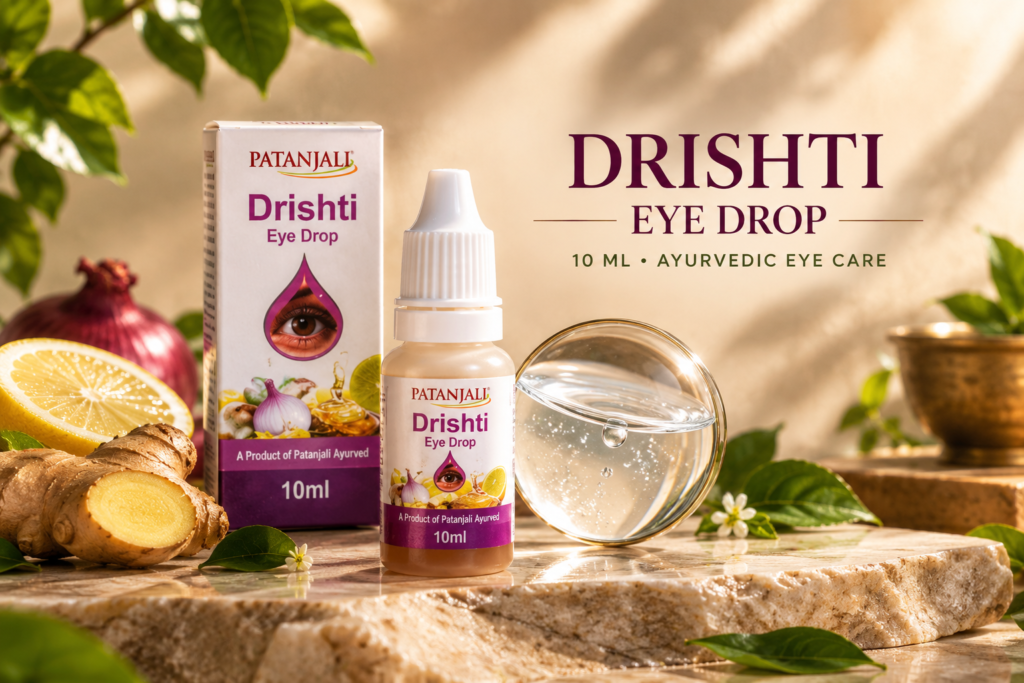
Patanjali Drishti Eye Drop is a 10 ml Ayurvedic liquid eye-care formulation manufactured by Patanjali Ayurved Ltd.
The product is described by the manufacturer as a homogeneous, light-brown liquid with a characteristic odour. It is sold as part of Patanjali’s eye-care range.
One detail on the manufacturer’s product information deserves attention: the product is stated to be used under medical supervision.
In other words, it is better not to look at this product in the same way as an ordinary personal-care item. Eye drops are applied directly to a sensitive part of the body, so following the manufacturer’s instructions matters.
What Are the Ingredients in Patanjali Drishti Eye Drop?
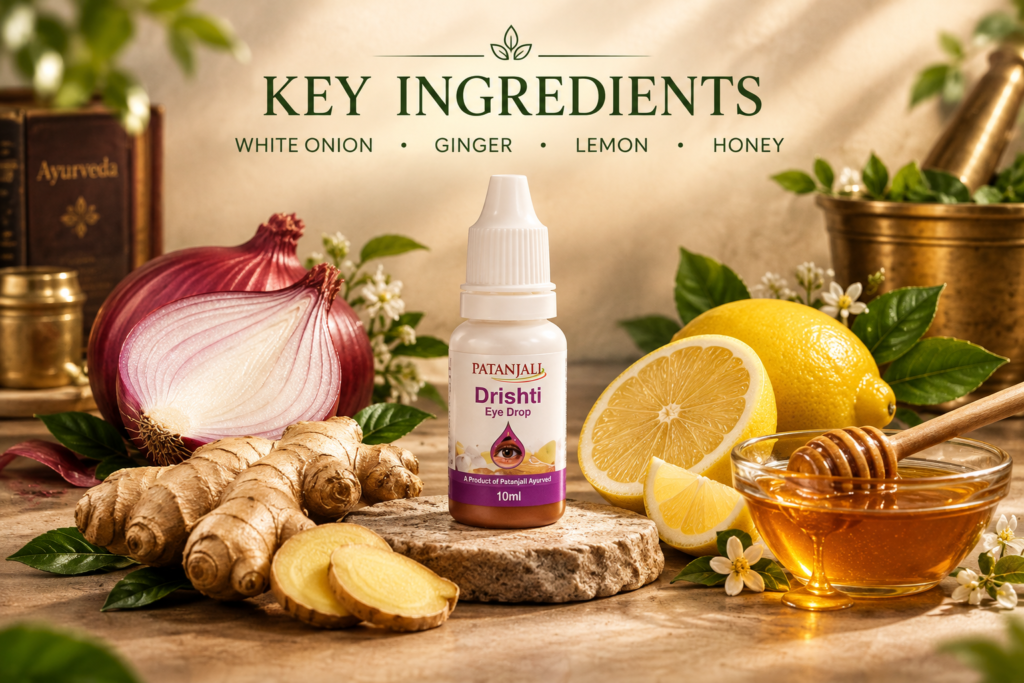
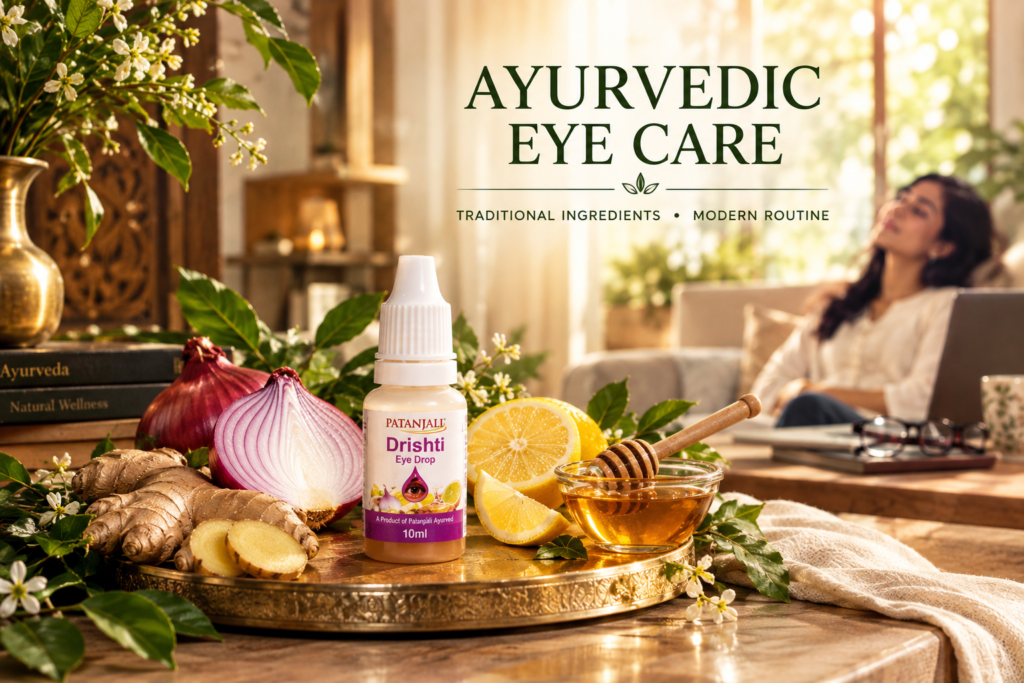
If you prefer to check the ingredients before buying a product, Patanjali lists the following key ingredients for Drishti Eye Drop:
- Shwet Pyaz (White Onion)
- Adrak Swaras (Ginger Juice)
- Nimbu Swaras (Lemon Juice)
- Shahad (Honey)
These ingredients are part of the formulation described in Patanjali’s official product information.
The use of familiar ingredients may be appealing to people who prefer Ayurvedic products. Still, an ingredient being natural or traditionally used does not mean that an eye product will suit everyone.
If you have sensitive eyes or an existing eye condition, it makes sense to get professional advice rather than deciding based only on the ingredient list.
What Is Patanjali Drishti Eye Drop Used For?
This is probably one of the first questions people ask when they come across the product.
Searches for Patanjali Drishti Eye Drop uses can bring up a wide range of information online. Some of it may come from personal experiences or general claims about Ayurvedic eye care.
The manufacturer’s current product listing, however, does not provide a long list of eye diseases that Drishti Eye Drop treats. It mainly provides the product information, directions for use and the recommendation for medical supervision.
So it would be a mistake to assume that the eye drops can treat every type of eye problem.
For example, tired eyes after a long day in front of a screen are not necessarily caused by the same thing as persistent redness, an eye infection or blurred vision. The treatment can therefore be different too.
If an eye problem keeps returning or is affecting your vision, getting the cause checked is more useful than simply trying another product.
How to Use Patanjali Drishti Eye Drop
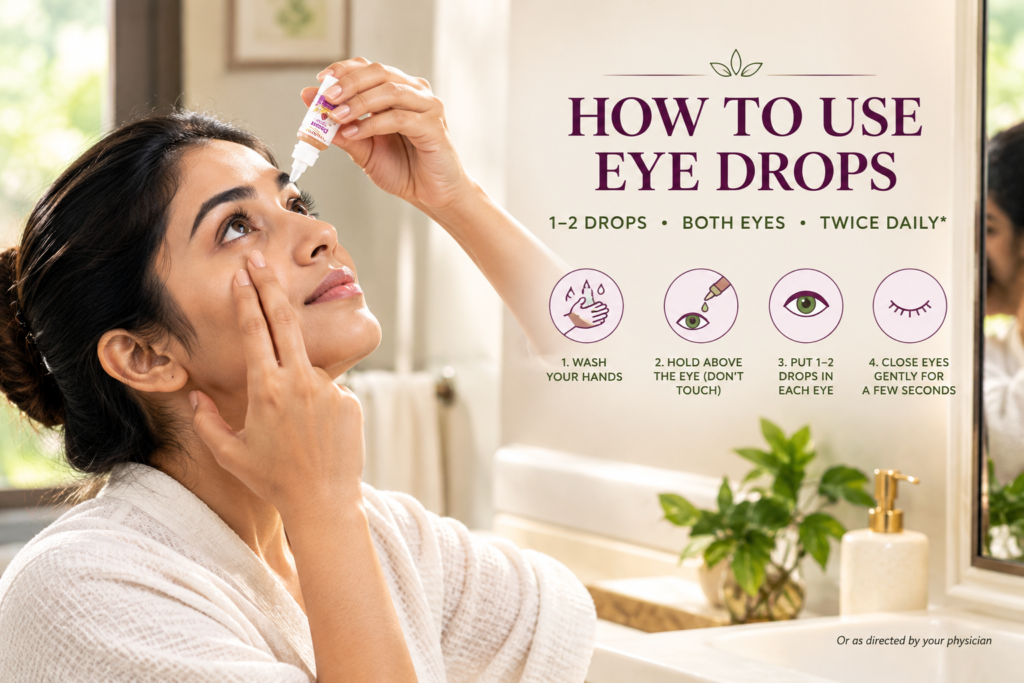
Patanjali’s stated direction is:
Put 1–2 drops in both eyes twice daily or use as directed by the physician.
If you have been advised to use the product, basic hygiene is also worth paying attention to.
A few simple precautions:
- Wash your hands before handling the bottle.
- Keep the dropper tip clean.
- Don’t touch the dropper tip with your fingers.
- Don’t allow the tip to touch your eye or eyelashes.
- Use only the recommended quantity.
- Close the bottle after use.
- Follow the storage instructions given on the packaging.
- If you notice significant irritation or an unusual reaction, stop and speak to a healthcare professional.
It can be tempting to use extra drops when your eyes feel particularly uncomfortable. That doesn’t mean you should increase the amount on your own. Follow the instructions on the product or those given by your doctor.
Is It Safe to Use Patanjali Drishti Eye Drop Without Advice?
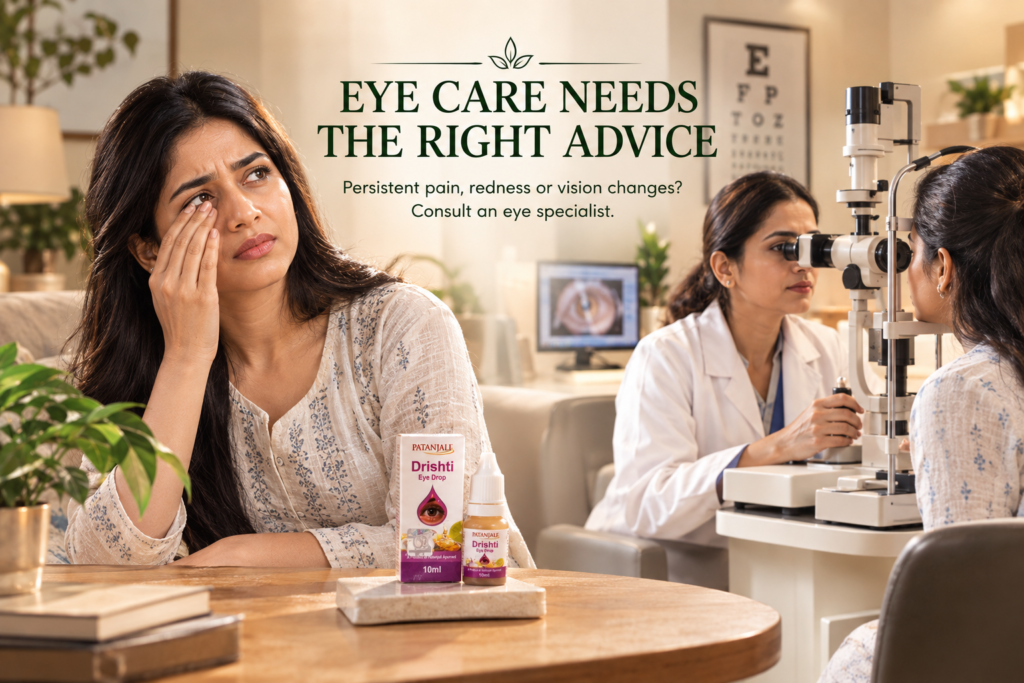
This is where some caution is sensible.
Patanjali’s own product information mentions medical supervision, so users should not assume that the product is suitable for every person or every eye problem.
The eyes are sensitive, and symptoms that seem minor can sometimes have different causes.
You should consider speaking to an eye-care professional if you have:
- Eye pain that does not settle
- Persistent or severe redness
- Blurred or reduced vision
- Unusual discharge or pus
- Swelling
- Strong sensitivity to light
- An eye injury
- Sudden changes in your vision
- Symptoms that repeatedly come back
And if you are already using prescription eye drops, ask your doctor before adding another product to your routine.
The same caution is useful for children, contact-lens users, older adults and people who already have an eye condition.
How Should You Store Patanjali Drishti Eye Drop?
Patanjali’s product information states that the product should be used before 12 months from the manufacturing date.
When you purchase the product, check the actual bottle and outer packaging for the latest information. Printed packaging is the most relevant reference for the product in your hands.
It is also a good habit to:
- Keep the bottle properly closed.
- Keep the dropper tip clean.
- Follow the storage instructions printed on the pack.
- Check the expiry or use-before information before use.
If the product looks different from its usual appearance or the packaging appears damaged, check with the seller or manufacturer before using it.
Who Should Be More Careful With Eye Drops?
If you already have something going on with your eyes, it’s worth being extra careful about what you put in them.
Wear contact lenses? Had eye surgery recently? Already dealing with a diagnosed eye condition, or on prescription eye medication? In any of these cases, don’t just assume a random eye drop will play nice with what’s already going on. It might not.
Kids and older adults are in a similar boat — what works for one person’s symptoms and history won’t necessarily work for another’s, so it’s worth getting advice tailored to them specifically rather than going with a one-size-fits-all pick.
Honestly, if there’s even a shadow of doubt, just ask an eye doctor. They can tell you in two minutes whether the product actually makes sense for your situation, or whether you’d be better off with something else entirely.
Patanjali Drishti Eye Drop: Things to Check Before Buying

If you are considering this product, don’t just look at the brand name. Take a minute to check the basics.
Check the ingredients: Make sure you know what the formulation contains.
Read the directions: Patanjali states a dosage of 1–2 drops in both eyes twice daily or as directed by a physician.
Look at the packaging: Check the manufacturing details, use-before information and storage instructions on the bottle.
Think about your symptoms: A product intended for eye care isn’t necessarily the right answer for every eye complaint.
Ask when necessary: If you have persistent or unusual symptoms, professional advice is more appropriate than self-treatment.
Final Thoughts
Patanjali’s own product listing mentions juice and honey among the ingredients. As for how to use it, the label suggests 1-2 drops in each eye, twice a day, unless your doctor tells you otherwise — and it’s meant to be used under medical guidance, not on your own.
So if you’re thinking of trying it, start with the label. Actually read what’s in the bottle and what it claims to do. And if your eyes have been bothering you — pain, redness that won’t go away, blurry vision, anything that just isn’t resolving — don’t treat it like a trial-and-error game where you keep swapping one eye drop for another hoping something sticks.
Your eyes already deal with enough screen time as it is. They don’t need you guessing on top of that. Get them checked properly — it’ll tell you far more than any bottle can.