

Beetroots are vegetables that not only provide color to your diet but are also very healthy. They can easily be added to your daily diet due to their sweet taste and serve well as an ingredient for salads, juices, parathas, and even pickle making. Apart from the color, beetroot provides you with other nutrients too, like fiber, vitamin C, and potassium.
Let’s take a look at some of the benefits of beetroot and simple ways to include it in your diet.
Health Benefits of Beetroot
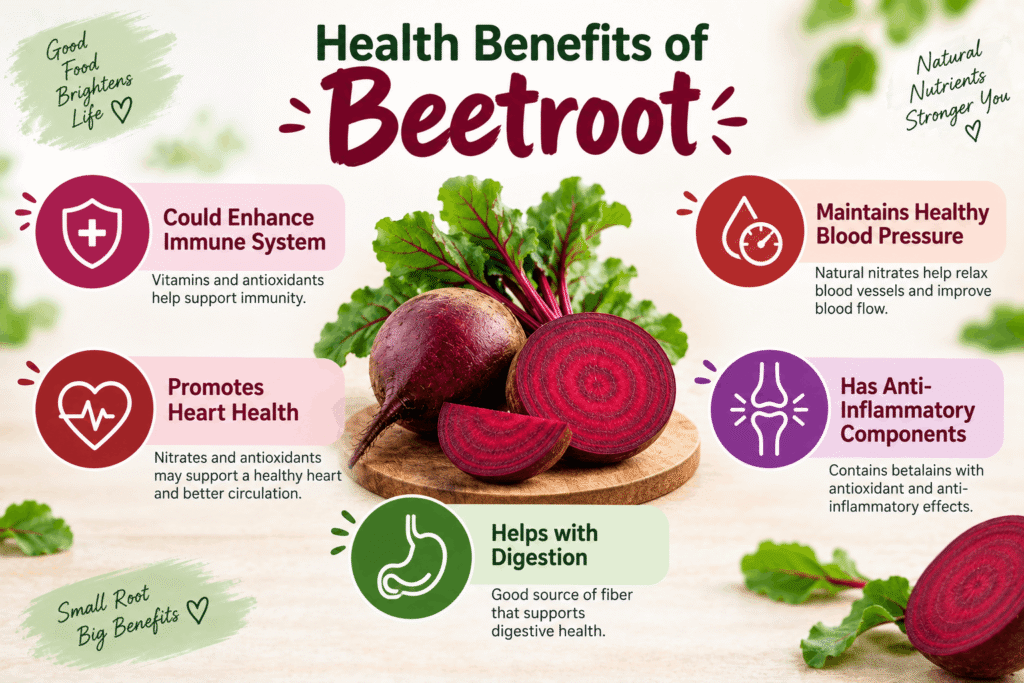
Could Enhance Immune System
The beetroot has vitamins and antioxidants that assist in enhancing the immune system. Including vegetables such as the beetroot in the diet is important since it helps in meeting daily nutritional requirements.
Maintains Healthy Blood Pressure
There are high amounts of nitrates found naturally in beetroot. The human body can make use of these nitrates to produce nitric oxide, which helps with the relaxation of blood vessels and blood flow.
Promotes Heart Health
The nitrate and antioxidants present in beets may promote heart health. Improved circulation can also aid in better utilization of oxygen by the body during exercise.
Has Anti-Inflammatory Components
Beetroots contain betalains, which are plant components that have antioxidant and anti-inflammatory effects. Beetroot consumption as part of a healthy diet can contribute to proper inflammatory response of the body.
Helps with Digestion
Beetroot includes fiber that is required for proper digestion. The inclusion of more fiber in one’s diet will help maintain proper digestive health.
Rich in Antioxidants
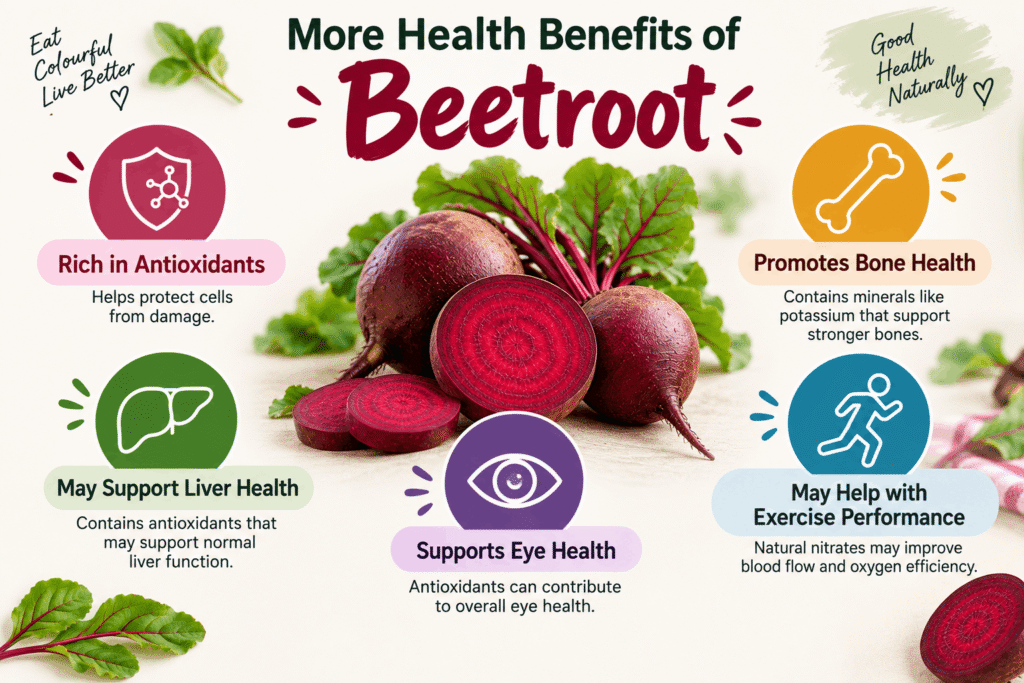
The bright red-purple colour of beetroot comes mainly from betalains. These antioxidants help protect cells from oxidative stress and make beetroot a nutritious addition to a balanced diet.
Promotes Bone Health
Beets have minerals like potassium, along with other nutrients, which help promote bone health. It is necessary to maintain a healthy diet comprising different types of vegetables to ensure good bone health.
May Support Liver Health
Beetroot contains antioxidants and plant compounds that may support normal liver function. However, it is better to think of beetroot as part of a healthy diet rather than a “detox” food.
Supports Eye Health
Beetroot contains antioxidants and plant nutrients that can contribute to overall eye health. Eating a variety of colourful vegetables is a simple way to add different antioxidants to your diet.
May Help with Exercise Performance
Beetroot is popular among people who exercise because of its natural nitrate content. Nitrates may improve blood flow and oxygen efficiency, which can be helpful during certain types of physical activity.
Nutritional Value of Beetroot
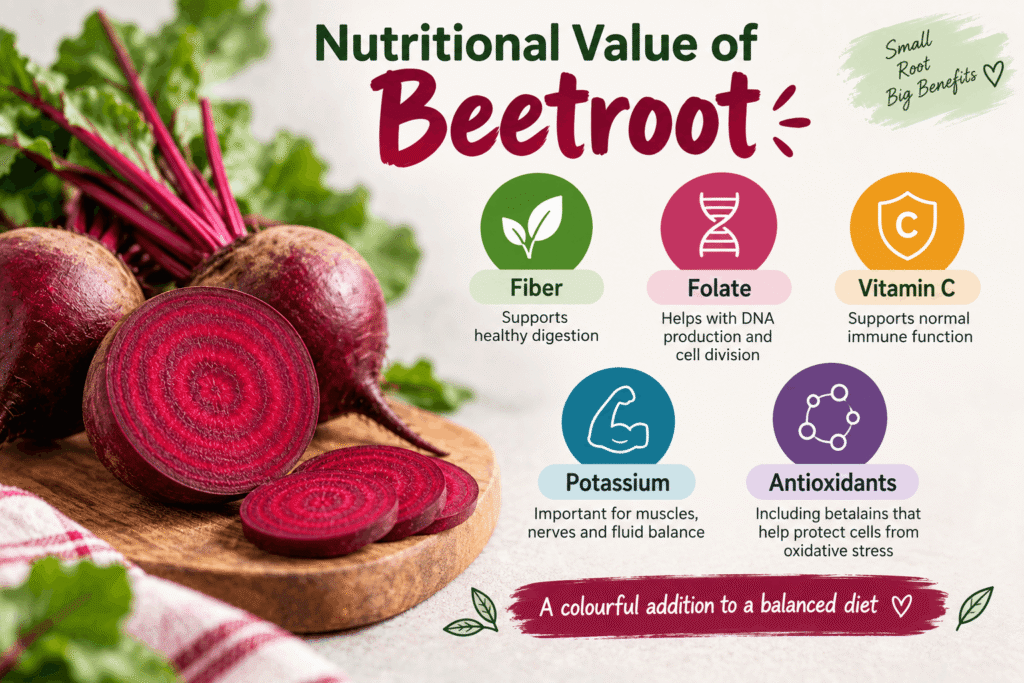
Beetroot is low in fat and provides several useful nutrients. It contains:
- Fiber – supports healthy digestion.
- Folate – helps with DNA production and cell division.
- Vitamin C – supports normal immune function.
- Potassium – important for muscles, nerves and fluid balance.
- Antioxidants – including betalains that help protect cells from oxidative stress.
Because of this nutritional profile, beetroot can be a good addition to a balanced everyday diet.
Easy Ways to Eat Beetroot
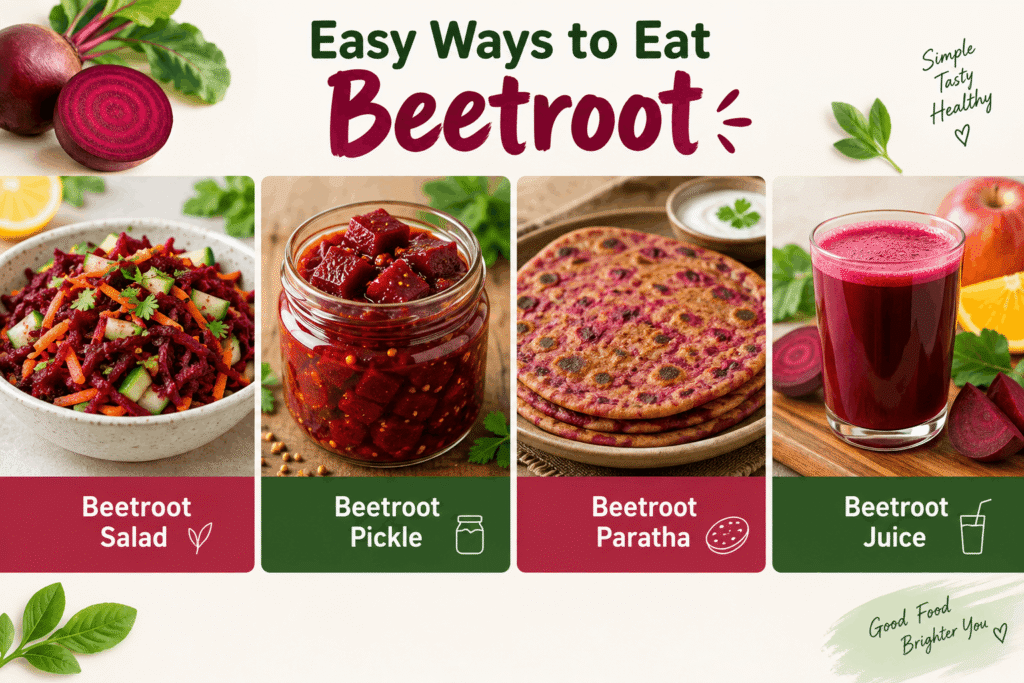
There are plenty of simple ways to add beetroot to your meals.
Beetroot Salad
Grate or finely chop beetroot and mix it with cucumber, carrot, lemon juice and a little seasoning. It makes a quick and refreshing side dish.
Beetroot Pickle
Beetroot can be sliced and prepared with spices, vinegar and herbs to make a tangy pickle. It goes well with everyday Indian meals.
Beetroot Paratha
The dough can be decorated with grated beetroot when making parathas. The spices of your choice could also be added.
Beetroot Juice
Beetroot juice can be made from mixed fruits such as apples and oranges to make an enjoyable beverage. Nevertheless, given that juice contains less fiber than the beetroot, the beetroot can also be used.
Conclusion
There are many foods that are not only good for health but tasty too and beetroot happens to be one of them. This particular vegetable contains a number of nutrients such as fiber, folate, vitamin C, potassium, and antioxidants. Some benefits can definitely be gained from eating this vegetable.
There are a number of ways in which you can eat beetroot like eating it raw, cooked, roasted, in salads, paratha, and even in the form of juice.
Disclaimer: Although it can certainly be considered healthy and incorporated into one’s diet, Beetroot should never be taken as a treatment for any disease or as a medicine. It is always important to seek the guidance of a medical professional in case of any health issues or medication.