


Ever stood there in the personal care aisle just staring at shower gel and body wash , not really sure which one to grab? They’re literally sitting right next to each other, both promising that same “clean, fresh skin” thing — so are they even actually different?
Short answer: yeah, they are. Just maybe not in the way you’d expect.
The real differences come down to stuff like texture, what’s actually in the formula, the cleansing agents used, how much moisture it adds, and honestly, just how it feels on your skin once you’re using it. Shower gels tend to have that lighter, gel-y texture — kind of refreshing, quick-rinsing. Body washes, on the other hand, usually lean creamier, almost lotion-like, and are made to leave your skin feeling a bit softer after.
But again, neither one’s objectively “better.” It really just depends on your skin type, what you personally like, and how that specific formula works for you.
So before you toss another random bottle into your bathroom shelf, let’s actually break this down properly — in plain, simple terms.
What Is Shower Gel?
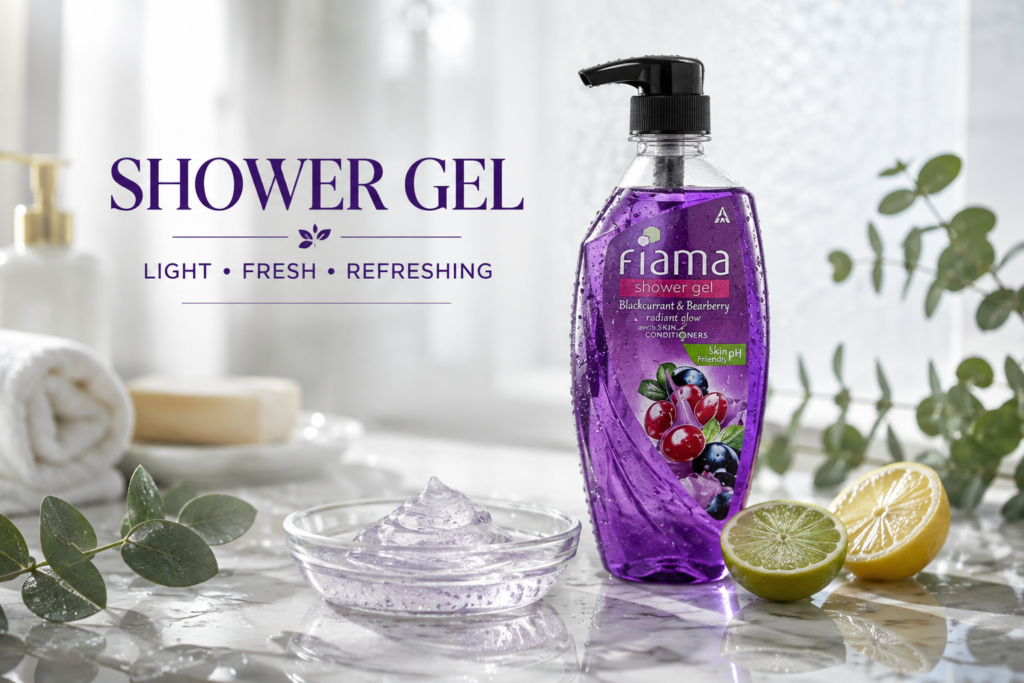
Shower gel is a liquid body cleanser with a gel-like consistency. It typically uses cleansing ingredients called surfactants to remove sweat, excess oil, dirt and impurities from the skin.
Shower gels are often associated with:
- Lightweight or gel-like textures
- Fresh, refreshing fragrances
- Easy rinsing
- Noticeable lather
- A clean, fresh after-shower feeling
Many shower gels are particularly popular in warm weather or after exercise because their lighter texture can feel refreshing.
However, don’t assume that every shower gel is drying or that every gel is designed for oily skin. Modern formulations can include moisturising ingredients too.
What Is Body Wash?
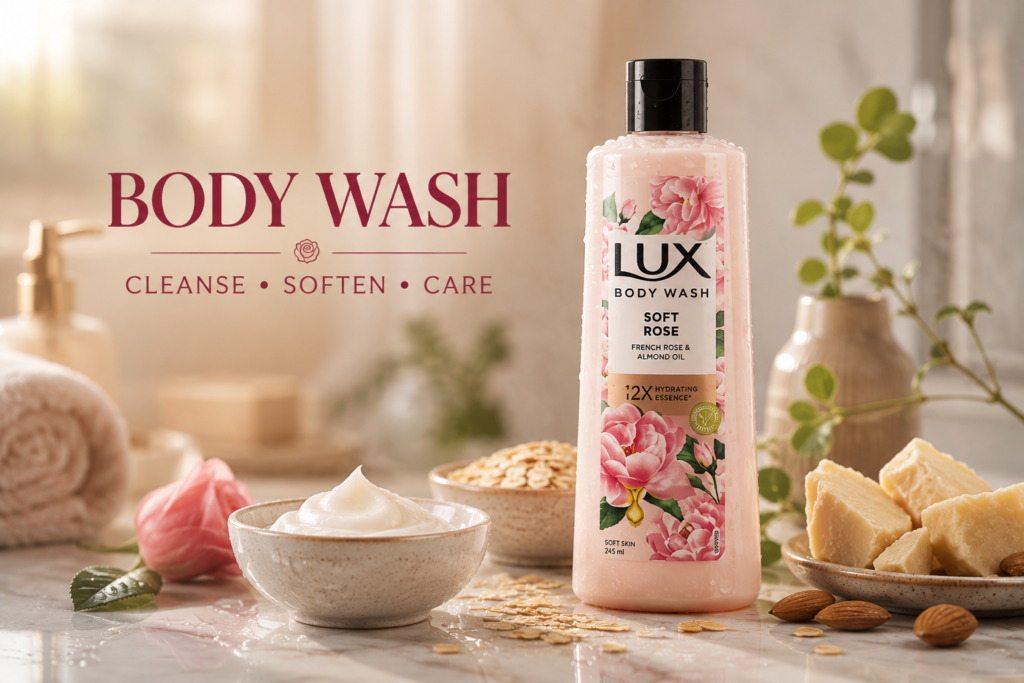
Body wash is also a liquid cleanser, but it often has a creamier, smoother or more lotion-like texture than traditional shower gels.
Depending on the formulation, body washes may contain ingredients such as:
- Glycerin
- Plant oils
- Shea butter
- Emollients
- Humectants
- Skin-conditioning ingredients
These ingredients can help support a more comfortable, moisturised skin feel after cleansing.
Body washes are particularly popular among people who dislike that tight or dry feeling that can sometimes occur after bathing.
Again, the formula matters more than the name on the bottle.
Shower Gel vs Body Wash: Key Differences
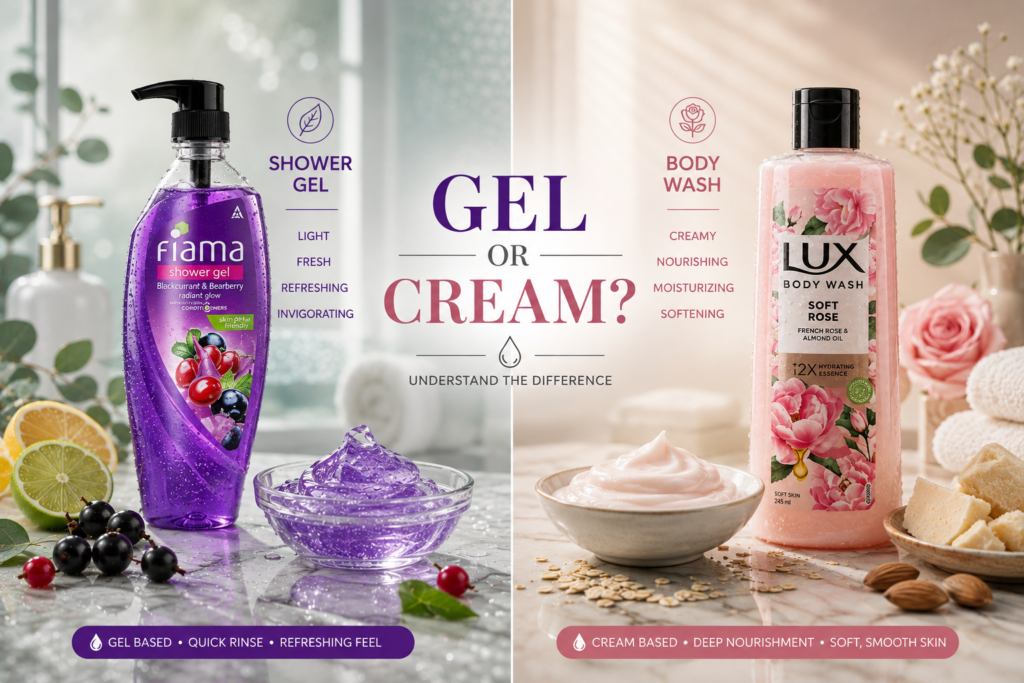
Here’s a quick comparison to make the choice easier.
| Feature | Shower Gel | Body Wash |
|---|---|---|
| Texture | Usually gel-like | Usually creamy or liquid |
| Feel | Fresh and lightweight | Soft and conditioning |
| Cleansing | Removes sweat, dirt and oil | Removes sweat, dirt and oil |
| Moisturising | Depends on formula | Often formulated with moisturising ingredients |
| Fragrance | Often fresh or vibrant | Can range from subtle to strongly fragranced |
| Best for | Depends on ingredients and preference | Depends on ingredients and preference |
| After-shower feel | Clean and refreshed | Clean and moisturised |
1. Texture
This is probably the easiest difference to notice.
Shower gel generally has a thicker, translucent or gel-like consistency, while body wash may feel creamier and more fluid.
If you enjoy a refreshing, lightweight cleanser, a shower gel may appeal to you. If you prefer a soft, lotion-like texture, body wash may feel more comfortable.
2. Lather
Both products can create lather.
However, the amount and type of foam depend heavily on the surfactants and formulation rather than simply whether the label says “gel” or “body wash.”
Some shower gels produce a rich foam, while some creamy body washes create a soft, low-foam lather.
3. Moisturisation
This is where many shoppers assume body wash automatically wins.
In reality, you should check the ingredient list.
A body wash may contain glycerin, oils, butters or other conditioning ingredients that help reduce the feeling of dryness after cleansing. But a shower gel can also contain moisturising ingredients.
So instead of choosing based only on the product category, look at what the formula actually contains.
4. Fragrance
Shower gels are often marketed with energising fragrances such as citrus, mint, ocean or other fresh scents.
Body washes can also be heavily fragranced, but many are positioned around softer, creamy or comforting scents.
If you have sensitive skin, fragrance-free or fragrance-minimised options may be worth considering.
Which Is Better for Your Skin Type?
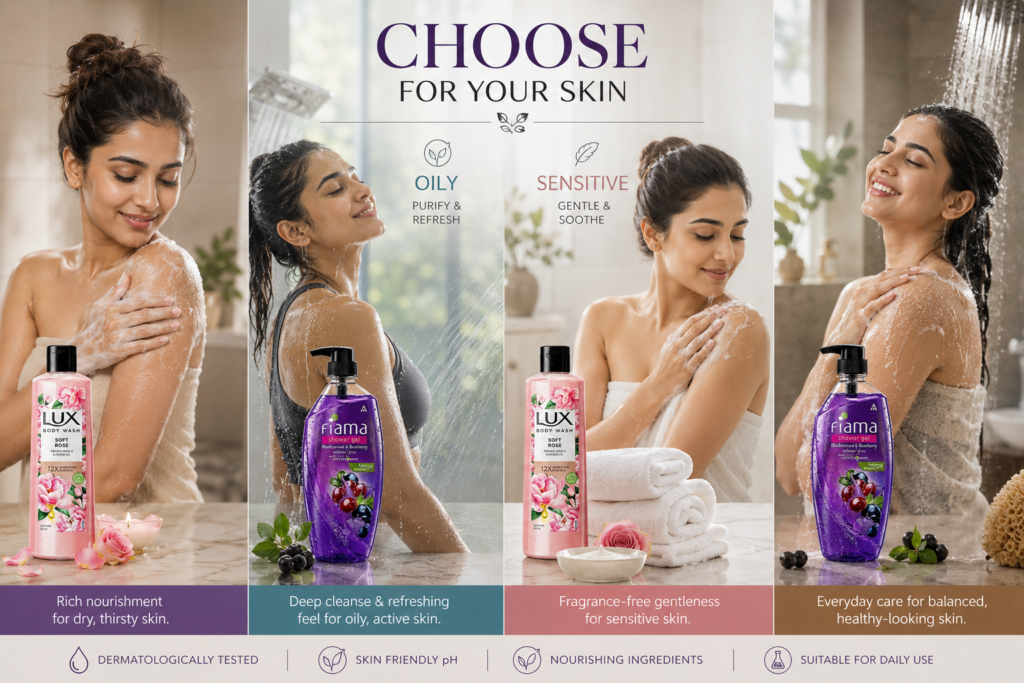
There isn’t one cleanser that is perfect for everyone.
Here’s a simple starting point.
For Dry Skin
If your skin often feels tight, rough or uncomfortable after bathing, consider a gentle, moisturising body cleanser.
Look for formulas containing ingredients such as:
- Glycerin
- Ceramides
- Shea butter
- Plant oils
- Other skin-conditioning ingredients
Avoid very hot showers and excessive scrubbing, as these can make dry skin feel worse.
For Oily Skin
If your skin tends to feel oily or sweaty, a lightweight cleanser may feel more comfortable.
A shower gel can be a good option if you enjoy its texture and cleansing feel, but don’t choose it simply because it is labelled “gel.”
The formulation is what matters.
For Sensitive Skin
Sensitive skin needs a little more attention.
Look for products that are:
- Gentle
- Fragrance-free or low-fragrance
- Designed for sensitive skin
- Free from ingredients that you personally know irritate your skin
Avoid aggressive scrubbing and very hot water.
If a product consistently causes burning, redness or irritation, discontinue use and consider speaking with a dermatologist.
For Normal Skin
Good news—you have plenty of flexibility.
You can choose between shower gel and body wash based on:
- Texture
- Fragrance
- Ingredients
- Season
- Personal preference
If your current cleanser leaves your skin comfortable rather than tight or irritated, there may be no reason to switch.
Why It Works: It’s the Formula, Not Just the Label
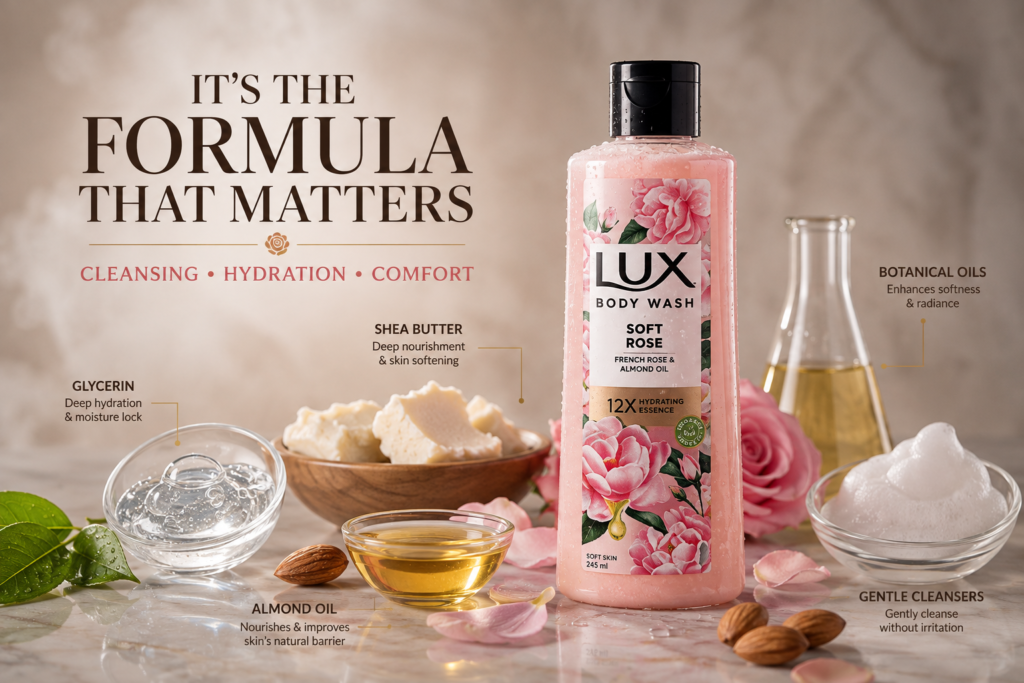
One of the biggest misconceptions in the shower gel vs body wash debate is that the product name tells you exactly how it will behave on your skin.
It doesn’t.
Two products labelled “body wash” can have completely different formulas. The same is true for shower gels.
What actually influences your experience?
Surfactants
These cleansing ingredients help lift away sweat, oil and dirt from the skin.
Humectants
Ingredients such as glycerin help attract and retain water, contributing to a more comfortable skin feel.
Emollients
These ingredients help soften and condition the skin.
Fragrance
Fragrance can make a shower feel luxurious and enjoyable, but it may not suit everyone—especially people with fragrance-sensitive skin.
Water Temperature
Even the best body cleanser won’t completely compensate for a very hot, long shower. Warm or lukewarm water is generally a better choice for maintaining skin comfort.
Shower Gel or Body Wash: How to Choose?

Still confused?
Use this simple checklist before buying.
Choose based on:
- Your skin type – Dry, oily, sensitive or normal?
- Ingredients – Does the formula contain moisturising or conditioning ingredients you want?
- Fragrance – Do you prefer fragrance, or would fragrance-free be better?
- Texture – Gel-like, creamy or somewhere in between?
- After-shower feel – Does your skin feel comfortable or tight?
- Your routine – Do you want something refreshing after workouts or something more comforting for everyday bathing?
The most expensive product isn’t necessarily the best product for your skin.
Can You Use Shower Gel Every Day?
Yeah, totally — a shower gel can easily be part of your everyday routine, as long as it actually suits your skin and doesn’t leave it feeling dry or irritated afterward. Same goes for body wash, really.
And here’s the thing — using more product doesn’t mean you’re getting any cleaner. A small amount, worked in with just your hands, a washcloth, or whatever bath tool you like, is usually more than enough, depending on the formula.
Also, don’t fall for the foam trap. Just because something lathers up like crazy doesn’t mean it’s cleaning your skin better. Sometimes it’s just… foam.
Shower Gel vs Body Wash: The Bottom Line
Shower gel vs body wash? Real talk, there’s no winner here. It’s really just about what your skin’s into and what mood you’re in that day.
Like if you’re into that light, kinda fizzy texture and just want a quick refreshing rinse — shower gel’s probably calling your name. But if creamy, more moisturizing-after-the-shower vibes are more your thing, body wash usually does that better.
Either way though, skip the whole “prettiest bottle wins” approach. Turn it around, check what’s actually in it, figure out if your skin leans oily, dry, combo, whatever — and pay attention to how it actually feels once you’re out and dry.
Because at the end of the day, the best one for you isn’t the one with the loudest packaging or the biggest claims splashed across the front. It’s just whatever leaves your skin feeling clean, comfortable, and not tight or stripped. That’s really it.