


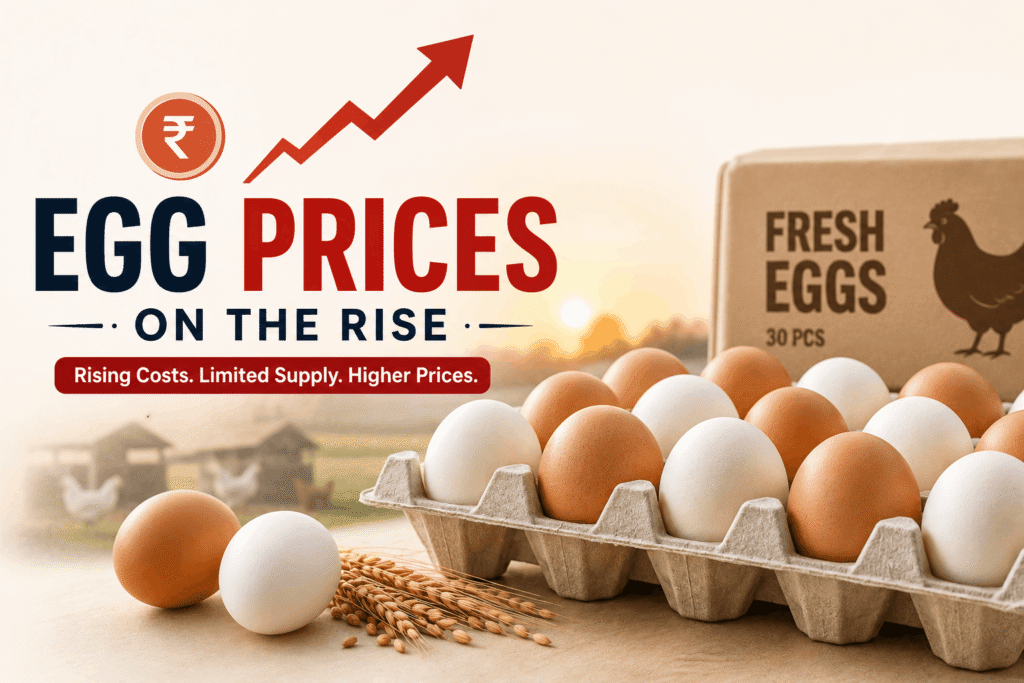
Eggs have always been one of the cheapest forms of protein sources in India. But, in recent times, egg prices have started to rise for consumers in a number of cities. When compared with the previous two months, August and September, there is an increase of about 25% to 50% in many markets, even to the extent that in some parts of New Delhi, egg prices are rising to ₹10 per piece.
But, what are the reasons for the price hike of eggs in India and how long will the prices continue?
Why Are Egg Prices Increasing in India?
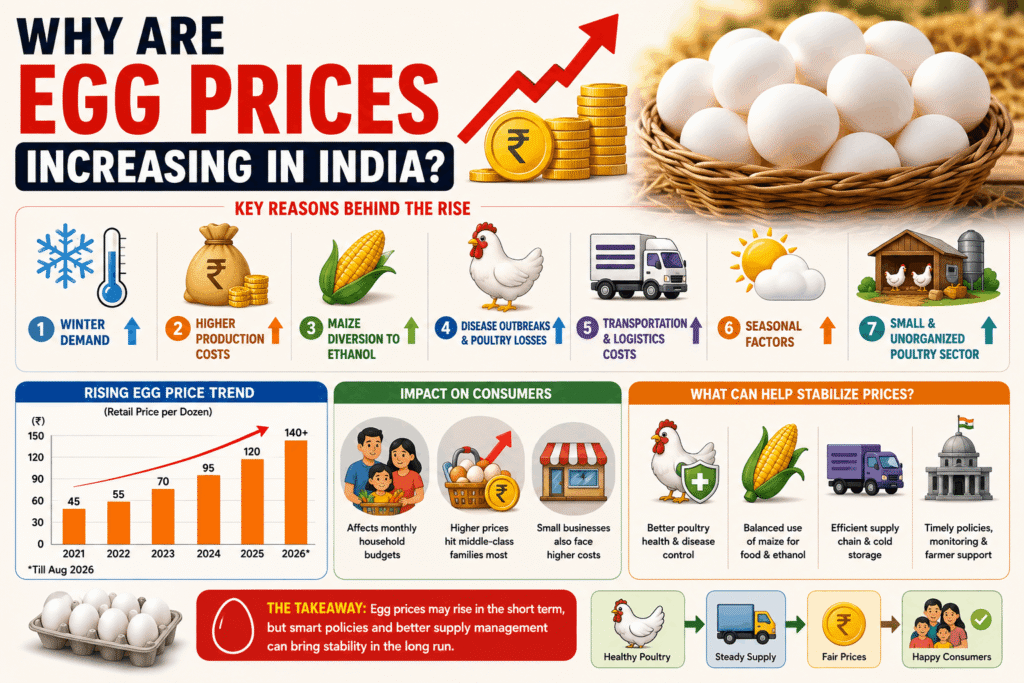
The increase in egg prices in India is not caused by a single factor. A combination of rising demand, higher production costs, seasonal changes and supply-related issues is putting pressure on the market.
Winter Demand Is Increasing
One of the major reasons behind the rise in egg prices is higher demand during the winter season. As temperatures fall, egg consumption tends to increase because eggs are a popular source of protein and are commonly included in everyday meals.
The growing focus on protein-rich diets has also contributed to stronger demand. When demand increases faster than available supply, prices naturally move upward.
Poultry Feed Has Become More Expensive
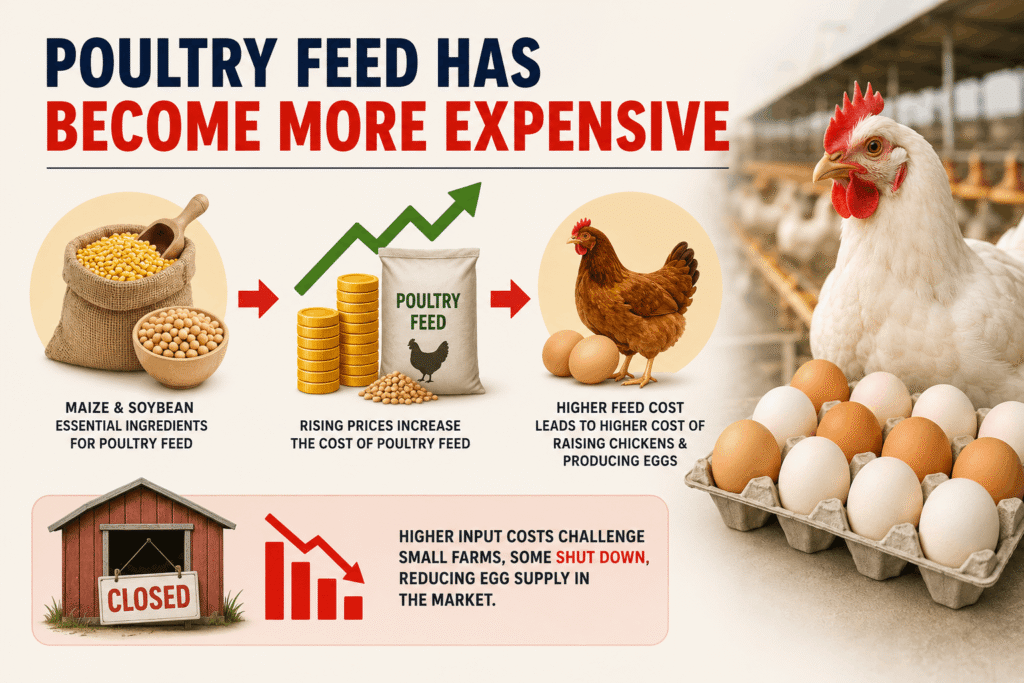
Another important factor is the increasing cost of poultry feed. Ingredients such as maize and soybean are essential for poultry farming, and their rising prices increase the overall cost of raising chickens and producing eggs.
For smaller poultry farms, these higher input costs can be particularly challenging. Some smaller operations have reportedly shut down because of increasing production expenses, which can further reduce the supply of eggs in the market.
Disease Outbreaks Are Affecting Supply
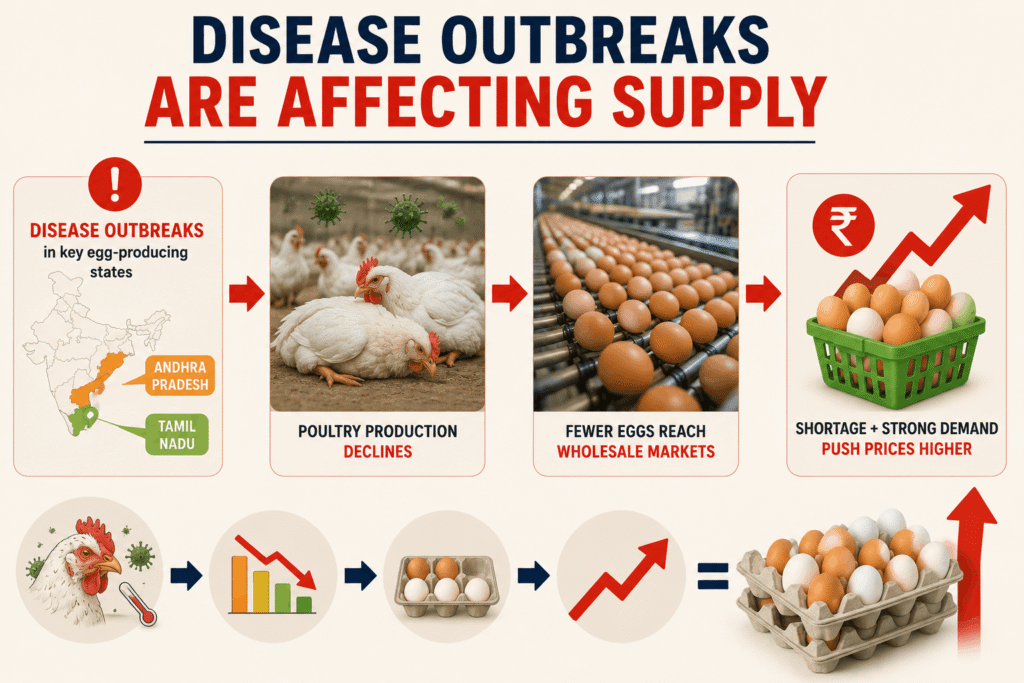
Supply-side problems have also played a role in the recent egg price hike. Disease outbreaks in important egg-producing states such as Andhra Pradesh and Tamil Nadu have affected poultry production.
When poultry production falls, fewer eggs reach wholesale markets. This shortage, combined with strong consumer demand, can push prices higher in other states as well.
Weather Conditions Are Adding Pressure
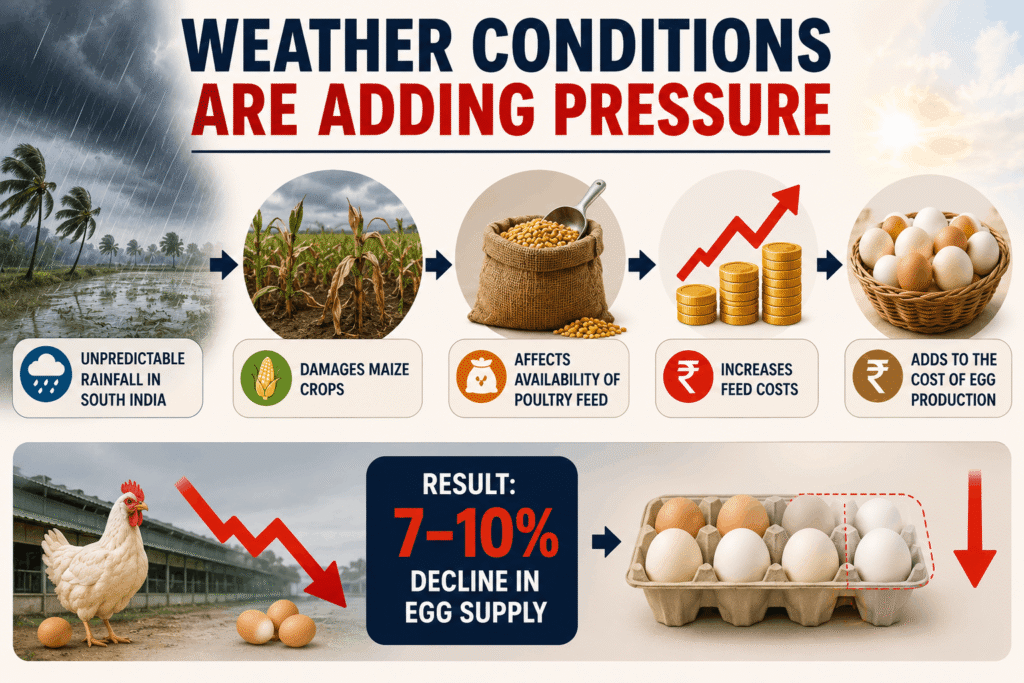
Weather conditions have also affected the poultry supply chain. Unpredictable rainfall in parts of South India has damaged maize crops and affected the availability of poultry feed.
Lower maize availability can increase feed costs, which eventually adds to the cost of egg production. The source also reports that these conditions contributed to a 7–10% decline in egg supply.
How Much Have Egg Prices Increased?
The increase varies from one city to another. According to the reported market data, eggs that were previously available at lower prices have moved up considerably. In some parts of New Delhi, prices have reached around ₹10 per egg, while cities such as Hyderabad and Mumbai have seen prices of approximately ₹8 per egg.
Data from the National Egg Coordination Committee (NECC) also shows an upward movement in farm-to-gate prices. In Tier-1 cities, the price of 100 eggs increased from around ₹550 to ₹700 over a three-month period.
Will Egg Prices Come Down?
The outlook depends largely on the balance between egg demand and supply. If poultry production improves and supply becomes more stable, prices could ease. However, continued strong winter demand, higher feed costs and production challenges could keep prices elevated for some time.
For consumers, the current egg price rise in India is a reminder that even everyday food staples can be affected by changes in weather, production costs, supply and demand.
What Does This Mean for the Consumers?
Given the fact that the prices of eggs continue to change, consumers are required to budget for their groceries. For people who want to budget for their daily groceries, they have the chance of comparing prices and purchasing essential items like eggs as well as other household products.
Aap ka Bazar also offers everyday grocery essentials at competitive prices, making regular shopping more convenient.