

If you have noticed that sugar is becoming more expensive at your local grocery store, you are not imagining it. Sugar prices in India have risen sharply in recent weeks, raising concerns among consumers, retailers and businesses.
According to recent government data, the average sugar price reached around ₹55.7 per kg on August 20, 2026, after rising by more than 15% in just one month. In Delhi, retail prices have crossed ₹60 per kg, while prices have increased by more than 20% compared with the previous year.
So, what exactly is driving this sudden increase?
Why Is Sugar Becoming More Expensive?
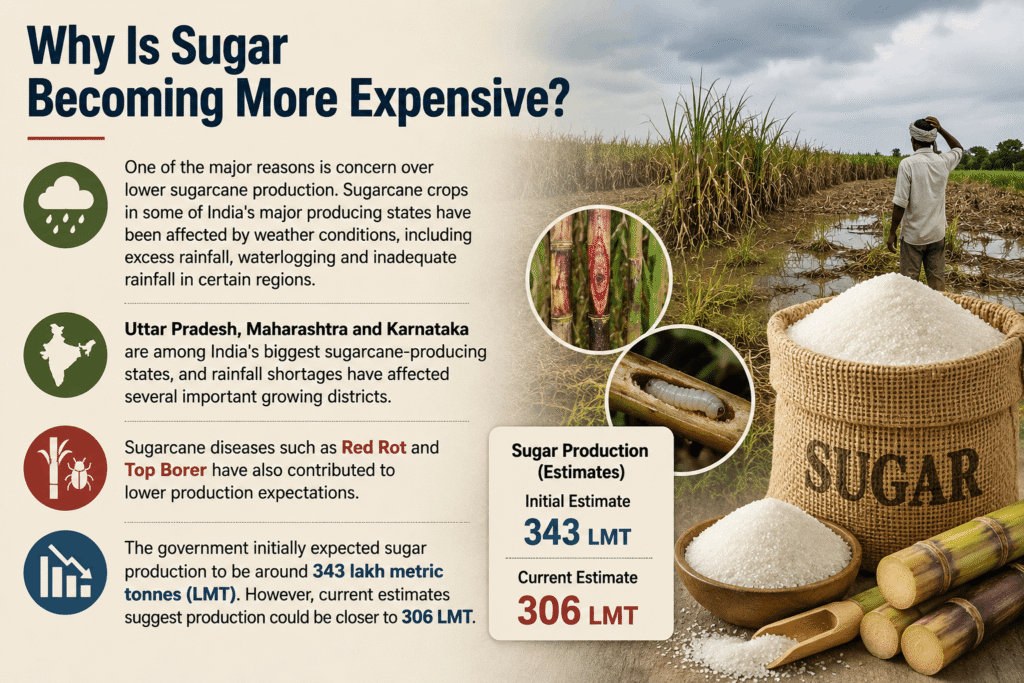
One of the major reasons is concern over lower sugarcane production. Sugarcane crops in some of India’s major producing states have been affected by weather conditions, including excess rainfall, waterlogging and inadequate rainfall in certain regions.
Uttar Pradesh, Maharashtra and Karnataka are among India’s biggest sugarcane-producing states, and rainfall shortages have affected several important growing districts.
Sugarcane diseases such as Red Rot and Top Borer have also contributed to lower production expectations.
The government initially expected sugar production to be around 343 lakh metric tonnes (LMT). However, current estimates suggest production could be closer to 306 LMT.
Is Sugar Actually Running Out?
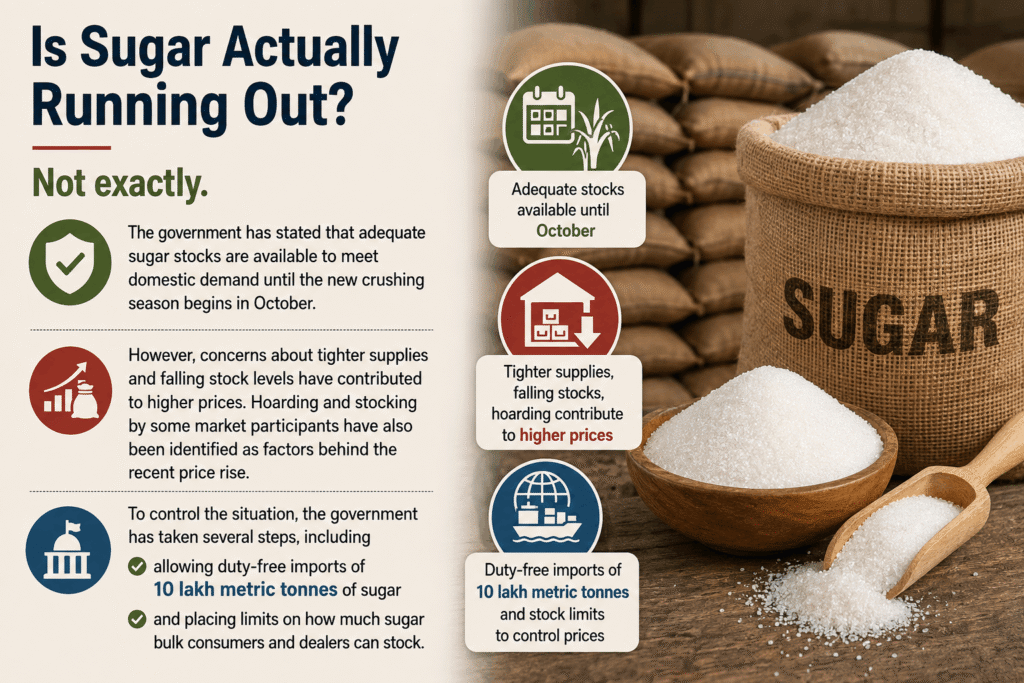
Not exactly.
The government has stated that adequate sugar stocks are available to meet domestic demand until the new crushing season begins in October.
However, concerns about tighter supplies and falling stock levels have contributed to higher prices. Hoarding and stocking by some market participants have also been identified as factors behind the recent price rise.
To control the situation, the government has taken several steps, including allowing duty-free imports of 10 lakh metric tonnes of sugar and placing limits on how much sugar bulk consumers and dealers can stock.
What About Ethanol?
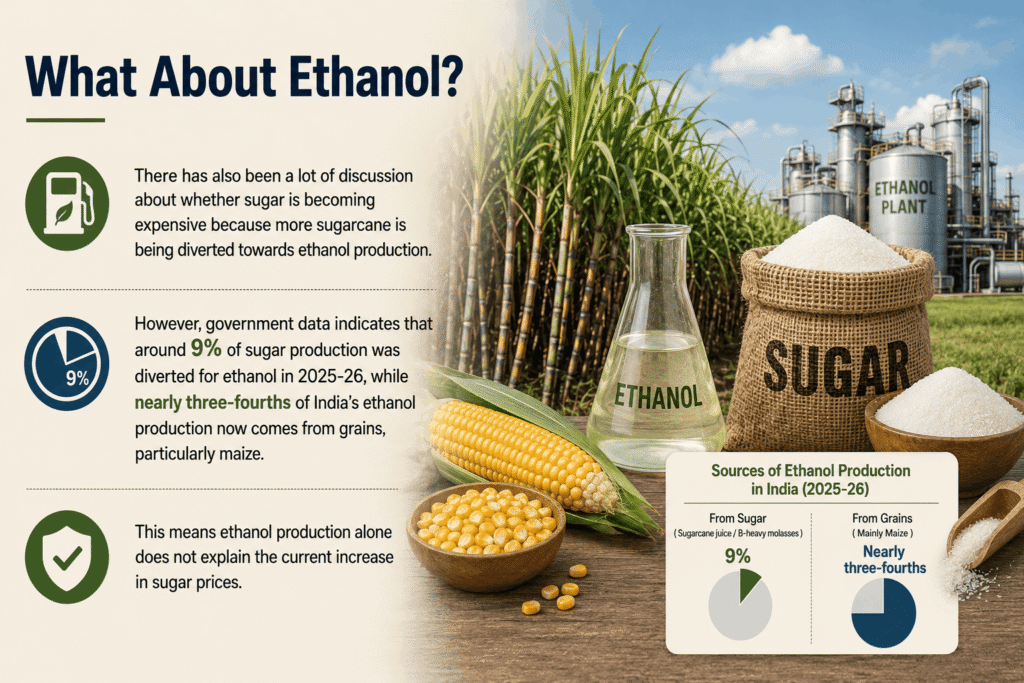
There has also been a lot of discussion about whether sugar is becoming expensive because more sugarcane is being diverted towards ethanol production.
However, government data indicates that around 9% of sugar production was diverted for ethanol in 2025-26, while nearly three-fourths of India’s ethanol production now comes from grains, particularly maize.
This means ethanol production alone does not explain the current increase in sugar prices.
What Does This Mean for Consumers?
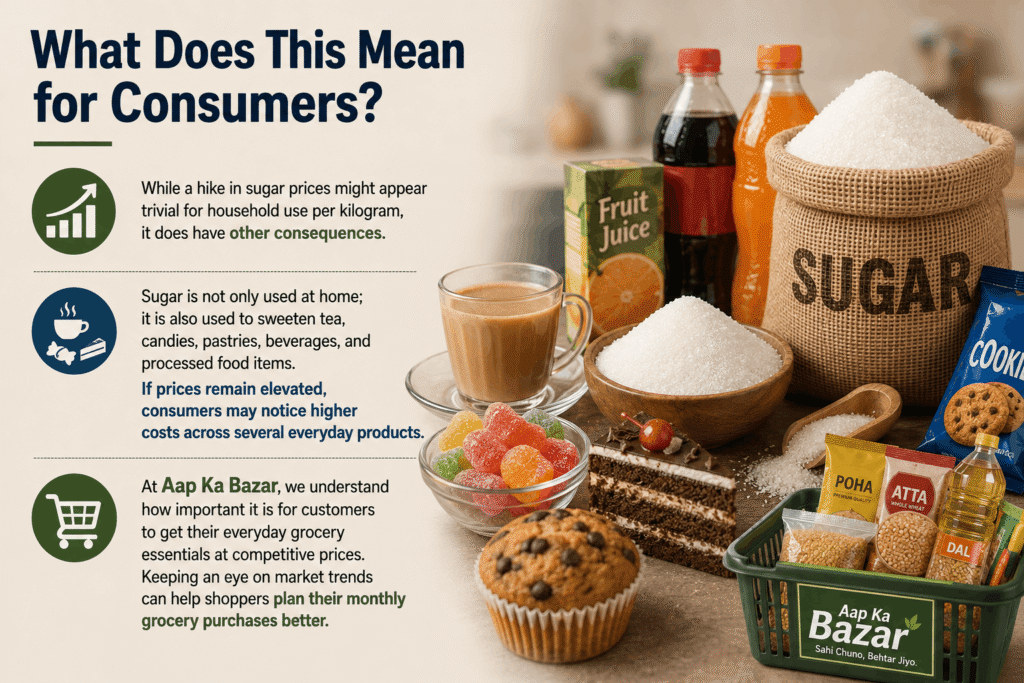
While a hike in sugar prices might appear trivial for household use per kilogram, it does have other consequences. Sugar is not only used at home; it is also used to sweeten tea, candies, pastries, beverages, and processed food items.
If prices remain elevated, consumers may notice higher costs across several everyday products.
At Aap Ka Bazar, we understand how important it is for customers to get their everyday grocery essentials at competitive prices. Keeping an eye on market trends can help shoppers plan their monthly grocery purchases better.
Will Sugar Prices Come Down?
The future depends on many aspects, among which the stock of sugar, demand from the market, imports, weather, and arrival of the sugarcane crushing season in October.
While the government says there are sufficient stocks to meet domestic demand until then, continued supply concerns could keep prices under pressure in the short term.
At the moment, however, there is one clear lesson to be learned: the reason for the increased cost of sugar lies in low production estimates, bad weather, poor inventory conditions, and fears of stockpiling – not ethanol production alone.
Disclaimer
The blog is for informational purposes and has been prepared using publically available data as on date. Prices of sugar may vary from place to place, shop to shop, and market to market condition. The prices and production levels are subject to changes with the availability of new data. Aap Ka Bazar makes no guarantees about future prices of the commodity.