


Fever hits and suddenly even food feels like too much work. That dish you love? Doesn’t sound good anymore. Appetite gone. You just want to lie down with a glass of water and be left alone, honestly.
So what do you eat then? Nothing fancy. Just fluids, light stuff, and small portions — don’t push yourself to finish a full plate. That’s the whole point.
Here’s the thing though — fever drains your body of fluids fast. Sweating a lot, maybe some vomiting or loose motions too, and before you know it you’re dehydrated without even realizing. So water, ORS, coconut water, whatever you can manage — keep sipping through the day.
Khichdi is the obvious go-to, everyone’s grandmother swears by it. Dalia works too. Bananas, soft oats, a simple soup, boiled veggies mashed up a bit — this kind of food doesn’t ask much of your stomach, and that’s exactly what you need when your body’s already fighting something. No need to overthink this into some elaborate “fever diet” plan. Just give your body fluids, a bit of energy, and food that won’t feel like a burden going down. That’s really it.
Important: Food can support hydration and nutrition, but it does not treat the underlying cause of a fever. If a fever is severe, persistent or accompanied by worrying symptoms, seek medical advice.
1. Start With Hydration

When you’re running a fever, drinking enough fluids can be just as important as eating.
Instead of drinking a large amount at once, try taking small, frequent sips throughout the day.
Water
Plain water should be your first choice for staying hydrated. Keep a glass or bottle nearby and take regular sips, especially if you are sweating more than usual.
You don’t necessarily need to force yourself to drink huge quantities at once. Frequent small amounts can be easier when you’re feeling nauseous or have little appetite.
ORS
If you’re losing fluids because of vomiting or diarrhoea, an oral rehydration solution (ORS) can help replace water and electrolytes.
Use a properly prepared ORS according to the product instructions rather than relying on homemade mixtures with uncertain proportions.
Coconut Water
Coconut water can be a refreshing option and provides fluids along with electrolytes such as potassium.
However, it doesn’t need to replace water or ORS when medical rehydration is needed.
Clear Soups and Broths
A light vegetable or chicken broth can provide fluid while also giving you some sodium and nourishment.
A warm bowl can also be easier to tolerate when you don’t feel like eating a full meal.
2. Choose Easy-to-Digest Foods
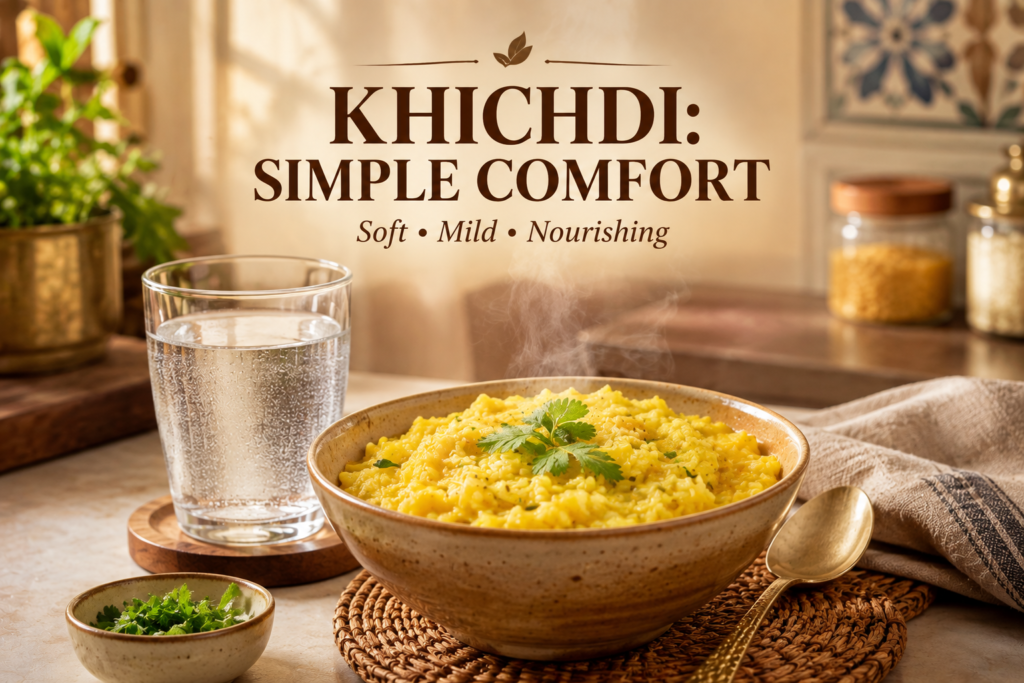
Once you’re able to eat, don’t worry about preparing an elaborate meal.
Think soft, simple and familiar.
Khichdi
For many Indian households, khichdi is the ultimate comfort food when someone isn’t feeling well.
A simple combination of rice and moong dal cooked until soft provides carbohydrates and some protein without being particularly heavy.
You can keep it mild and adjust the consistency depending on your appetite.
If your stomach feels sensitive, avoid loading it with excessive oil, ghee or strong spices.
Why Khichdi Works
Khichdi combines two useful components:
- Rice provides carbohydrates for energy.
- Moong dal contributes protein.
- Cooking everything until soft makes it easier to eat.
- Its mild flavour can work well when your appetite is low.
It’s not a medicine for fever, but it can be a practical, comforting meal when you’re recovering.
3. Try Dalia or Oatmeal
If you don’t feel like eating rice, dalia or oatmeal can be another gentle option.
Cook them until soft and keep the preparation relatively simple.
For a savoury version, you can add a small amount of soft-cooked vegetables. If you prefer something mildly sweet, keep the sugar moderate.
The advantage is flexibility: you can make the consistency thinner when you’re struggling with appetite and slightly thicker as you start feeling better.
4. Don’t Forget Fruits
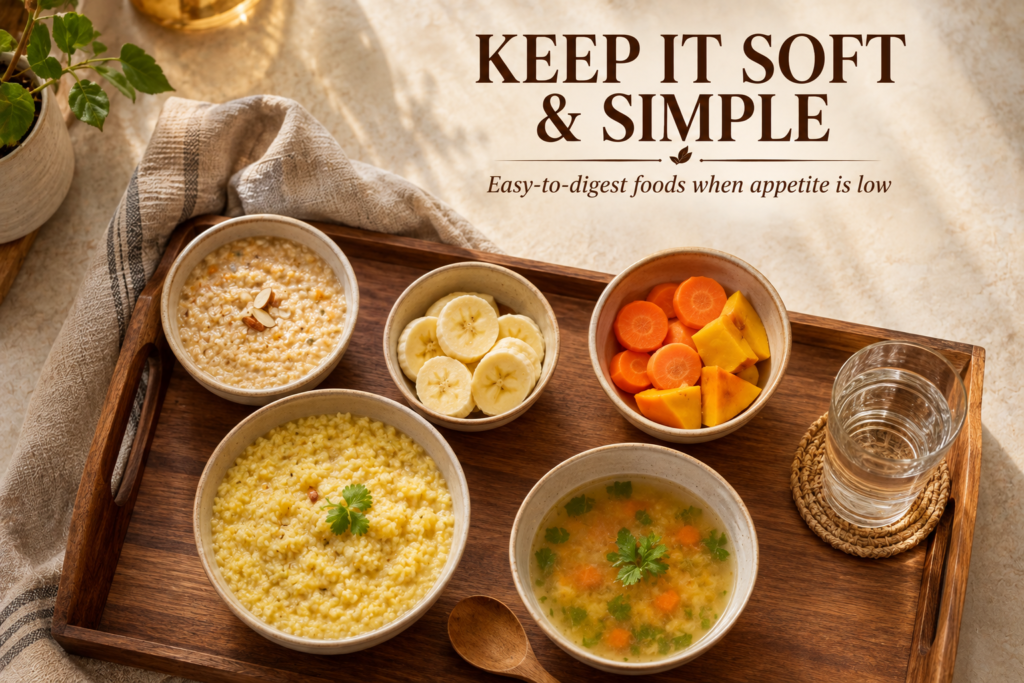
You don’t need to eat a huge fruit bowl when you have a fever.
Choose fruits that feel comfortable for you.
Bananas
Bananas are soft, convenient and provide carbohydrates and potassium.
They’re particularly easy to eat when you don’t have much appetite.
Other Soft Fruits
Depending on your tolerance, you can also consider:
- Stewed or soft apples
- Ripe papaya
- Melon
- Pears
- Other soft, well-tolerated fruits
If a particular fruit makes your stomach uncomfortable, simply skip it.
There’s no single “best fruit for fever.”
5. Add Soft-Cooked Vegetables
When your appetite starts returning, vegetables can help add variety and nutrients to your meals.
Instead of eating a large plate of raw salad, consider steamed or boiled vegetables such as:
- Carrots
- Pumpkin
- Bottle gourd
- Squash
- Potatoes
Cook them until soft and keep the seasoning mild if your stomach is sensitive.
As you begin feeling better, you can gradually return to your normal diet.
6. What About Protein During Fever?
Your body still needs nourishment while you’re recovering, so protein doesn’t have to disappear from your diet.
Depending on your appetite and what you normally eat, options can include:
- Moong dal
- Light dal
- Eggs
- Yogurt or curd, if tolerated
- Chicken in a light soup
- Soft paneer preparations, if comfortable
You don’t need to force yourself to eat a large protein-heavy meal.
Instead, add small amounts to meals as your appetite allows.
7. Foods to Limit During Fever
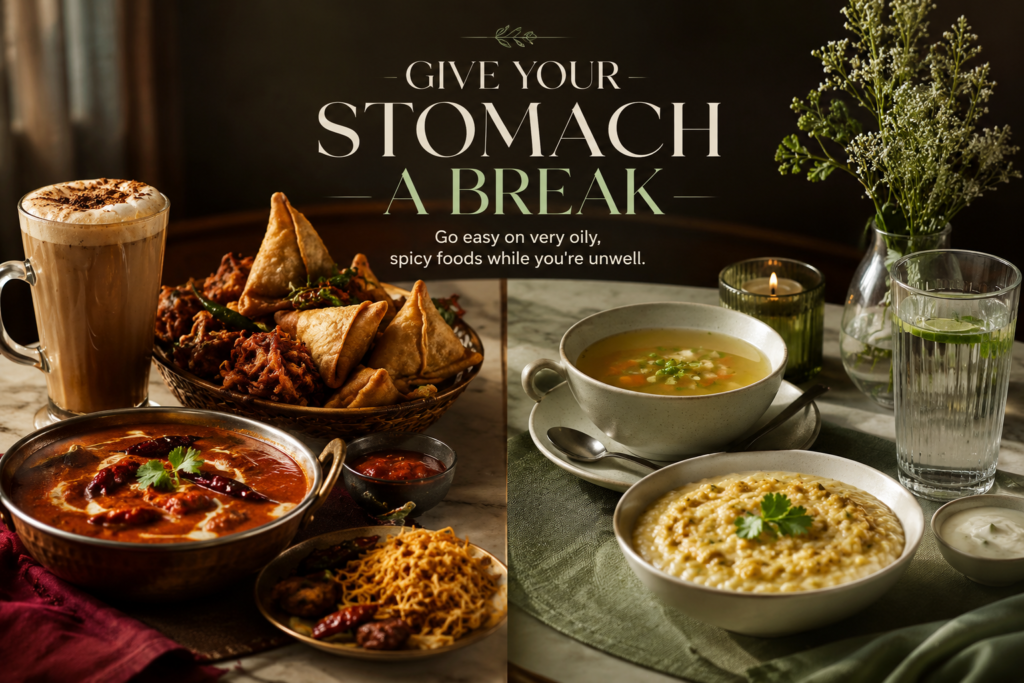
There isn’t a universal list of foods that everyone must completely avoid during a fever. However, some foods may be harder to tolerate when you’re nauseous or experiencing digestive symptoms.
Very Oily or Fried Foods
Fried foods can feel heavy and may worsen nausea or digestive discomfort.
Instead, choose steamed, boiled or lightly cooked foods.
Very Spicy Foods
If you have an irritated stomach, very spicy food may make you feel worse.
Mild seasoning is often more comfortable while you’re unwell.
Alcohol
Avoid alcohol while you’re sick, particularly when you’re dehydrated or taking medicines.
Excessive Caffeine
Coffee, strong tea and energy drinks aren’t ideal substitutes for water or proper rehydration.
If caffeine normally gives you headaches when you stop suddenly, you don’t necessarily need to make a dramatic change overnight—but prioritise fluids.
8. Eat Small Meals Instead of Forcing Yourself
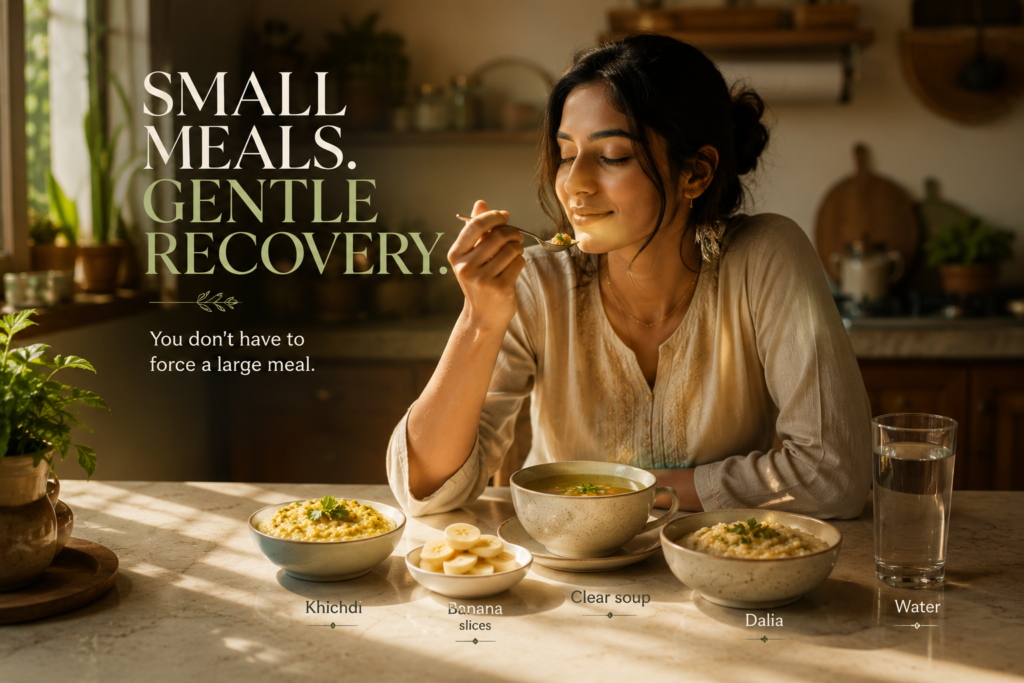
One of the most practical fever-diet tips is also one of the simplest:
Don’t force yourself to finish a large meal.
If three full meals feel impossible, try smaller portions throughout the day.
For example:
Morning:
Water + banana or light oatmeal
Mid-morning:
Coconut water or another suitable fluid
Lunch:
Soft khichdi with a little dal
Evening:
Soup or a light snack
Dinner:
Dalia, khichdi or another simple meal you tolerate well
The exact foods aren’t important. Your appetite, symptoms and dietary needs should guide your choices.
Why It Works: The Simple Fever Food Formula
Instead of memorising dozens of “fever foods,” remember three priorities:
1. Hydrate
Water and appropriate electrolyte solutions help replace fluids.
2. Nourish
Simple foods provide carbohydrates, protein and other nutrients your body needs.
3. Tolerate
The best meal is one you can comfortably eat and keep down.
This is why simple Indian comfort foods such as khichdi, dalia and light soups often make practical choices when you’re feeling unwell.
A Simple Fever Recovery Plate
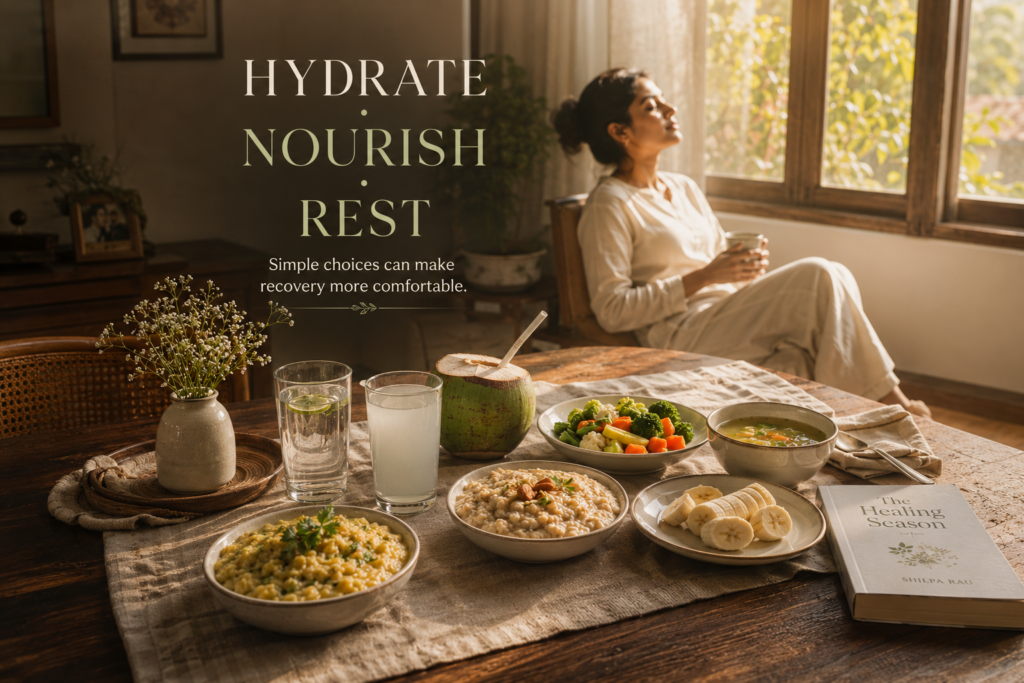
When your appetite starts coming back, think of your meal in simple components:
Carbohydrate:
Rice, dalia, oats or soft roti
Protein:
Moong dal, eggs, curd or another tolerated protein source
Vegetables:
Soft-cooked vegetables
Fluid:
Water, soup or another suitable hydrating drink
You don’t have to get every component perfectly balanced at every meal. What matters more is gradually returning to adequate food and fluid intake.
Final Takeaway
Honestly, you don’t need some complicated diet chart to figure out what to eat when you’re running a fever. Keep it basic — drink enough fluids, go for soft food that’s easy on the stomach, eat in small portions, and just listen to what your body’s actually asking for.
Khichdi, dalia, oats, bananas, a warm soup, soft veggies, maybe some protein if your body can handle it — all of this fits into a gentle recovery diet. Nothing needs to be exact or perfect here.
But one thing — food helps your body recover, sure, but it’s not a substitute for actual medical care. If the fever’s not going down, or something else feels off, please don’t just rely on khichdi and hope for the best. See a doctor.
When you’re not sure what to do, just stick to the basics — drink water, rest properly, and get medical advice when you need it.