


Eggs are one of the most talked-about foods in fitness and nutrition circles — but most of what people repeat about them is half-accurate at best. Some call it a “complete protein superfood” others worry about cholesterol, and almost nobody actually breaks down what’s in an egg beyond “protein” This post lays out the full nutritional picture, backed by actual numbers, so you know exactly what you’re eating. Let’s breakdown the composition of Eggs:
1. Basic Nutrition Facts (Per Large Egg~50g)
| Nutrient | Amount | % Daily Value* |
|---|---|---|
| Calories | 72 kcal | 3–4% |
| Protein | 6.3 g | 12–13% |
| Total Fat | 4.8 g | 6% |
| Saturated Fat | 1.6 g | 8% |
| Carbohydrates | 0.4 g | <1% |
| Fiber | 0 g | 0% |
| Sugar | 0.2 g | — |
| Cholesterol | 186 mg | 62% |
| Sodium | 71 mg | 3% |
“Based on a general 2,000-calorie diet; individual needs vary“
Quick note on fiber: Eggs contain essentially zero fiber. This surprises a lot of people, since eggs get lumped into “healthy whole foods,” but fiber only comes from plant-based sources — eggs are purely an animal protein/fat food.
2. Where the Nutrition Actually Comes From: Yolk vs. White
This is where most people get confused — the egg white and yolk are nutritionally very different.
| Component | Calories | Protein | Fat | Key Nutrients |
|---|---|---|---|---|
| Egg White (~33g) | 17 kcal | 3.6 g | 0.1 g | Riboflavin, potassium, low-fat protein |
| Egg Yolk (~17g) | 55 kcal | 2.7 g | 4.5 g | Vitamin D, A, choline, B12, iron, most of the fat & cholesterol |
So if someone tells you “just eat egg whites for protein” they’re right about the protein-to-calorie ratio — but they’re also throwing away most of the egg’s actual nutrient density. Choline-important for brain function and vitamin D almost entirely live in the yolk.
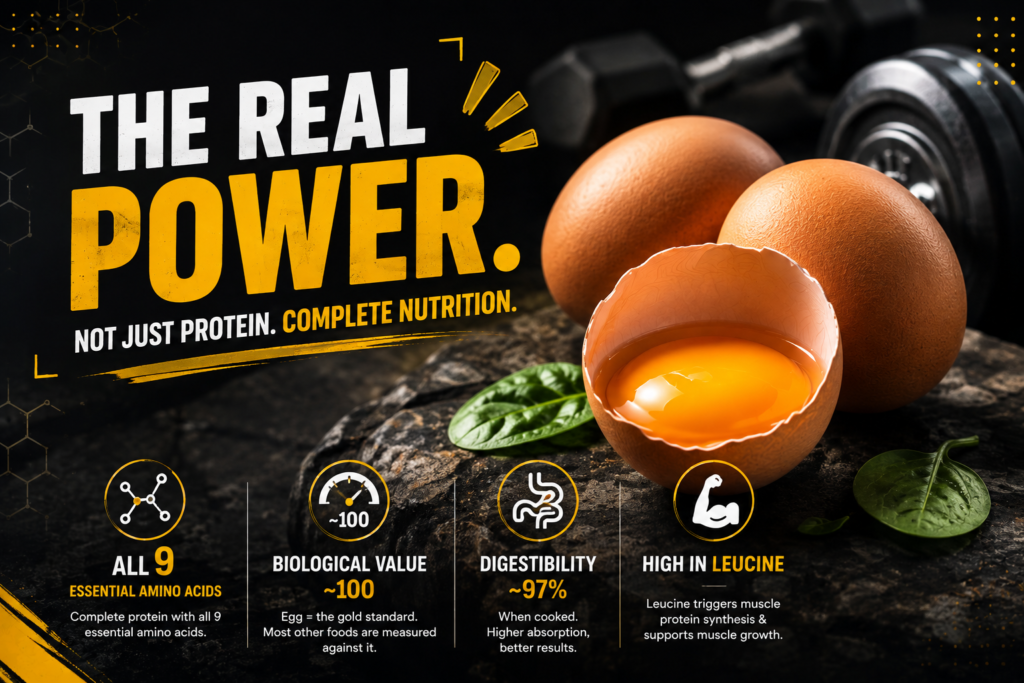
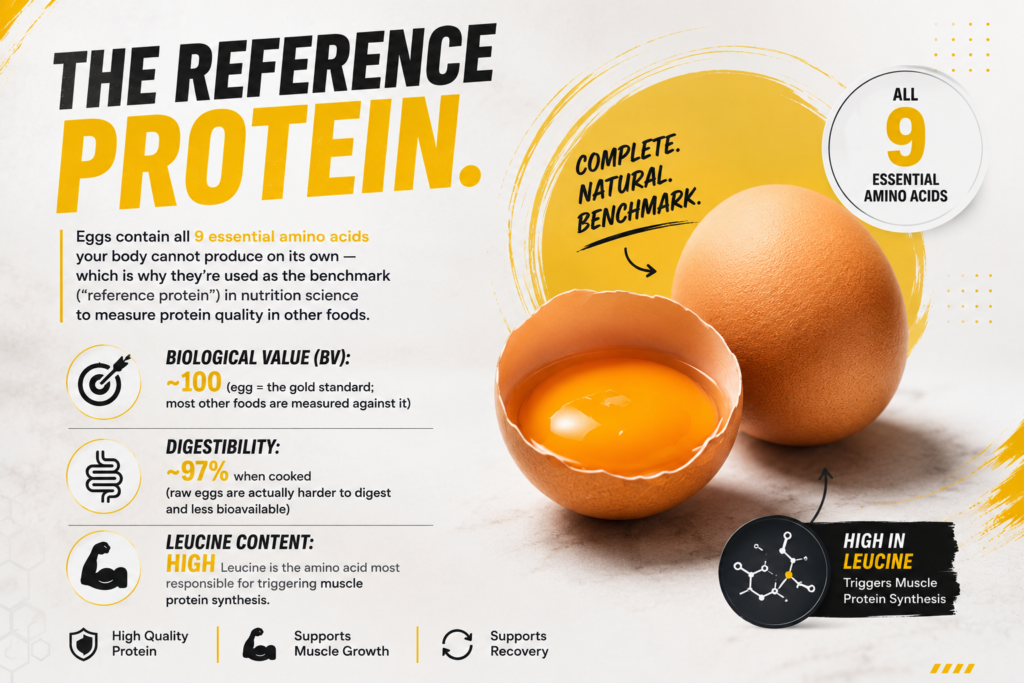
3. Protein Quality: Why Eggs Are Called “Complete”

Biological Value (BV): 100 (the egg is considered to be the standard; most others are compared to it)
Digestibility: 97% once cooked (raw eggs are actually more difficult to digest than cooked ones)
High in Leucine – This is the amino acid that initiates muscle protein synthesis.
4. How Eggs Compare to Other Common Protein Sources
| Food (100g) | Calories | Protein | Fat | Fiber |
|---|---|---|---|---|
| Eggs (2 large) | 143 kcal | 12.6 g | 9.5 g | 0 g |
| Chicken breast | 165 kcal | 31 g | 3.6 g | 0 g |
| Greek yogurt | 59 kcal | 10 g | 0.4 g | 0 g |
| Lentils (cooked) | 116 kcal | 9 g | 0.4 g | 7.9 g |
| Paneer | 265 kcal | 18 g | 20 g | 0 g |
| Almonds | 579 kcal | 21 g | 50 g | 12.5 g |
This is why eggs work well alongside other foods rather than as a total replacement — they’re protein-dense but fiber-absent, so a balanced plate usually needs a plant-based side to round things out.
*NOTE*: Boiling or poaching keeps the egg closest to its “natural” nutritional numbers. Every added ingredient — oil, butter, cheese — shifts the calorie and fat count, sometimes significantly.
Micronutrients Worth Knowing About
Eggs aren’t just protein and fat — they carry a fairly dense micronutrient profile for their size:
- Choline — supports brain and liver function; one egg covers roughly 25–30% of daily needs
- Vitamin D — one of the few natural food sources of vitamin D
- Vitamin B12 — essential for nerve function and red blood cell production
- Selenium — antioxidant mineral, supports thyroid function
- Lutein & Zeaxanthin — antioxidants linked to eye health, found in the yolk
In Summary:
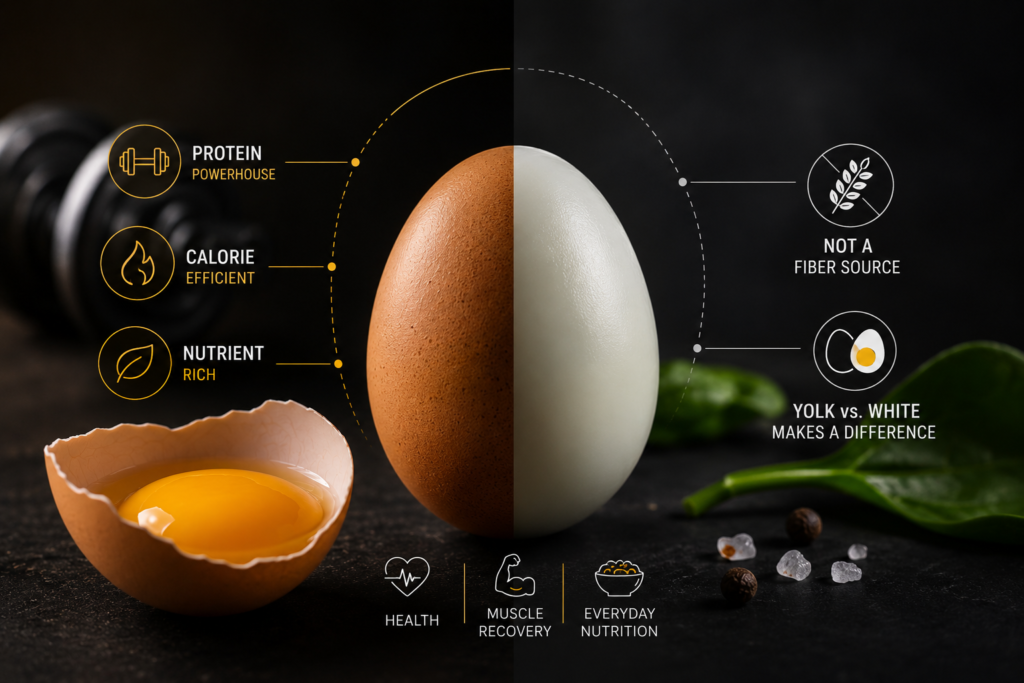
Eggs are calorie-efficient, protein-dense, and nutrient-rich — but they are not a fiber source, and the yolk vs. white choice genuinely changes what you’re getting nutritionally. Understanding the full breakdown (not just “eggs = protein”) helps you build meals more intentionally, whether that’s for general health, muscle recovery, or simple day-to-day eating.