
Energy drinks have gained popularity among individuals in need of an immediate boost during their working hours, studies, travels, or while exercising. Sting Energy Drink is one of the most preferred beverages among the Indians due to its affordable nature, easy availability, and sweet taste. However, most people are curious about the ingredients used in Sting Energy Drink, and is it safe to consume?
Let’s have a closer look at the truth.
What Ingredients Compose Sting Energy Drink?
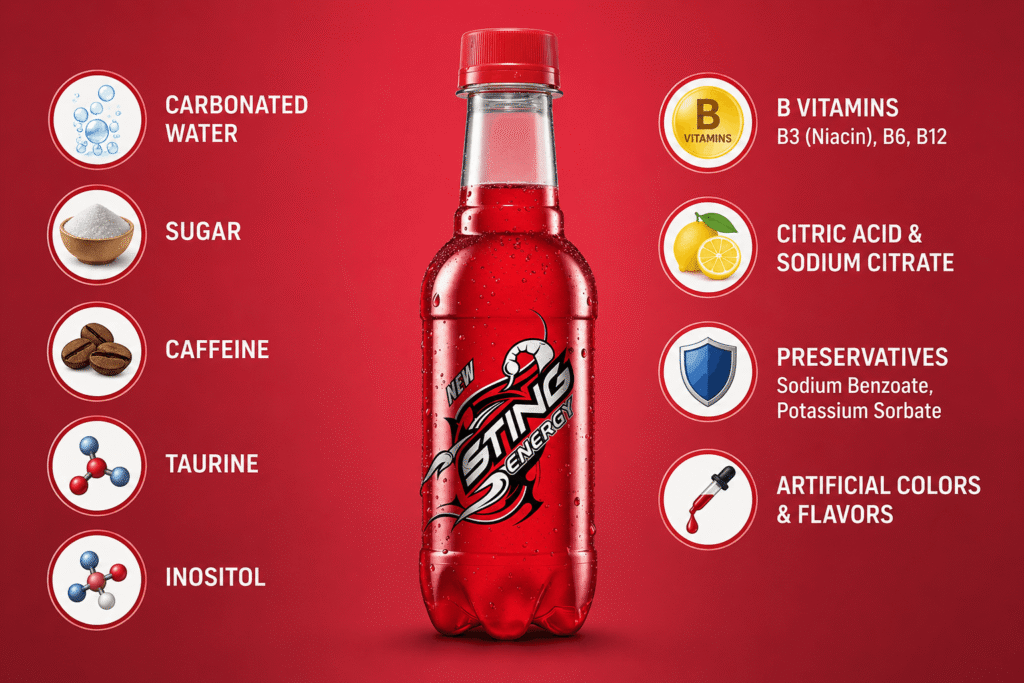
There are several ingredients which are used to flavor and give energy to Sting Energy Drink. These ingredients include:
Carbonated Water
This is the basic ingredient of the drink.
Sugar
Sugar forms one of the most important ingredients in Sting. Sugar helps provide energy quickly but also adds to calories. There is 17.5 grams of sugar in a 250 ml bottle which is equivalent to 4 teaspoons.
Caffeine
Caffeine forms the primary stimulant in Sting. There are 72 mg of caffeine in 250 ml of Sting. Caffeine helps increase alertness and helps combat fatigue. Excess consumption of caffeine causes nervousness, faster heartbeat, inability to sleep, and anxiety.
Taurine
Taurine forms an amino acid that is found in many energy drinks. Taurine contributes to muscle activity and energy metabolism but the benefits in terms of performance are still under study.
Inositol
Inositol is a naturally occurring chemical that is used by cells for their functionality. It is often added to energy drinks.
B Vitamins
Some of the B vitamins found in Sting include:
- B3 (Niacin)
- B6
- B12
These vitamins assist the body in turning food into energy; however, they cannot instantly give energy.
Citric Acid and Sodium Citrate
These two ingredients regulate the acidity and improve the taste of the drink.
Preservatives
Sting contains preservatives like Sodium Benzoate and Potassium Sorbate to increase shelf life and prevent spoilage.
Artificial Colors and Flavors
The drink uses permitted food colors and flavoring agents to achieve its bright color and fruity taste.
Nutritional Information (Approx. Per 250 ml Bottle)
- Energy: 70 kcal
- Carbohydrates: 17.5 g
- Sugar: 17.5 g
- Fat: 0 g
- Protein: 0 g
- Caffeine: Around 72 mg
Sting Energy Drink Safety
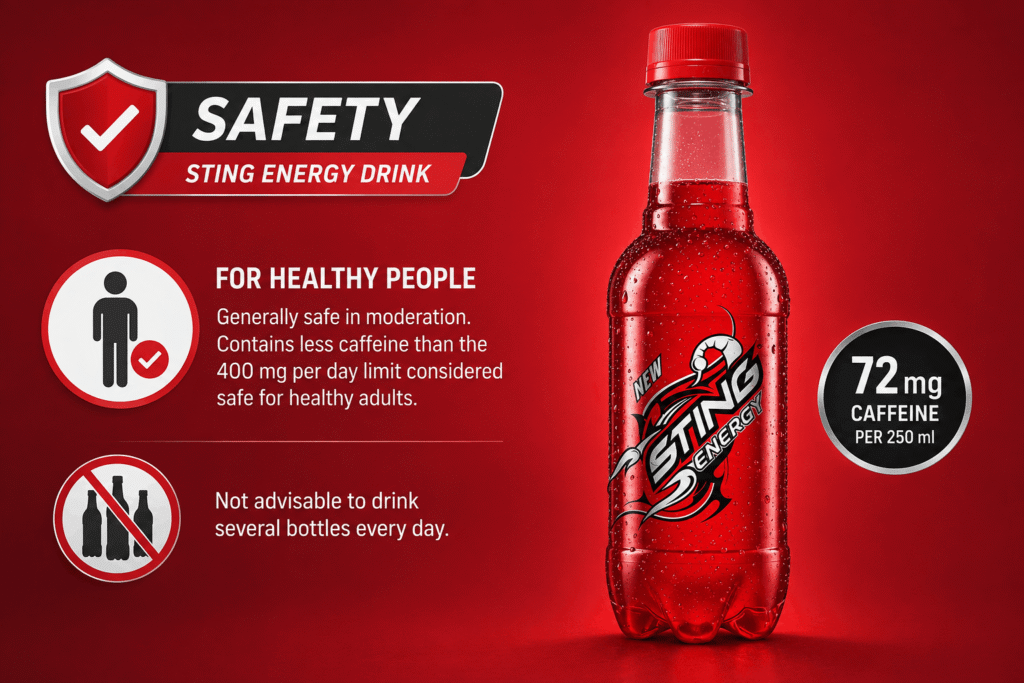
For Healthy People
It is generally safe to consume in moderation by most healthy people. The amount of caffeine present in the beverage is less than the 400 mg per day of caffeine that is generally considered to be safe for healthy people.
However, it is not advisable to drink several bottles every day.
Who Should Refrain from Using Sting?
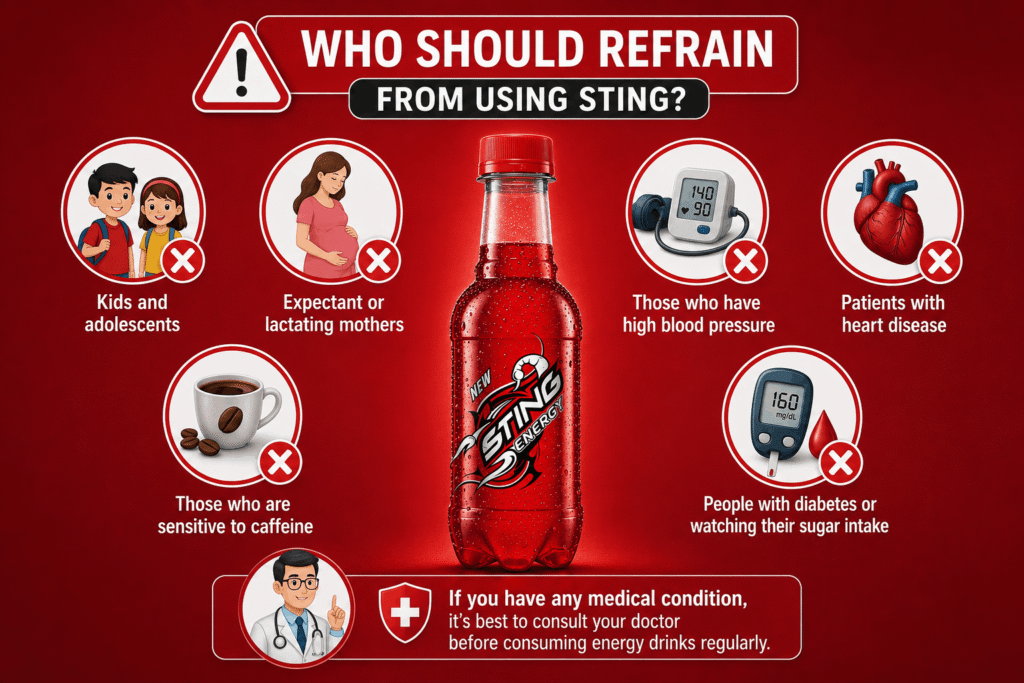
Sting is not recommended for use by:
- Kids and adolescents
- Expectant mothers or lactating mothers
- Those who have high blood pressure
- Patients with heart disease
- Those who are sensitive to caffeine
- People with diabetes or those who are watching their sugar consumption
If you have any medical condition, it’s best to consult your doctor before consuming energy drinks regularly.
Should You Have Sting Before Working Out?
There are some individuals who consume Sting before engaging in physical activities because of the caffeine in the beverage that can boost one’s concentration for a brief period of time. But remember, it is not meant to be used as a sports drink.
Things to Remember
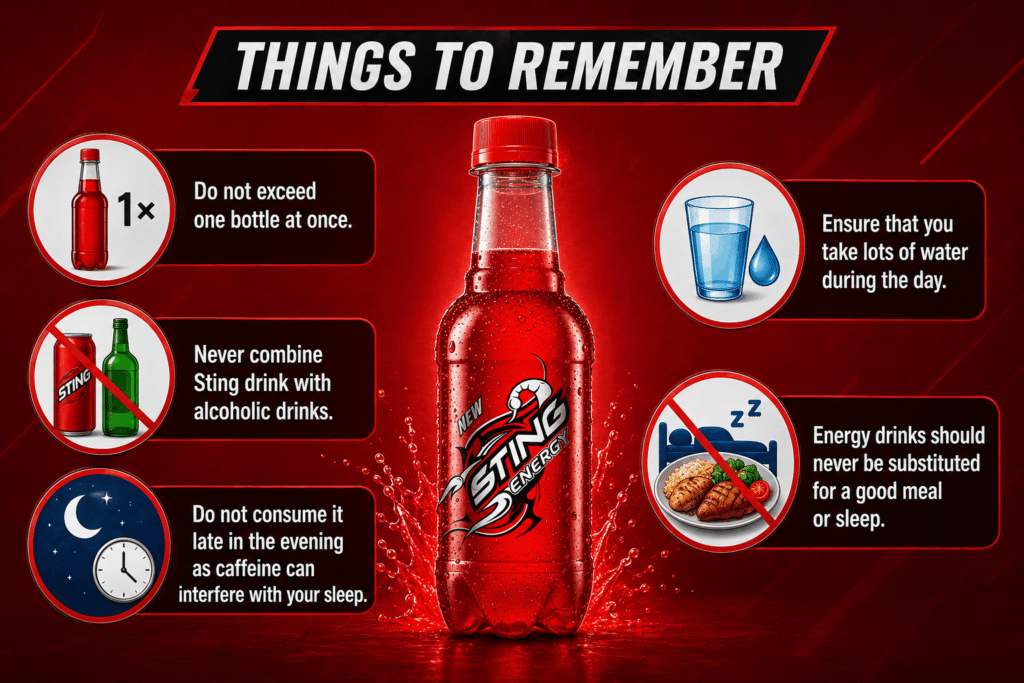
- Do not exceed one bottle at once.
- Never combine Sting drink with alcoholic drinks.
- Do not consume it late in the evening as caffeine can interfere with your sleep.
- Ensure that you take lots of water during the day.
- Energy drinks should never be substituted for a good meal or sleep.
Conclusive Statement
Sting Energy Drink contains caffeine, sugar, taurine, and B vitamins, and therefore, this drink will be able to give you an energy boost. However, since Sting Energy Drink has caffeine and sugar as its ingredients, this means that it should not form part of your daily diet.
The most appropriate method of keeping your energy levels high would be ensuring that you have a good diet, exercise, hydrate yourself, and get adequate sleep. Sting Energy Drink can be used as an energy booster.