
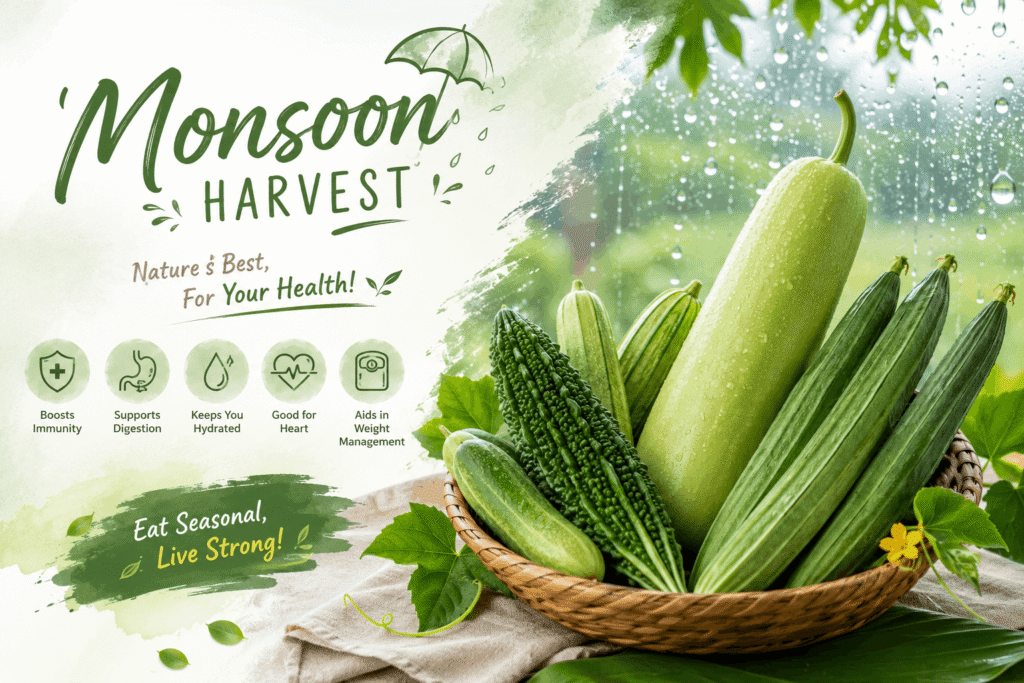

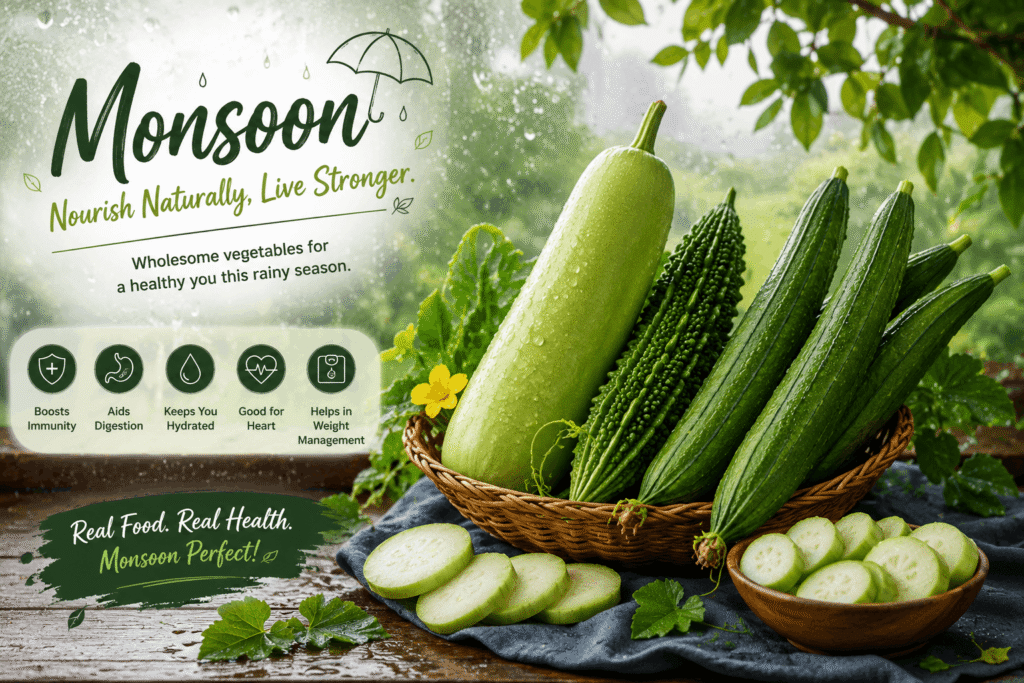
Though the monsoon season has its own pleasant weather conditions, it also poses threats in terms of infections, digestion problems, and other such seasonal problems. One of the most effective methods of building up your immunity and keeping yourself healthy during this season is by consuming fresh vegetables of the season. Sponge gourd (tori), bitter gourd (karela), and bottle gourd (lauki) are few examples of Monsoon Vegetables .
Let us look at why these vegetables should be included in your diet during the monsoon.
Sponge Gourd (Tori) – A Lightweight Monsoon Vegetable
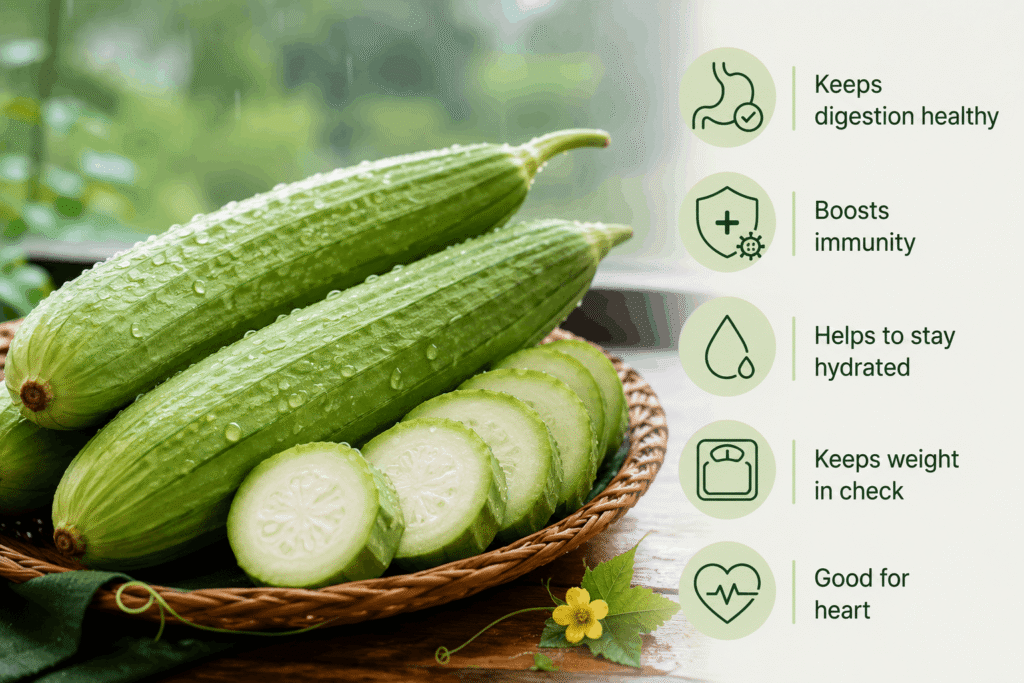
This vegetable is loaded with water content and is light in terms of calories. As digestion slows down during monsoons, tori is one good option to choose from.
Why Should I Have Tori During the Monsoon?
- Keeps digestive system healthy: Its high fiber content ensures healthy digestion and prevents any cases of constipation.
- Increases immunity: High content of vitamin C and antioxidants to keep infections at bay during monsoons.
- Helps to stay hydrated: Despite being humid weather, I need to stay hydrated and the consumption of tori makes sure that my body gets its fluids.
- Keeps weight in check: Low in calories and high in fiber content, perfect food to eat.
- Good for heart: Contains potassium to maintain blood pressure levels.
Bitter Gourd (Karela) – Nature’s Immunity Booster
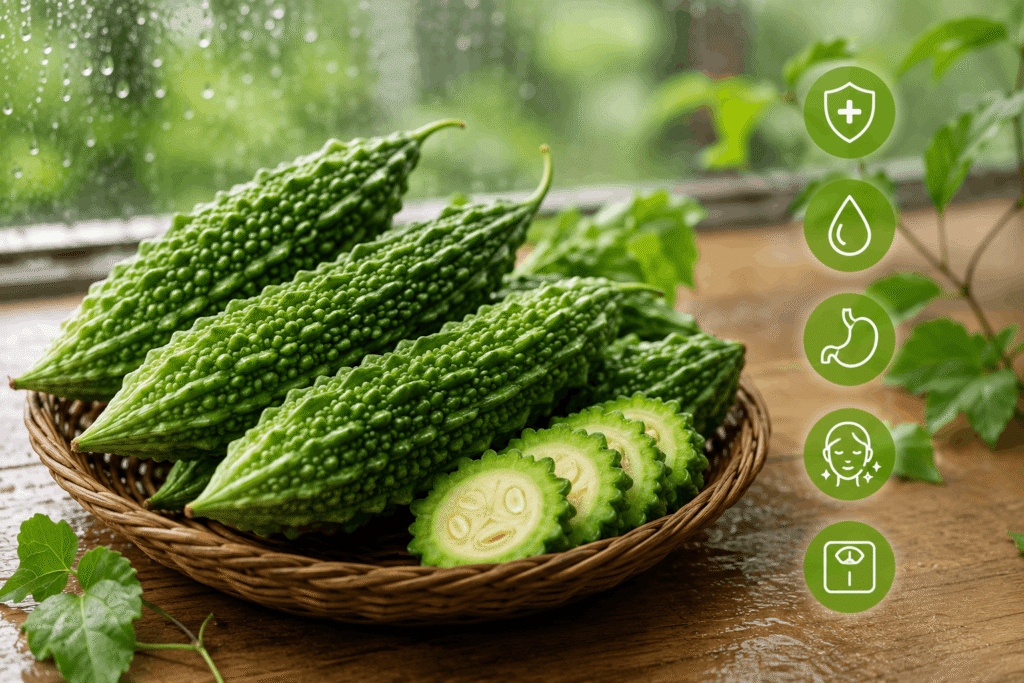
Karela may have a bitter taste, but it offers impressive health benefits, especially during the monsoon when immunity needs extra support.
Karela to Eat During Monsoon Season – Why?
- Boosts immune system: Contains vitamin C and antioxidant properties to prevent infections.
- Beneficial for diabetes: The presence of compounds such as charantin and polypeptide-p helps to control sugar levels.
- Improves digestion: It is rich in fiber which facilitates good digestion and bowel movements.
- Healthy skin: It acts as a natural blood purifier and prevents any skin issues due to humid weather.
- Ideal for managing weight: It is low in calories.
Lauki/Bottle Gourd – The Best Cool Vegetable for the Rainy Season
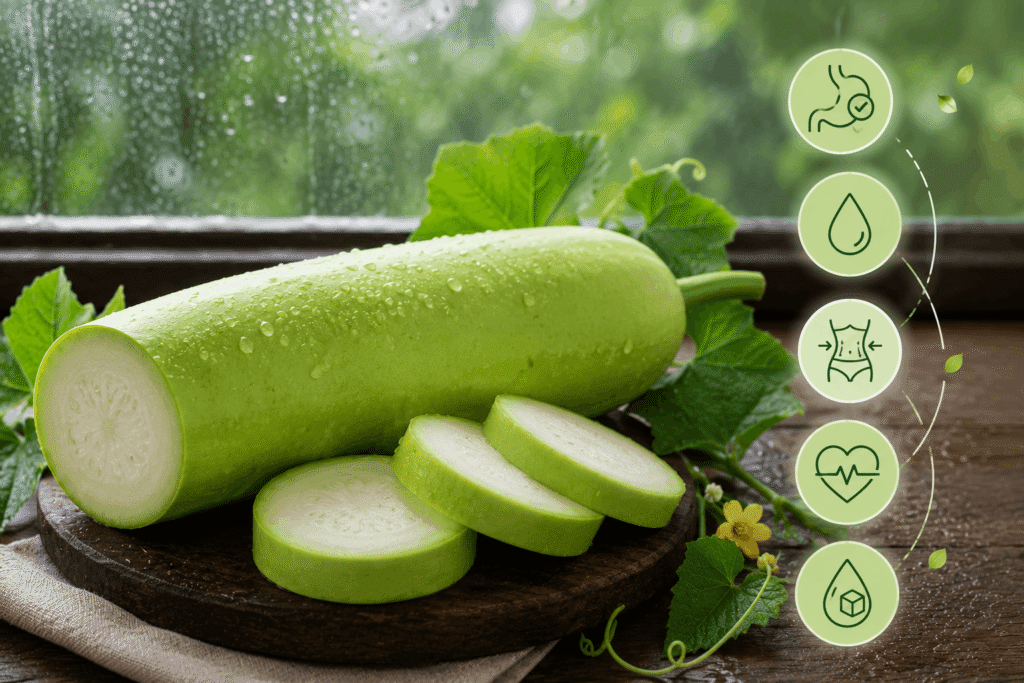
The bottle gourd vegetable is one of the easiest to digest and hence can be easily included in the rainy season diet plan.
Why Should You Consume Lauki During Monsoon Season?
- Good for digestion: It prevents acidity and aids in proper digestion.
- Keeps your body hydrated: The water composition in lauki is between 92-96%.
- Aids in weight loss: It is calorie-deficient and keeps you satiated.
- Heart health: Potassium plays an important role in controlling your blood pressure.
- Diabetics: Low glycemic index is beneficial for diabetic patients.
Important: Always taste a small piece of raw bottle gourd before cooking. If it tastes bitter, do not consume it, as bitter bottle gourd may contain harmful natural toxins.
Why Seasonal Vegetables Are Best During the Monsoon
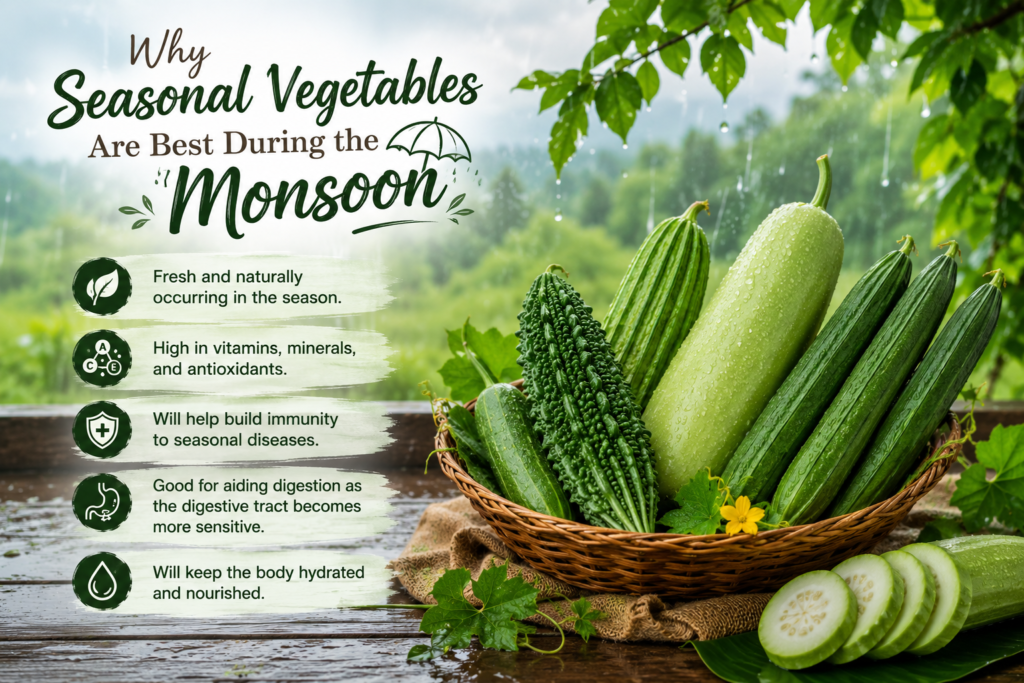
Eating vegetables that naturally grow during the rainy season offers several benefits:
- Fresh and naturally occurring in the season.
- High in vitamins, minerals, and antioxidants.
- Will help build immunity to seasonal diseases.
- Good for aiding digestion as the digestive tract becomes more sensitive.
- Will keep the body hydrated and nourished.
Vegetable Eating Tips in the Monsoon Season
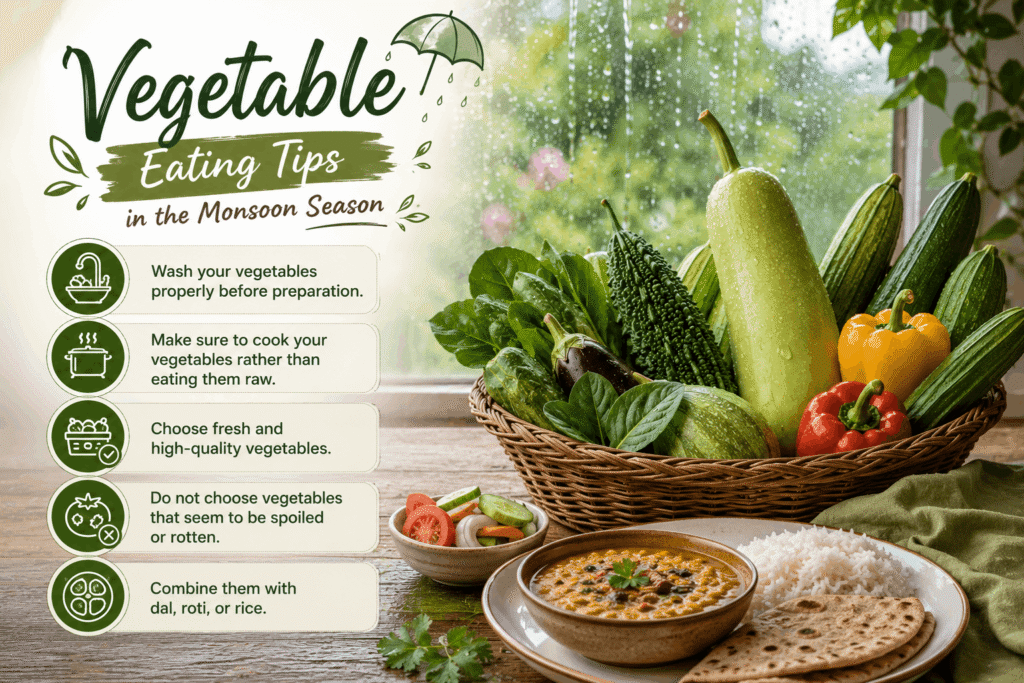
- Wash your vegetables properly before preparation.
- Make sure to cook your vegetables rather than eating them raw.
- Choose fresh and high-quality vegetables.
- Do not choose vegetables that seem to be spoiled or rotten.
- Combine them with dal, roti, or rice.
Conclusion
For good health during the rains, include foods like Tori, Karela, and Lauki in your diet regularly. This is because they are seasonal foods and also have many benefits which include providing immunity strength, digestion, hydration, and much more. Consumption of fresh seasonal vegetables is one of the easiest ways of enjoying monsoon season.