



One of the easiest ways to maintain good health is by consuming fresh vegetables on a daily basis. Spinach, Mint Leaves, and Bitter Gourd are three vegetables that are commonly consumed in India and known for their high nutritional values. These include vitamins, minerals, antioxidants, and fiber.
Whether you enjoy them in sabzi, soups, juices, chutneys, or salads, these vegetables can become a healthy part of your daily meals. Let’s take a closer look at their benefits, common uses, and a few precautions.
Spinach (Palak): Benefits, Usage & Warnings
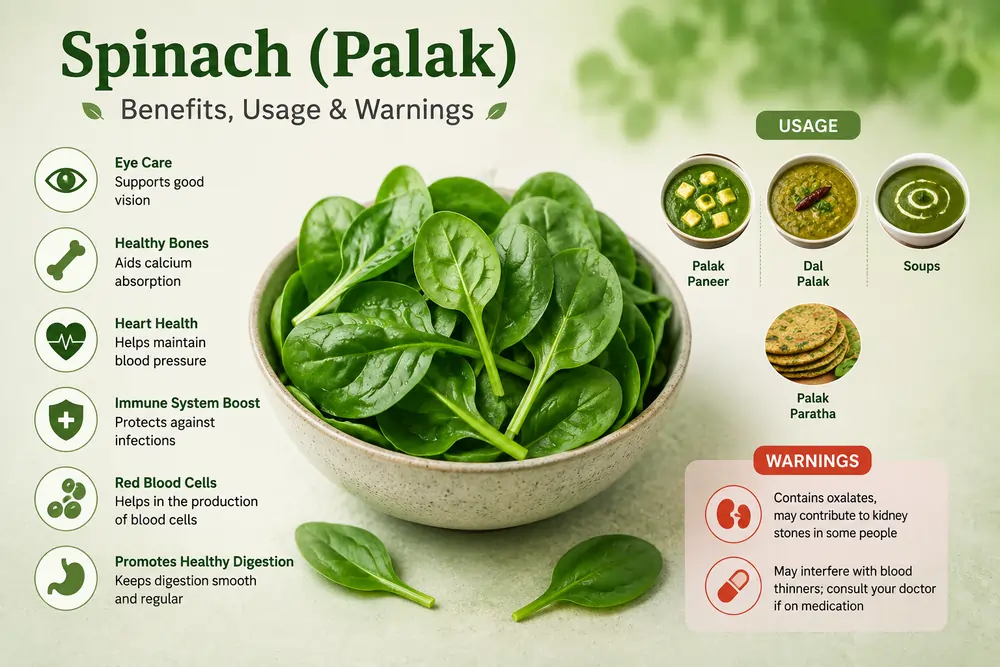
Spinach, commonly referred to as Palak, is a dark green leafy vegetable that features in several Indian recipes such as palak paneer, dal palak, soups, and parathas. In addition to enhancing the taste and appearance of the meal, spinach is one of the most nutritious vegetables you can add to your diet.
Spinach and its Advantages to Health
Eye Care
This vegetable is a source of Vitamin A, lutein, and zeaxanthin. These nutrients help maintain good eyesight and protect the eyes from any damage.
Healthy Bones
As a source of vitamin K and calcium, palak aids in the process of maintaining bone health and the proper absorption of calcium.
Heart Health
Spinach is known as a source of potassium and natural nitrates. They help maintain blood pressure levels and provide healthy heart function.
Immune System Boost
Thanks to vitamin A, vitamin C, and antioxidants, spinach helps protect against any infection and provides healthy cells’ protection.
Red Blood Cells
Iron and folic acid are found in spinach. Thanks to them, proper blood cells can be produced.
Promotes Healthy Digestion
Fibre content in spinach ensures good digestion and keeps the bowel system regular.
Common Usages
- Palak Paneer
- Dal Palak
- Soups
- Smoothies
- Parathas Stuffed with Spinach
- Salads
Precautions
If you suffer from kidney stones, you should not eat much spinach as it contains natural oxalates. If you are using blood-thinning medications, then do consult your physician before consuming more spinach.
Mint Leaves (Pudina): Health Benefits, Uses and Precautions
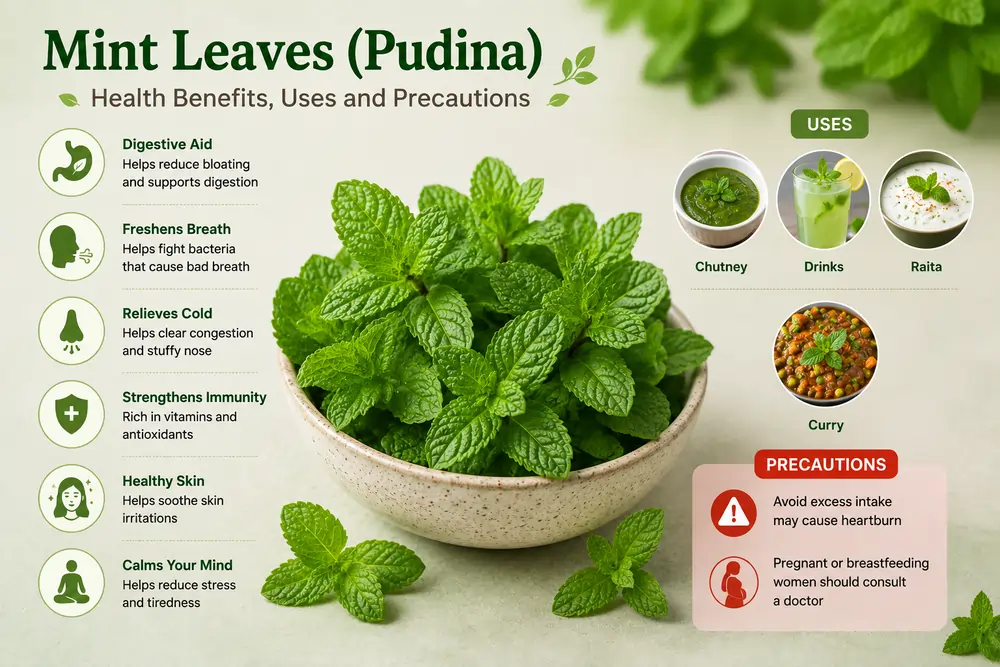
Pudina is an aromatic plant that is used in several Indian recipes. Starting from chutney and drinks up to raita and curry, it is used on a daily basis.
Health Benefits of Pudina
Digestive Aid
The natural menthol in mint helps relax the digestive system and may reduce bloating and stomach discomfort after meals.
Freshens Breath
The plant has antibacterial compounds that aid in fighting bacteria that cause bad breath.
Relieves Common Cold and Stuffy Nose
Because of its cooling properties and presence of menthol, it helps in clearing congestion in the nose.
Strengthen Immune System
This is a rich source of vitamin A, vitamin C, and antioxidants that work against infections in the body.
Maintain Healthy Skin
The antioxidant properties of pudina might be useful in soothing skin irritations.
Make You Feel Calm
The fresh fragrance of pudina has a calming effect on people, helping relieve stress and tiredness.
Uses
- Mint Chutney
- Lemon-Mint Water
- Herbal Tea
- Raita
- Salad
- Biryani
Precaution
Do not take mint in excess in case it gives you acid or any form of digestion trouble. People with GERD should also take it in moderation.
Karela – Health Benefits, Uses, Precautions
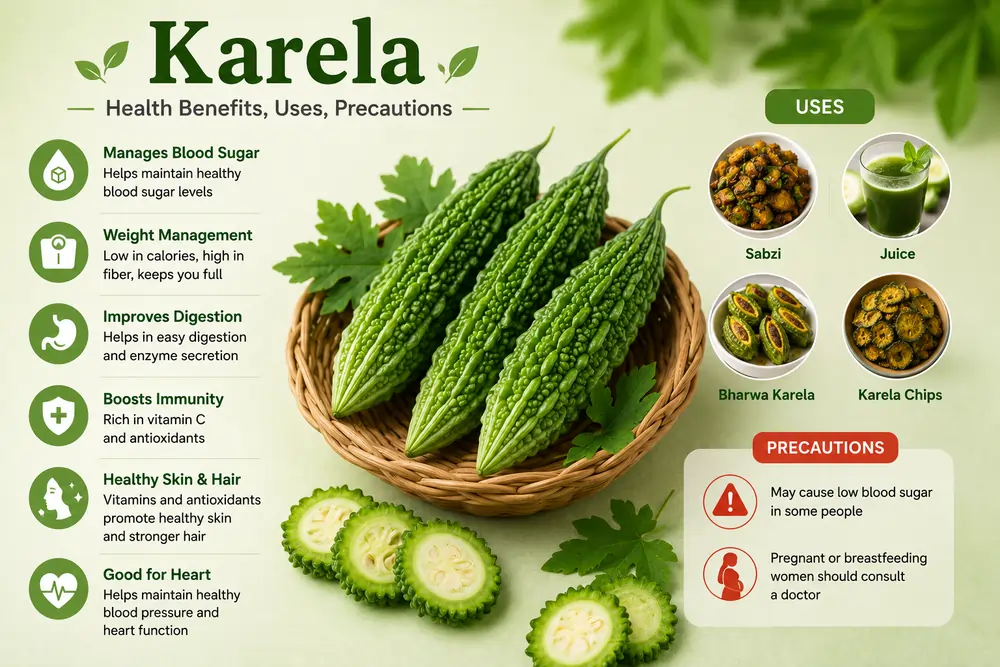
Karela is an edible vegetable known for its bitter taste and excellent health benefits. Though everyone does not like its taste, it has lots of health benefits.
Health Benefits of Karela
It Can Manage Your Blood Sugar Levels
There are some natural plant compounds found in Karela that are called charantin and polypeptide-P, which can be helpful for healthy blood sugar levels.
Weight Management Aid
It is a naturally low-calorie vegetable with high fiber content and helps to keep you satiated.
Improves Digestive Functioning
The high fiber content makes it easy for your body to digest food, and the bitter components increase the secretion of enzymes.
Immunity System Booster
It is a source of vitamin C and acts as an antioxidant.
Supports Healthy Skin and Hair
The vitamins and antioxidants found in bitter gourd contribute to healthier-looking skin and stronger hair.
Good for Heart Health
Potassium and fibre content in Karela are beneficial for maintaining proper blood pressure levels and heart functioning.
Uses of Karela
- Karela Sabzi
- Stuffed Karela
- Bitter Gourd Juice
- Stir Fried Karela
- Karela Chips
- Precautions
Diabetics on medications are advised to take professional guidance before having bitter gourd since it can affect their blood sugar levels. Expecting women should also have medical consultation prior to taking it.
Conclusion
Palak, Pudina, and Karela are vegetables that are abundantly found and can make an enormous difference in your diet. They are easily incorporable in your diet to make full use of their various nutritional values. Fresh Palak, fresh mint leaves (Pudina), and bitter gourd (Karela) can be found at Aap Ka Bazar.