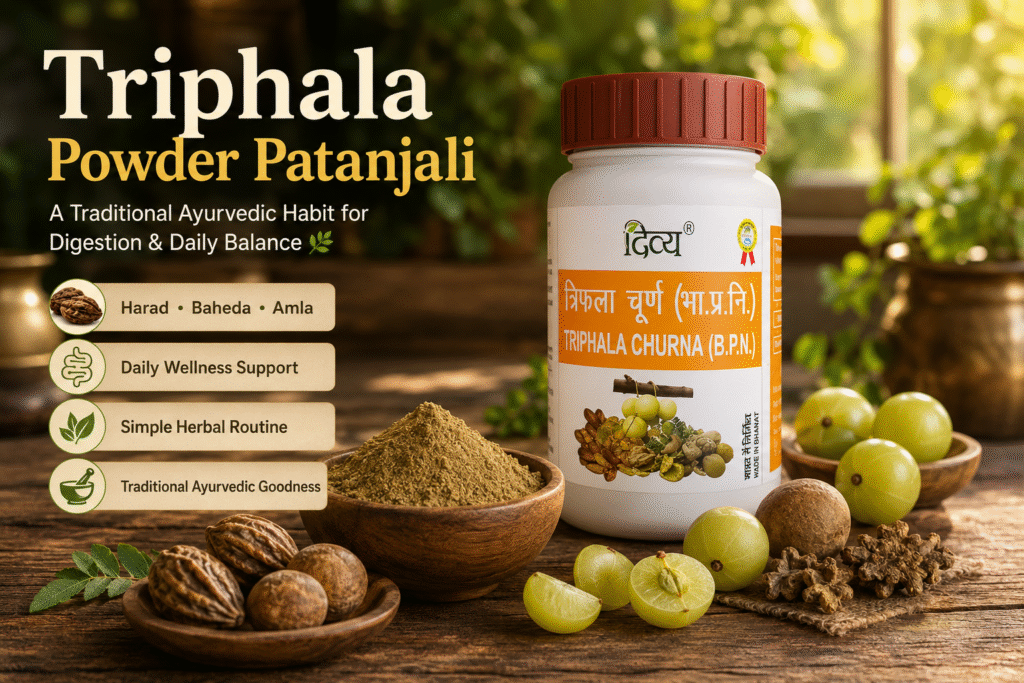

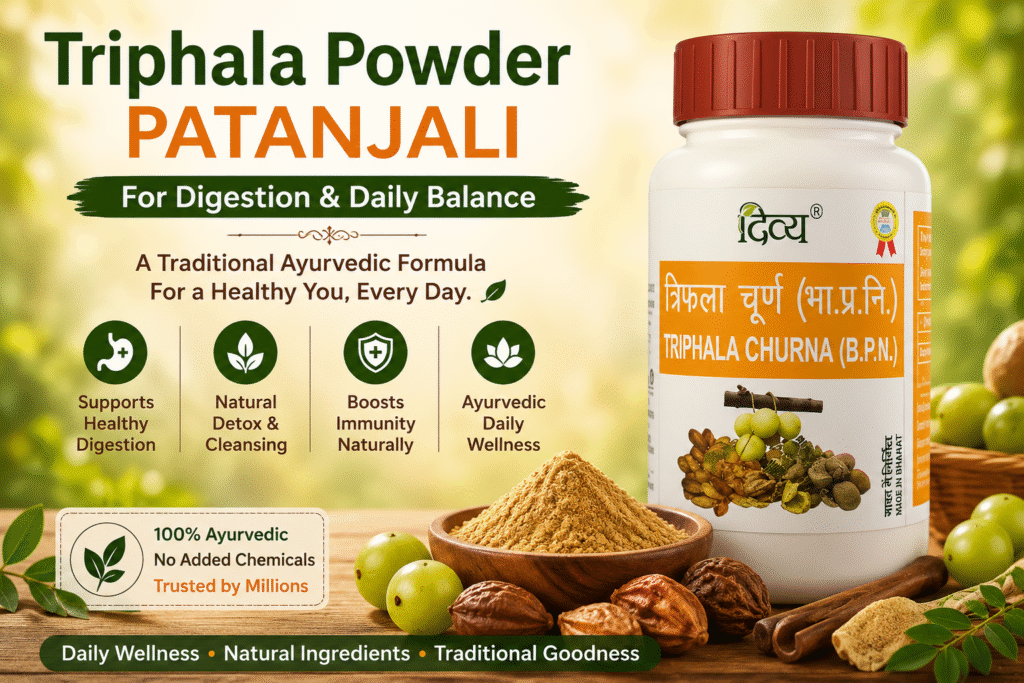
Triphala Powder Patanjali is one of those traditional products that quietly stays in Indian kitchens for years without needing flashy advertising. Someone at home usually recommends it first — maybe a parent, grandparent, or even a relative who uses it after heavy dinners or during irregular eating schedules 🌿
And honestly, that’s probably why people still trust it.
Unlike modern wellness products with fancy packaging and confusing ingredient lists, Triphala feels simple. One spoon, warm water, and a small daily routine. That’s it.
What Is Triphala Powder Patanjali?
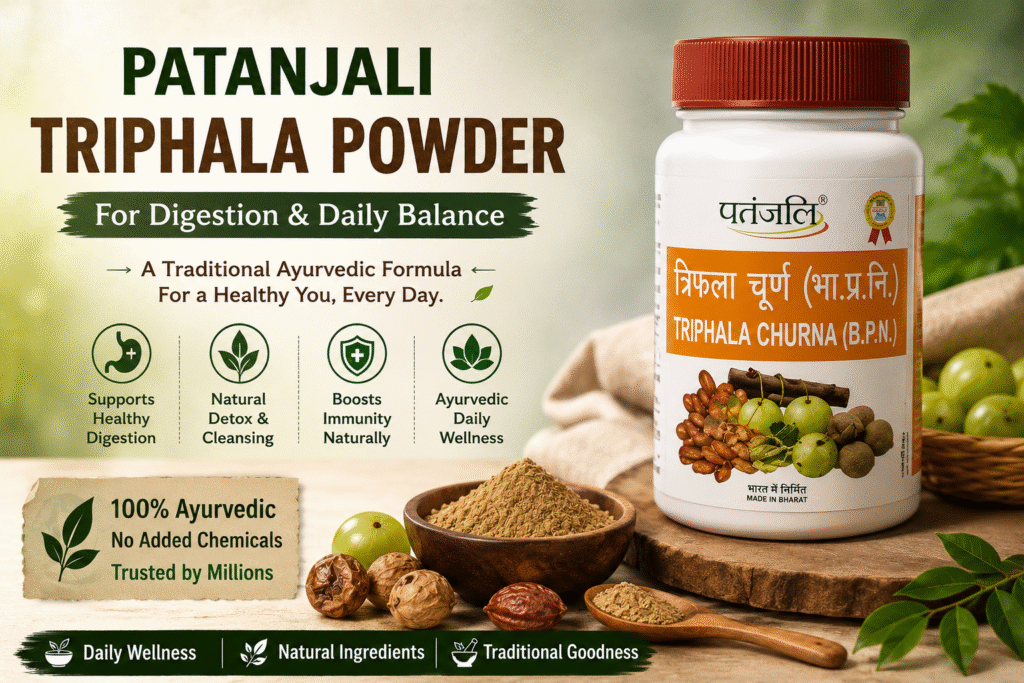
Patanjali Triphala Powder, also called Triphala Churna, is an Ayurvedic herbal blend made using three traditional ingredients:
- Harad
- Baheda
- Amla
The word “Triphala” literally means “three fruits.”
These ingredients are dried naturally, powdered, and mixed together to create a balanced herbal formula commonly associated with digestion and daily wellness support in Ayurveda.
Unlike strong digestive products that work aggressively, Triphala is usually connected with gradual routine-based wellness habits.
That slower and calmer approach is actually one reason many people prefer it.
The Three Ingredients That Make Triphala Special 🌿
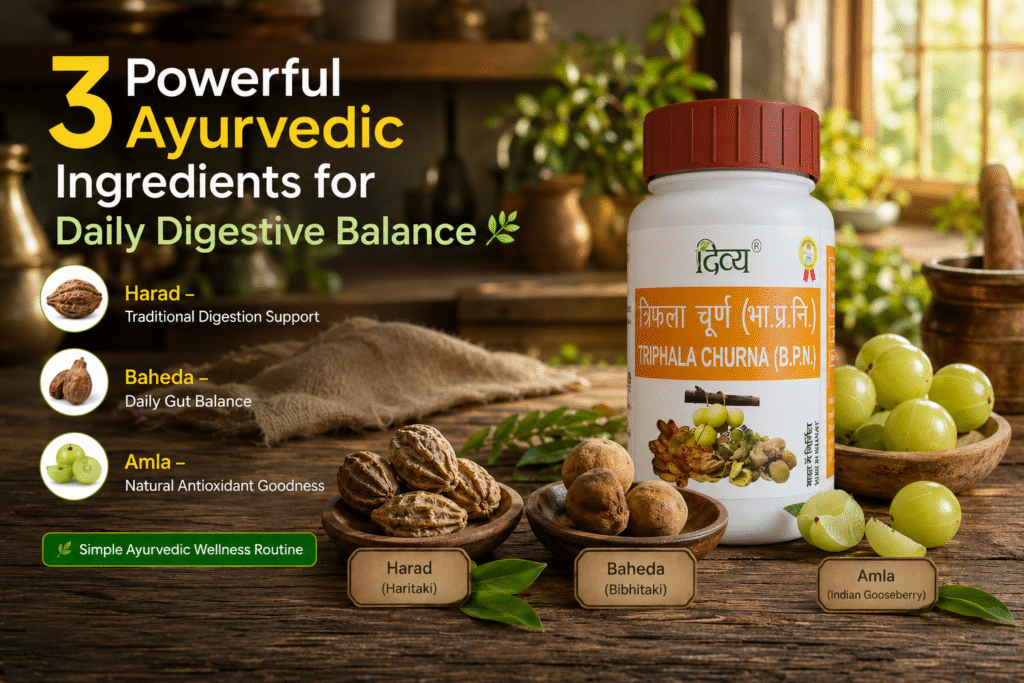
1. Harad (Haritaki)
Harad is traditionally linked with digestion support and bowel balance in Ayurvedic practices.
Many people include Triphala in their nighttime routine after heavy meals because Harad is believed to support smoother digestion habits.
Some families even call it one of those “keep at home just in case” Ayurvedic ingredients.
2. Baheda (Bibhitaki)
Baheda is commonly associated with internal balance and digestive wellness.
In traditional use, it is often valued for helping maintain overall digestive comfort instead of acting like an instant quick-fix solution.
That’s why Triphala usually feels gentler compared to many heavily processed digestive products.
3. Amla
Amla is probably the most recognized ingredient among the three.
It is traditionally valued because of its antioxidant properties and long-standing use in Ayurvedic wellness routines.
Many people already associate Amla with everyday wellness support, which adds to Triphala’s popularity in Indian households.
Why So Many People Still Use Triphala Regularly
It Fits Easily Into Daily Life
One reason people continue using Triphala Powder Patanjali is convenience.
Modern routines are already exhausting. Most people don’t want complicated wellness schedules with too many steps.
In the same way, many people also continue following simple Ayurvedic wellness habits through Patanjali Shatavari for Energy and Daily Balance instead of depending completely on complicated modern wellness routines.
Common During Festival and Wedding Seasons 🍯
Indian celebrations usually mean late-night dinners, sweets, fried snacks, and irregular eating timings.
That’s exactly when many traditional household products quietly return to daily use again.
A lot of people prefer simple Ayurvedic habits during these periods instead of depending completely on instant digestive products every single time.
Interestingly, many users don’t even think of it as a “wellness supplement.” For them, it’s simply part of old household habits.
How Triphala Powder Patanjali Works in Daily Routines
Traditional Ayurvedic products usually focus on consistency instead of overnight results.
That’s why regular users often take smaller amounts consistently rather than expecting immediate dramatic changes.
People commonly use Triphala as part of routines connected with:
- Digestion balance
- Feeling lighter after meals
- Simple nighttime wellness habits
- Daily gut comfort
- Long-term routine support
Many users also prefer it because it feels less artificial compared to flavored digestive products filled with excess sugar and synthetic ingredients with aapkabazar.
Who May Like Using Triphala Powder Patanjali?
This product is commonly preferred by:
- Adults following Ayurvedic routines
- People with irregular meal schedules
- Individuals who prefer herbal wellness habits
- Users looking for simple digestion support
- People interested in traditional daily wellness practices
It is especially common among users who like calm and practical routines instead of aggressive wellness trends.
Who Should Avoid Excess Use?
Even traditional products should still be used carefully.
Some users may initially dislike the herbal taste. Others may feel more comfortable starting with smaller quantities before making it part of their routine.
Taking excessive amounts may sometimes cause digestive discomfort for certain people.
Moderation matters — even with traditional wellness products.